
The Digital Trail Before Nancy Guthrie Vanished
A chilling series of online searches—addresses, images, and financial details—may reveal the calculated planning behind her disappearance.


When you cover enough cases, you learn to recognize the moment when something shifts—when speculation hardens into something more concrete, more unsettling. This was one of those moments.
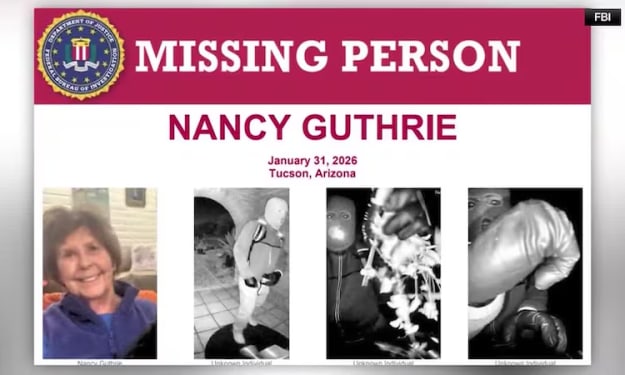
We had been talking for days about whether Nancy Guthrie’s disappearance was random or targeted. Law enforcement had already signaled they believed this wasn’t a crime of opportunity. The sheriff had said as much. But there was still an open question: was Nancy the intended target, or was someone actually after her family—specifically her daughter?
Then suddenly, a new piece of information surfaced, and it changed everything.
Fox News reported that someone had searched for Nancy Guthrie’s home address and her daughter Savannah’s salary in the months—and even weeks—before Nancy vanished. Not just once. Multiple times. Spread across a timeline that now reads less like coincidence and more like preparation.
And that’s what makes this so disturbing.
A Timeline That Suggests Planning
According to Google Trends data cited in the report, someone in Arizona searched for Nancy Guthrie’s home address between June 21 and June 28, 2025. That alone might not mean much. People search for addresses all the time. But then it happened again—this time on January 11, 2026.
That date matters.
January 11 is one of the exact dates investigators have publicly asked residents to review their Ring camera footage. That alone raises the question: was someone physically near the home after searching for the address?
But it doesn’t stop there.
There were also Google Image searches for Nancy’s address—specifically looking for photos or maps of the home. One search occurred between March 1 and March 8, 2025. Another between November 30 and December 1, 2025.
These weren’t just casual searches. These were visual reconnaissance attempts.
Someone wasn’t just curious. Someone wanted to see the property.
The Search for Savannah Guthrie’s Salary
Then there’s the search that adds an entirely different layer to this case.
Between December 13 and December 20, 2025, someone in Tucson searched for Savannah Guthrie’s salary.
On its own, that might seem less alarming. Public figures often have their salaries searched online. Even journalists and television personalities experience that. But in this context—stacked alongside repeated searches for Nancy’s home address and images of the property—it takes on a different meaning.
Because now, it looks less like curiosity and more like victimology.
Investigators often look at victimology to understand motive. Who is the victim? Who are their family members? What resources might they have? What vulnerabilities exist?
When someone searches for both the home address of a person and the salary of their daughter, it raises an uncomfortable possibility: they may have been assessing value.
What Investigators Call Pre-Offense Behavior
Experts immediately recognized the pattern.
This kind of digital activity falls squarely into what investigators call pre-offense behavior. It’s the phase where an offender gathers information, studies the target, and prepares.
It’s reconnaissance.
They select a potential target. They look up addresses. They examine maps. They review images. They revisit the location repeatedly, both digitally and potentially physically.
And the timeline here fits that cycle almost perfectly.
First, the initial searches in early 2025. Then additional searches months later. Then renewed searches just weeks before Nancy disappeared.
That progression suggests sustained interest.
Not random curiosity. Continued focus.
The Importance of Digital Evidence
What makes this lead especially powerful is that digital searches leave behind data.
Every search originates from an IP address. Every IP address can potentially be traced back to a device, a network, or a location. With proper legal authorization, investigators can reconstruct search histories, identify related activity, and narrow down suspects.
This is what makes digital evidence so critical.
Unlike eyewitness testimony, it doesn’t rely on memory. Unlike physical evidence, it doesn’t degrade over time.
It just sits there, waiting to be discovered.
If these searches came from the same person—or even the same network—it could provide investigators with a direct pathway to whoever was behind Nancy Guthrie’s disappearance.
Why Law Enforcement May Be Letting This Information Surface
There’s another important question: why is this information becoming public now?
Sometimes, investigators release details strategically. Not everything—but just enough.
It can prompt witnesses to come forward. It can trigger memories. It can cause someone who knows something to suddenly realize the significance of what they’ve seen.
It can also put pressure on the person responsible.
Because once the public knows about the digital trail, whoever created it knows something else too.
They know investigators are getting closer.
A Case That Feels Increasingly Targeted
Taken together, these searches paint a chilling picture.
Someone searched for Nancy Guthrie’s address months before she disappeared. They searched for images of her home. They searched again weeks before she vanished. And they searched for her daughter’s salary shortly before that.

It suggests planning. It suggests preparation. And it suggests intent.
We still don’t know who conducted those searches.
But we do know this: digital footprints have a way of leading investigators exactly where they need to go.
And in cases like this, they often tell the story long before the suspect ever does.
About the Creator
Lawrence Lease
Alaska born and bred, Washington DC is my home. I'm also a freelance writer. Love politics and history.
Keep reading
More stories from Lawrence Lease and writers in Criminal and other communities.
New Developments in the Nancy Guthrie Investigation: DNA Setbacks, Missing Footage, and Signs the Case Is Still Moving
New information released by the Pima County Sheriff’s Office and the FBI has provided a clearer picture of where the Nancy Guthrie investigation stands right now. While some of the most anticipated forensic tests have not produced immediate answers, investigators continue to pursue multiple avenues that could ultimately identify the person responsible.
By Lawrence Leasea day ago in Criminal
Clara Harris: The Texas Socialite
Clara Harris: The Texas Socialite Who Ran Over Her Husband — And the Affair That Turned Deadly A luxury lifestyle, a cheating spouse, a hired private investigator, and a parking-lot confrontation that ended in one of the most shocking crimes of passion in modern true crime
By Dakota Denise 6 days ago in Criminal
Nancy Guthrie Update Today: FBI Intensifies Search for Savannah Guthrie’s Missing Mother
Nancy Guthrie Update Today: Latest Developments in the Search The disappearance of Nancy Guthrie, mother of NBC Today show co-anchor Savannah Guthrie, remains an active and highly publicized investigation. As of February 13, 2026, authorities continue to comb the Catalina Foothills and surrounding areas in Tucson, Arizona, searching for any leads that could lead to her safe return. With nearly two weeks passed since she was last seen, the case has captured national attention, drawing public tips, forensic analysis, and family appeals.
By Story Prism7 days ago in Criminal


Comments
There are no comments for this story
Be the first to respond and start the conversation.