
The Dark Web: The Hidden Internet You’re Not Supposed to See
A chilling but honest look into the underworld of the internet that search engines don’t show you

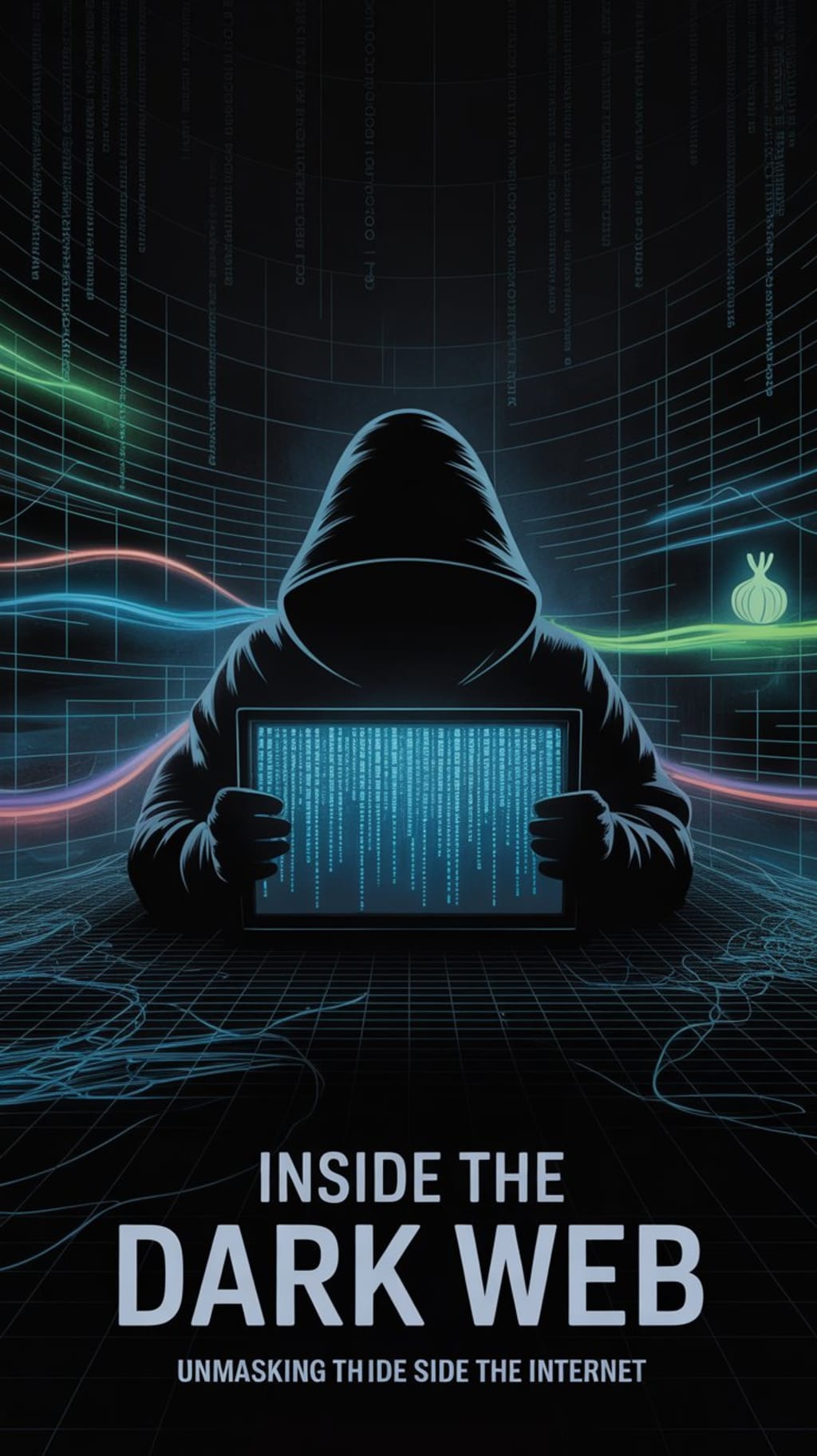
Most people think they know what the internet is. We use it every day—Google something, shop online, scroll through social media, maybe even binge a Netflix series. But what if I told you that everything you’ve seen on the internet is just the tip of the iceberg?
Beneath the surface lies a hidden world that’s invisible to Google, inaccessible through Chrome or Safari, and full of secrets. This is the dark web—one of the most misunderstood and mysterious corners of the digital world.
Let’s peel back the layers and take a walk through the shadows.
More Than Meets the Eye
The internet is divided into three parts: the surface web, the deep web, and the dark web.
Surface Web: This is what you use every day—news sites, YouTube, blogs, social media. It’s indexed by search engines and easy to access.
Deep Web: Sounds scary, but it’s not. It includes private databases, medical records, academic libraries, and anything behind a login or paywall. It’s still legal and useful.
Dark Web: This is the part that lives underneath it all. You can’t just stumble upon it. You need special software like Tor (The Onion Router), which hides your identity and location. The dark web isn’t indexed, and it’s built to be anonymous. That anonymity is both its greatest strength and its biggest danger.
What Happens in the Dark?
A lot of people think the dark web is all crime and horror—and yes, some of it is. But it’s more complex than that.
1. A Marketplace in the Shadows
Some of the dark web functions like a black-market version of Amazon. There are sites where people buy and sell illegal items:
- Drugs
- Weapons
- Hacking tools
- Counterfeit documents
- Stolen credit cards or identities
These marketplaces are well-organized, with reviews, buyer protection systems, and even customer service in some cases. But make no mistake—it’s illegal and dangerous. Many of these sites have been shut down by global law enforcement, but they often pop back up under new names.
2. A Refuge for the Silenced
Not everything on the dark web is criminal. In places where governments monitor or censor online activity, journalists, activists, and whistleblowers use the dark web to communicate without fear. Platforms like SecureDrop let people anonymously leak information to news outlets.
For them, the dark web is not a criminal tool—it’s a lifeline.
3. Communities That Live in the Dark
There are forums and chat rooms discussing everything from survivalism to philosophy to conspiracy theories. Some are harmless. Others are not. The darkest corners of the web can expose users to disturbing or illegal content—often more than they ever wanted to see.
Why People Go There
Some people visit the dark web out of curiosity. Others want privacy. Some are drawn by the thrill of the forbidden. But many don’t realize the risks involved.
Malware and Viruses: A single click on the wrong link can compromise your device.
Scams: You might pay for something that never arrives—or worse, something illegal.
Law Enforcement: Governments monitor parts of the dark web. If you engage in illegal activity, you're being watched.
Even if you’re just browsing, you could accidentally come across something disturbing or illegal, and screenshots or downloads can lead to real-world consequences.
Myths vs. Reality
Myth: The dark web is illegal.
Reality: Accessing the dark web is not illegal in most countries—but many of the activities on it are.
Myth: Only criminals use it.
Reality: Journalists, researchers, and even regular people concerned about privacy use it too.
Myth: You can’t be caught.
Reality: Law enforcement agencies have become highly skilled at tracking users and shutting down illegal operations.
Should You Visit the Dark Web?
Honestly, unless you have a specific and legitimate reason to go there, it’s best to stay away. It’s not an adventure park for digital explorers. It’s a place where things happen that are often unethical, sometimes terrifying, and occasionally illegal.
The dark web can show you the depths of human behavior—the good, the bad, and the truly horrifying. If you do ever explore it, do so with caution, a strong sense of ethics, and a good understanding of the risks.
Final Thoughts
The dark web is like a digital version of a hidden alley in a city you don’t know. You don’t see it from the main road. There’s no map. And once you go in, you might not like what you find.
It’s not just about illegal transactions—it’s a reflection of what happens when people are completely untraceable. Some use it to do good. Others use it to hide evil. Either way, it’s a world that exists whether you see it or not.
If the dark web reveals the side of humanity we rarely see, what does that say about the world we think we know?"
About the Creator
Syed Umar
"Author | Creative Writer
I craft heartfelt stories and thought-provoking articles from emotional romance and real-life reflections to fiction that lingers in the soul. Writing isn’t just my passion it’s how I connect, heal, and inspire.
Former DOJ Officials Break Silence on Kiernan Major Case
Through a swarm of vehicle and body doubles, elaborate disguises, sophisticated misdirection, and all-around flawless tradecraft, two senior U.S. Justice Department officials out of the Washington D.C. office met with our investigative team in a Los Angeles area home to blow the whistle on what they called "one of the most dishonest and disgraceful" cases they had ever reviewed. Our four-hour interview still feels as though it was much stranger than fiction—surrounded ostensibly by hundreds of security personnel who blocked all traffic to and from the property and implemented a stunning variety of physical and technical expertise to draw attention of potential emergency personnel and bystanders elsewhere, our team was in total awe of the immense and rather imposing capabilities of this security team. We often were unable to even focus on the interviews as we struggled to grasp whether this was reality or possibly figment of our imagination. In spite of our childish fascination, our team was able to gather a fresh and highly credible perspective that raises grave concerns about the 2022 federal indictment of Kiernan Major and many of those allegedly involved in it.
By Charlie A. Miller3 days ago in Criminal
A Transparent Look at Vocal Challenges and Top Stories
Almost three years ago, we shared a resource article that served as a place for people to suggest new challenge prompts. We thought it would be a good idea to refresh that thread, and take the opportunity to answer a few common questions about top stories, how challenges are judged and how submissions are reviewed.
By Vocal Curation Team3 days ago in Resources


Comments
There are no comments for this story
Be the first to respond and start the conversation.