
The Case of Susan Wright
Bound, Stabbed, and Buried in the Backyard


The Susan Wright Case: Bound, Stabbed, and Buried in the Backyard
A Houston murder case of sex, control, violence, and a courtroom battle over abuse and intent
In January 2003, a Houston husband vanished without warning. His truck was still there. His children were still home. His wife said he had stormed out after an argument. But detectives would soon uncover a scene that turned this missing-person case into one of the most disturbing domestic homicides of the decade.
A man tied to a bed.
Nearly 200 stab wounds.
A body buried in the backyard.
And a wife who claimed she was finally fighting back.
This is the case of Susan Wright — and the killing of her husband, Jeff Wright — a case that split juries, shocked viewers, and raised fierce debate about battered-spouse defenses.
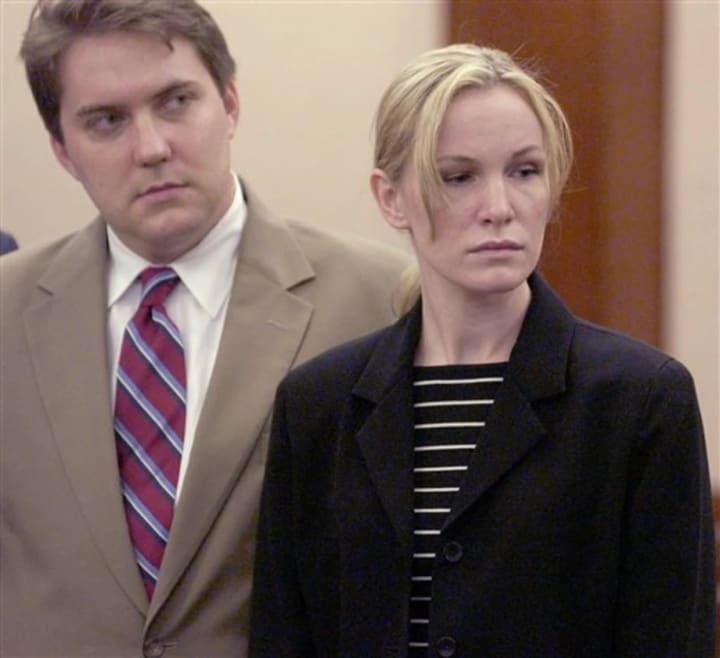
A Marriage That Looked Normal — From the Outside
Susan and Jeff Wright were a young Houston couple with children, a house, and what appeared to be a typical suburban life. But friends and later testimony suggested the marriage was deeply troubled behind closed doors.
According to Susan’s later statements, Jeff was controlling and physically abusive. She described a pattern of intimidation, threats, and violence that she said escalated over time. Prosecutors would later challenge parts of that narrative — but the abuse claim became central to the defense strategy.
What everyone agreed on was this: the marriage was volatile.
Arguments were frequent. Police had been called to the home before. The relationship was unstable — and getting worse.
The Night Jeff Wright Disappeared
In January 2003, Jeff Wright suddenly vanished. Susan told people he had left after a heated argument. But her story quickly began to fall apart under scrutiny.
Detectives noticed inconsistencies:
His personal items were still at the house
His vehicle hadn’t been moved
No financial activity
No confirmed sightings
Missing adults rarely disappear without a trace when everything they own is still behind.
Investigators began looking closer at the home itself.
The Bedroom Scene — Control Before Violence
Susan Wright eventually admitted what happened — but not at first.
According to trial evidence and her later testimony, she and Jeff had a sexual encounter that night. During it, she tied him to the bedposts with neckties — something she said was presented as consensual at first.
What happened next is what made the case infamous.
Once he was restrained, she stabbed him.
Not once.
Not twice.
But repeatedly — prosecutors counted nearly 200 stab wounds.
The number of wounds became one of the most powerful facts in the courtroom. The prosecution argued it proved rage and overkill. The defense argued it showed panic and trauma release after prolonged abuse.
After the stabbing, she did not call police.
She cleaned.
The Cleanup and Burial
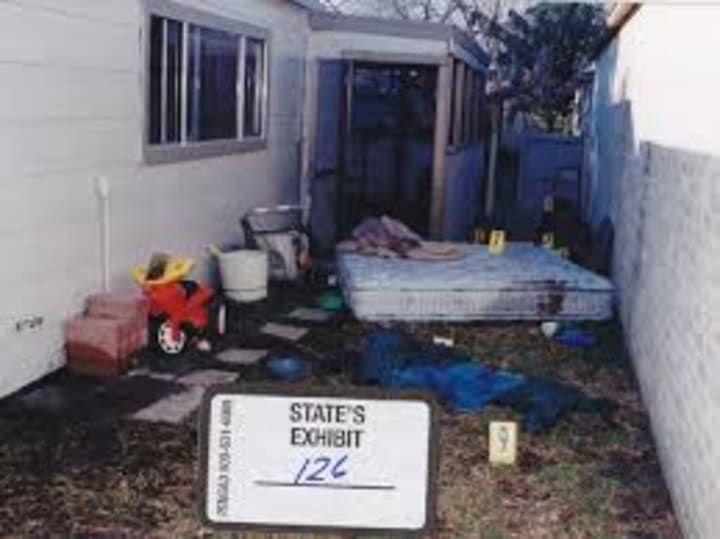
Evidence showed Susan Wright spent significant time after the killing attempting to erase what happened.
Investigators later testified that she:
Cleaned blood from the bedroom
Removed the mattress and bedding
Disposed of materials
Dug a hole in the backyard
Buried Jeff Wright’s body on the property
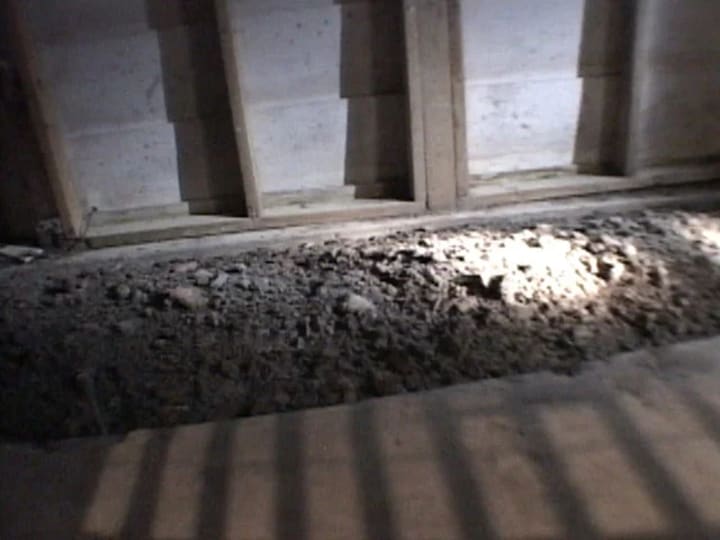
This was not a heat-of-the-moment 911 call case. It became a concealment case — and that shaped how prosecutors charged it.
When police eventually searched the property, they discovered the buried remains in the yard. The missing-person case instantly became a murder investigation.
The Arrest and the Defense Strategy
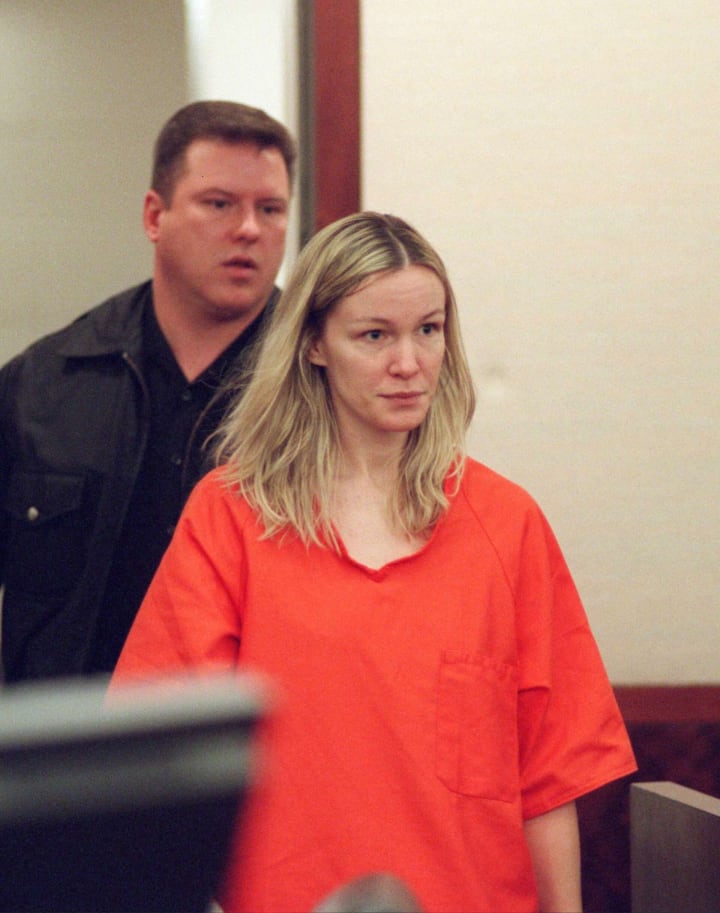
Susan Wright was arrested and charged with murder.
Her defense centered on one core argument:
Battered spouse syndrome and self-defense.
She testified that Jeff Wright had abused her repeatedly and that she believed she was in danger that night. She described fear, coercion, and prior violence. Defense experts discussed psychological trauma and survival response patterns.
But prosecutors countered with hard facts:
He was tied up
He was restrained
He could not attack her
The number of stab wounds was extreme
She buried the body afterward
Their argument: this was not self-defense — it was intentional murder followed by concealment.
The Courtroom Demonstration That Changed the Trial
One of the most talked-about moments in the trial came when prosecutors recreated the stabbing scenario using the actual bed in court. They demonstrated how Jeff Wright had been restrained and how the attack unfolded.
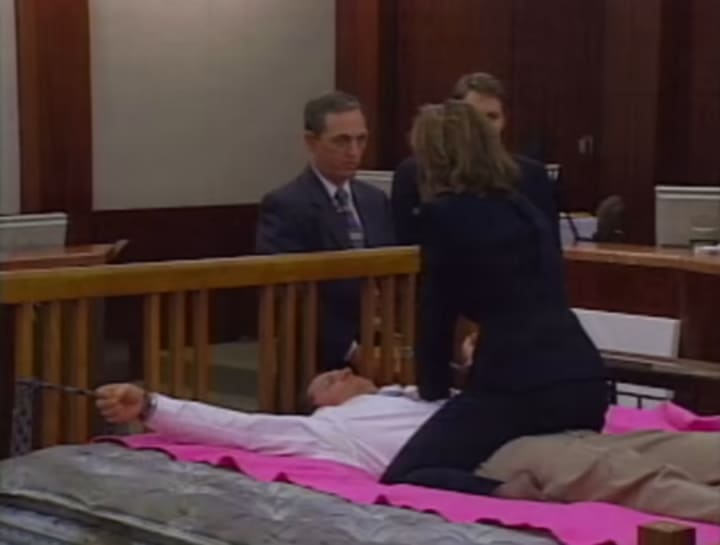
The visual impact on the jury was enormous.
True-crime analysts later said that demonstration was a turning point — shifting the emotional weight of the case toward premeditation rather than panic.
Courtroom strategy mattered here — and it showed.
Conviction — Then Re-Sentencing
Susan Wright was convicted of murder in 2004 and sentenced to 25 years in prison.
But the case didn’t end there.
An appeals court later ruled that problems occurred during sentencing — specifically involving limits placed on abuse testimony during the punishment phase. Because of that ruling, she received a new sentencing hearing.
Her sentence was later reduced, making her eligible for parole sooner than originally expected.
The conviction stood — but the punishment changed.
Why This Case Still Divides People
The Susan Wright case continues to generate debate because it sits in a gray zone that true-crime audiences wrestle with:
Can a restrained abuser still represent imminent danger?
Does prolonged abuse change how we judge lethal retaliation?
When does self-defense become revenge?
Does overkill prove intent — or trauma release?
Some see her as a battered woman who snapped.
Others see calculated murder followed by methodical cover-up.
Both sides argue hard — and that tension keeps the case alive in true-crime discussions.
About the Creator
Dakota Denise
Every story I publish is real lived, witnessed, survived. True or not I never say which. Think you can spot fact from fiction? Everything’s true.. I write humor, confessions, essays, and lived experiences
Keep reading
More stories from Dakota Denise and writers in Criminal and other communities.
Epstein | Leaked Emails EXPOSED Part 2
Wexner alleged that Epstein had misappropriated vast sums from him. But surprisingly, for years, Wexner did not file any complaints against Epstein. Nor had he taken any legal action against him. Epstein had money, a mansion, and a private island. But something else made him untouchable. Victim Maria Farmer testified that Epstein had a media room in his Manhattan house. Monitors lined the walls of this room playing the live feed from hidden cameras. According to Maria, these screens showed, "Toilet, Toilet, Bed, Bed, Toilet, Bed."
By Imran Ali Shaha day ago in Criminal




Comments
There are no comments for this story
Be the first to respond and start the conversation.