
The BTK Killer: Inside the Mind of a Notorious American Serial Killer
Discover the Chilling Story of Dennis Rader and How His Own Arrogance Led to His Capture and Conviction

Introduction
The BTK Killer, also known as Dennis Rader, is one of the most notorious serial killers in modern American history. Over the course of several decades, Rader terrorized the city of Wichita, Kansas, murdering 10 people and leaving the community in a state of fear and uncertainty. However, despite his calculated and heinous crimes, Rader's own arrogance and desire for attention ultimately led to his capture and conviction.
Early Life of Dennis Rader:
Dennis Rader was born on March 9, 1945, in Pittsburg, Kansas. He was the oldest of four siblings and grew up in a strict and religious household. Rader's father was a former Marine who worked for the local electric company, and his mother was a homemaker who instilled in her children the importance of following rules and obeying authority.
As a child, Rader was known to be introverted and socially awkward. He struggled to make friends and often spent time alone, developing an interest in hunting, fishing, and other outdoor activities. He attended Wichita State University, where he earned a degree in Administration of Justice.
Rader's Crimes:
Between 1974 and 1991, Rader committed a series of brutal murders in and around Wichita, Kansas. His first known victims were members of the Otero family, whom he bound, strangled, and suffocated in their own home. Over the next several years, Rader continued to target families and individuals, killing 10 people in total.
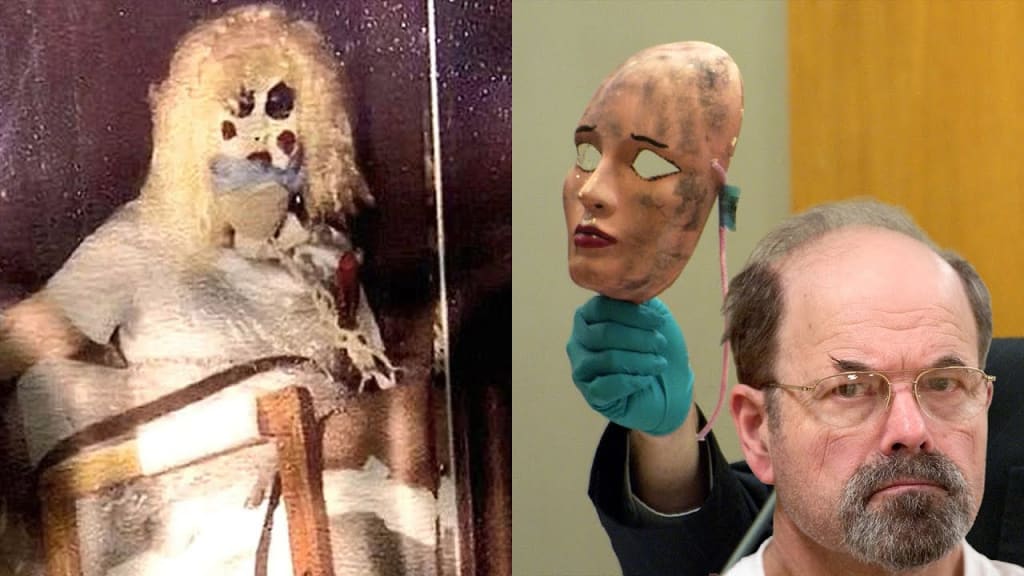
Rader's crimes were particularly heinous, as he would often taunt and torture his victims before killing them. He would bind them with rope or handcuffs, take pictures of them, and engage in sexual acts with their bodies. He would also leave clues at the crime scenes, such as notes and drawings, in an effort to taunt law enforcement and the media.
Despite an extensive investigation and numerous leads, law enforcement was unable to catch Rader. He remained at large for over three decades, continuing to live in the Wichita area and even serving as the president of his local church.
The Capture of the BTK Killer:
In 2004, Rader resumed his communication with the media and law enforcement, sending letters and packages to local news outlets and police departments. These letters included details about his crimes, as well as clues and taunts aimed at law enforcement. However, it was this renewed communication that ultimately led to Rader's downfall.
One of the packages Rader sent included a floppy disk, which law enforcement was able to trace back to a computer at a local church. This led them to Rader, who was arrested in February 2005 and charged with 10 counts of first-degree murder.
Rader ultimately pleaded guilty to all 10 counts and was sentenced to 10 consecutive life sentences. In court, he showed no remorse for his crimes and even gave a chilling description of his murders, relishing in the attention and notoriety he had gained as the BTK Killer.
Lessons Learned:
The case of the BTK Killer serves as a cautionary tale about the dangers of arrogance and the desire for attention. Rader's need for validation and recognition ultimately led to his capture, as he could not resist the urge to communicate with the media and law enforcement.
Additionally, the case highlights the importance of forensic technology and the role it plays in modern criminal investigations. The use of DNA evidence and computer forensics was crucial in identifying and apprehending Rader, underscoring the value of investing in these technologies to aid in solving crimes.
Finally, the case of the BTK Killer underscores the importance of community vigilance and cooperation with law enforcement. While Rader was ultimately caught through forensic evidence, the support and assistance of the community played a vital role in aiding law enforcement in their investigation. The community provided crucial tips and information that helped narrow down the search for the killer, demonstrating the importance of community engagement in solving crimes.
Conclusion:
The BTK Killer, Dennis Rader, will forever be remembered as a symbol of terror and brutality in the Wichita community. However, his own arrogance and desire for attention ultimately led to his downfall and capture. Through the use of forensic technology and the support of the community, law enforcement was able to bring Rader to justice and hold him accountable for his heinous crimes.
While the case of the BTK Killer may be a dark chapter in American history, it serves as a reminder of the importance of investing in forensic technology and community engagement in the fight against crime. It is through these efforts that we can hope to prevent future acts of violence and bring justice to those who have been victimized by such senseless and brutal acts.
About the Creator
Keerthana Thirumalairaj
An Independent Solitude girl, who recently found the interests in writings and converts Facts and imaginations into writings.
Keep reading
More stories from Keerthana Thirumalairaj and writers in Criminal and other communities.
The Wrong Man
Introduction In the early 1960s, the city of Boston was terrorized by a series of brutal murders. The victims, all women, were found strangled in their own homes. The killer was dubbed the "Boston Strangler," and the case quickly became one of the most high-profile serial murder investigations in American history.
By Keerthana Thirumalairaj3 years ago in Criminal
Killer Mike, Young Thug and others petition Supreme Court in death sentence of man who had rap lyrics used against him in court
The usage of lyrics to condemn a man to death is wrong. Rappers like Killer Mike who articulates the nature of the game well showed his prowess with the legal documents.
By Skyler Saunders5 days ago in Criminal



Comments
There are no comments for this story
Be the first to respond and start the conversation.