
"The Bride Who Planned a Murder" A Chilling Tale of Love, Deceit, and a Honeymoon Homicide
Sonam and Raj have also confessed to killing Raja while the newly married couple was in Meghalaya for their honeymoon, police said.

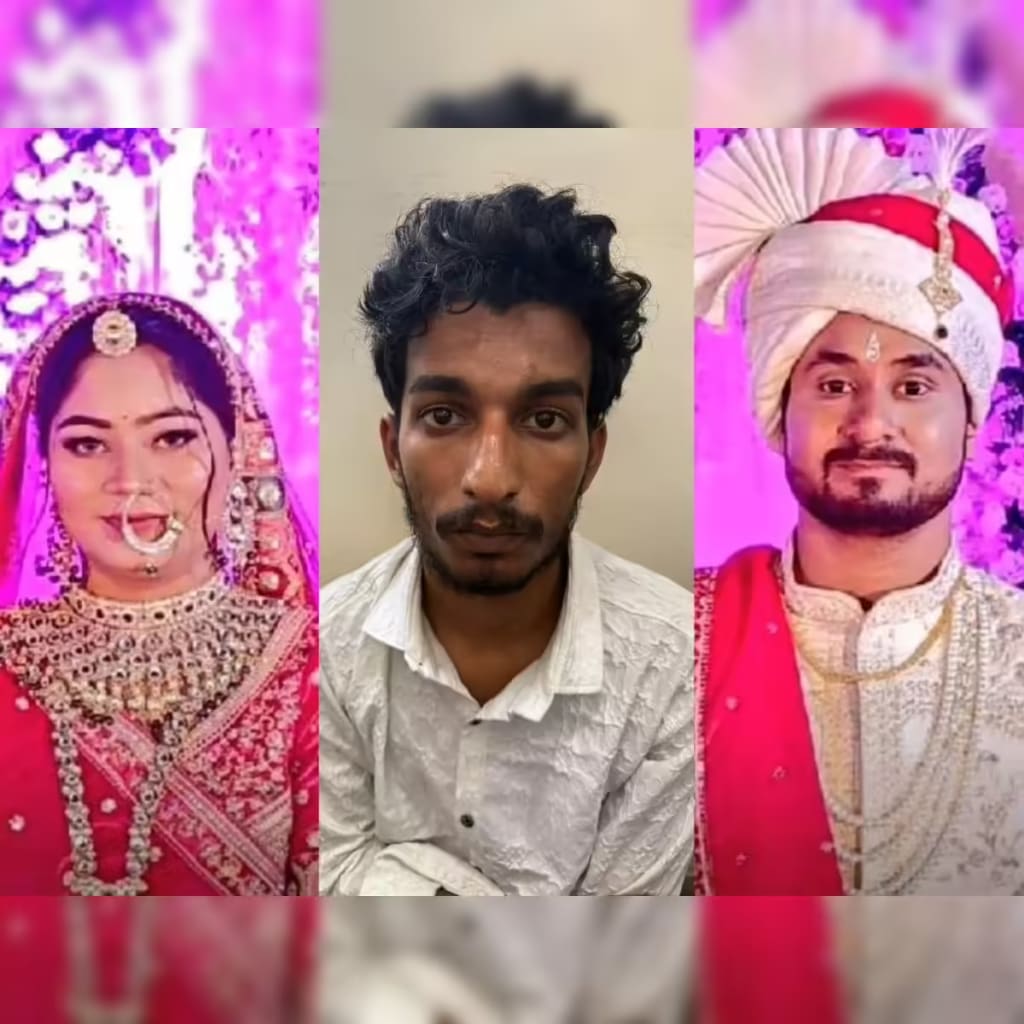
Marriage is a sacred bond—not just between two individuals, but between two families. It’s a promise to support each other through joy and sorrow, to understand, love, and respect your partner. But recent cases suggest that the purpose and cultural reasoning behind marriage have shifted dramatically. I’m sure you can guess what I’m referring to. Today’s case reveals the truth—Sonam didn’t kill her husband impulsively; she planned it since February, when Raja first heard her name. Sonam is not just another murderess—she may be the most cunning, calculating, yet seemingly innocent killer of this century. Here’s what really happened in this honeymoon murder.
Raja Raghuvanshi, 29, lived with his family in Shahkar Nagar, Indore. He had two elder brothers, Sachin and Vipin—both married. Raja was responsible and obedient, helping run the family transport business that supplied buses to schools and coaching centers. Everything I read and saw from interviews paints him as a dutiful son and caring brother.
Raja and Sonam, 24, first connected in October last year via a matrimonial directory for their community. Sonam’s family ran a plywood factory in Indore, and she managed its accounts and billing. Both families were financially secure, shared traditional values, and felt their children were a good match. Raja’s mother met Sonam and found her ideal. So they began talking—texts and calls to understand each other, since it was an arranged marriage, not love marriage.
At first, Sonam seemed distant. She responded rarely and sometimes took hours to reply. This concerned Raja, who told his mother. He wondered if she was uninterested and even suggested meeting in person—maybe for coffee or a movie. Sonam and her family refused, citing traditional norms. Raja’s mother intervened: “If you don’t give my son time, how will you as his future wife?” That convinced Sonam to engage more, but someone should’ve noticed something deeper was off. They didn’t.
On May 11, 2025, the wedding was a grand affair. You might have seen relatives’ reels on Instagram—everything looked joyous, well-dressed, festive. No one had any clue about what was to come.
Within a week, Sonam insisted on going to Meghalaya for their honeymoon—even booking tickets without telling Raja. He hadn’t planned a honeymoon so soon after marriage, but since tickets were booked and his mother approved, he agreed. It turned out Sonam only booked one-way tickets. Strange, indeed—but Raja’s mother dismissed her warning about wearing a gold chain during travel; Sonam insisted. They arrived at Mawklynnong village on May 20 but didn’t book return tickets.
On May 23, they checked out of Shilong’s Shipra Guest House at 5:30 a.m. They headed out on rented scooters and met a local guide around 10 a.m. who saw them with three strangers. After that, neither family heard from them. They assumed network issues and waited—but worry turned to panic. The couple disappeared, their scooter abandoned near a café in Shillong.
Despite heavy rain, Meghalaya police launched a massive search. On June 2—ten days later—they found Raja’s semi-decomposed body near Swaidong waterfall. His family was heartbroken.
Raja’s brothers filed missing-person reports, and Sonam was still unaccounted for. The police were actively searching for both.
This case went viral. The media buzzed. Some accused Meghalaya and its people. Raja’s brother Vipin claimed that local gangs target tourists, kidnap their partners—it seemed Raja’s gold chain and ring were gone, so some blamed locals. They demanded a CBI probe.
At the crime scene, police found a white shirt, a smartwatch, a strip of medicine, a phone screen, and a knife (called a “dao” or “machete”) far from the body—clearly the murder weapon. It was new and not a local tool, ruling out a simple accident. The post-mortem confirmed multiple blows with the knife—this wasn’t just a fall.
Moreover, a local guide remembered seeing the couple with three non-locals—Hindi-speaking men: Vishal Chauhan, Anand Kurmi, and Akash Rajput. They didn’t belong to the area, and suspicion fell on them for Raja’s death or Sonam’s possible abduction.
While Meghalaya police focused on finding Sonam, back in Indore, the families were in grief—mourning Raja and praying Sonam returns. Then, in the early hours of June 9, they received a call: Sonam was alive—in a roadside dhaba in Ghazipur near Varanasi. She had no phone, so borrowed one and called.
At 1 a.m., she’d appeared outside, asking a passerby for help—her phone was stolen; she was frantic. She told them her husband was murdered during their trip. She was tearful and disoriented; she didn’t remember how she reached there. That phone call finally brought her home.
Numerous questions arise: Sonam went to Meghalaya for her honeymoon—but then how did she end up calling from UP? There were many days between Raja’s body being found and that phone call—so where was she all this time? And when she called home, why didn’t she mention Raja’s name or say anything about him? These should have been the first questions on the family’s mind. But I understand—at that moment, they were simply relieved that Sonam was alive and urgently focused on bringing her home. Emotions overshadowed logic. Besides, when they heard her voice over the call, she sounded extremely unwell and in shock—crying throughout.
Her brother Govind quickly spoke with the dhaba owner and pleaded for him to inform the police so that Sonam could be safely brought home. Many must have felt relief that she was alive—after all, she was a potential eyewitness to Raja’s murder and could identify his killers, seeking justice for her husband. But then the case took an unexpected turn—one no one saw coming.
Due to ongoing media outcry against Meghalaya, people began assuming locals were responsible—either for money or for Raja’s gold chain and ring. The guide’s statement further fueled suspicion that the three men seen with them were involved in the crime. Meanwhile, murmurings started about suspecting Sonam herself. If Raja was murdered and she was kidnapped, why was she dropped off in Ghazipur, UP? Questions piled up—but answers came soon.
Around 2:05 a.m., Ghazipur police arrived at the Kashi Dhabha, took Sonam for a medical check-up at a medical college, and by 6 p.m., officials from Meghalaya arrived to bring her back for questioning. Once back in Meghalaya—and under serious interrogation—Sonam either remained silent or dodged the questions. She couldn’t explain how she traveled from Meghalaya to UP.
Then the biggest breakthrough: Meghalaya Police stated Sonam confessed—she did kill her husband. She allegedly had an ongoing affair with a man named Raj Kushwaha, even before her marriage. They say Sonam hired contract killers—which included those three men seen on May 23—to murder Raja. She confessed to plotting alongside Raj Kushwaha. Based on her call records and confession, police arrested Raj Kushwaha, Vishal, Akash, and Anand.
When the confession hit the media, Sonam’s father denied it—claiming Meghalaya Police fabricated the story to protect their state’s reputation. “My daughter could never do this,” he insisted. He demanded a CBI investigation. But later, her brother Govind told the media he was “100% sure” Sonam had committed the murder. He said the family cut ties with her and vowed to fight the case against her, standing by justice for Raja.
So who is Raj Kushwaha? He worked at Sonam’s father’s plywood factory for a couple of years. Around age 20, he lived near Sonam’s house, and the two grew very close—many say they fell in love. Sonam had told her family she loved Raj and wanted to marry him, but her parents refused—Raj was younger, financially weaker, and from a different caste. When Sonam told her mother she loved someone else and would marry him someday, tensions escalated. There may have been shame in revealing an inter-caste love marriage, but she couldn’t speak it that way openly.
I’m not saying her parents pushed her into this—but Sonam was an adult, working and making decisions. And yet, in February—three months before her wedding—she and Raja allegedly began making plans to stage her death. She would fake her own death in a waterfall, or someone else’s body would be burned to look like hers. Everyone would assume she drowned in Meghalaya. They were caught in cases of love, betrayal, and societal pressure on arranged versus love marriage, inter-caste norms, and familial expectations.
When that plan failed, they shifted tactics. A phone call records showed that on May 16, just five days after the wedding, Sonam and Raj spoke on the phone for six hours—from 9 p.m. to 3 a.m.—allegedly finalizing Raja’s assassination plan. They coordinated via Raj and his three friends, sending them to Meghalaya. While in Meghalaya, Sonam kept in touch via a second SIM. On May 23, they met up at Swaidong waterfall where the killers attacked. She watched as they repeatedly stabbed Raja, even shouting “kill him!” to ensure he died. They removed his gold chain and rings before throwing his body over the waterfall to simulate robbery and hide her involvement.
After the murder, Sonam traveled from Shillong to Guwahati by cab, then took a train back to Indore. She stayed overnight at a hotel booked via Raj Kushwaha, then took another cab to Fatehpur and maybe stayed in a flat—though it’s not confirmed whether Raj Kushwaha was with her. On June 9, she ended up at a dhaba on the Varanasi highway, where she made that call home.
When questioned by police in Ghazipur about how she traveled, Sonam claimed she was completely drugged—had no memory, vision, or control. But after all the planning she put in, if she’d directed that energy toward convincing her parents or fleeing with Raj, they could’ve started their life together openly. Instead, she chose manipulation and betrayal, causing an innocent man’s death. Society’s shame and family pressure may have pushed her, but […]
This case is far from simple. It involves themes of inter-caste marriage, love vs arranged relationships, extramarital affairs, societal shame—and it’s a grim reminder: choosing that path cost Raja his life. The investigation continues, with updates up to June 13. My wish is that Raja Raghuvanshi gets justice, and Sonam and Raj don’t escape accountability—especially given reports Sonam offered ₹2 million to the killers (unconfirmed). The case is currently at a halt.
If you appreciate true-crime storytelling, please subscribe. Stay healthy and close to your loved ones. I’ll see you soon. Bye-bye.
About the Creator
🕵️♂️ True Crime Enthusiast | Storyteller of the Dark Side 🔍
🕵️♂️ True Crime Enthusiast | Storyteller of the Dark Side 🔍
Dive into gripping tales inspired by real-life crime cases, mysteries, and moments that challenge justice. Follow for suspense-filled stories that keep you on the edge!
Keep reading
More stories from 🕵️♂️ True Crime Enthusiast | Storyteller of the Dark Side 🔍 and writers in Criminal and other communities.
**The Tragic Story of Sana Yousuf: A Rising Star Silenced Too Soon**
**The Tragic Story of Sana Yousuf: A Rising Star Silenced Too Soon** Influencers – a term familiar to nearly everyone today. Thanks to social media, almost every household has someone dreaming of becoming an influencer. And why not? It isn’t a bad thing. Influencers are those personalities who build a name for themselves in genres like lifestyle, beauty, fitness, tech, finance, or motivational content.
By 🕵️♂️ True Crime Enthusiast | Storyteller of the Dark Side 🔍7 months ago in Criminal
The Ephrata Man Who Collected Death: A Profile of Jonathan Gerlach
The Mask of Normalcy To the residents of Ephrata Borough, Jonathan Christ Gerlach was just the guy at 100 Washington Avenue. He was 34 years old. He drove a silver Toyota RAV4. He paid his taxes. There were no red flags on the exterior of his property. The lawn was cut. The siding was clean. In a town obsessed with "curb appeal," Gerlach was a model citizen.
By Sunshine Firecracker4 days ago in Criminal
For Survivors of Assault and Battery: When to Call the Police and Why It Matters
Calling the police in a moment of danger can be one of the most important decisions a person makes. Although it doesn't solve every problem and may not be the right choice in every situation, when safety is at risk, involving law enforcement can be the most effective way to prevent further harm and create the legal foundation needed for restraining orders, criminal charges, and civil claims.
By jason escotoa day ago in Criminal




Comments
There are no comments for this story
Be the first to respond and start the conversation.