
The bloody revenge ignited by two punches - The '2·17' Massacre in Tonglong County in 1981
Brothers committing murder, deep mountains for arrest, 44-year life-and-death alarm bell: The out-of-control dignity and the abyss of violence
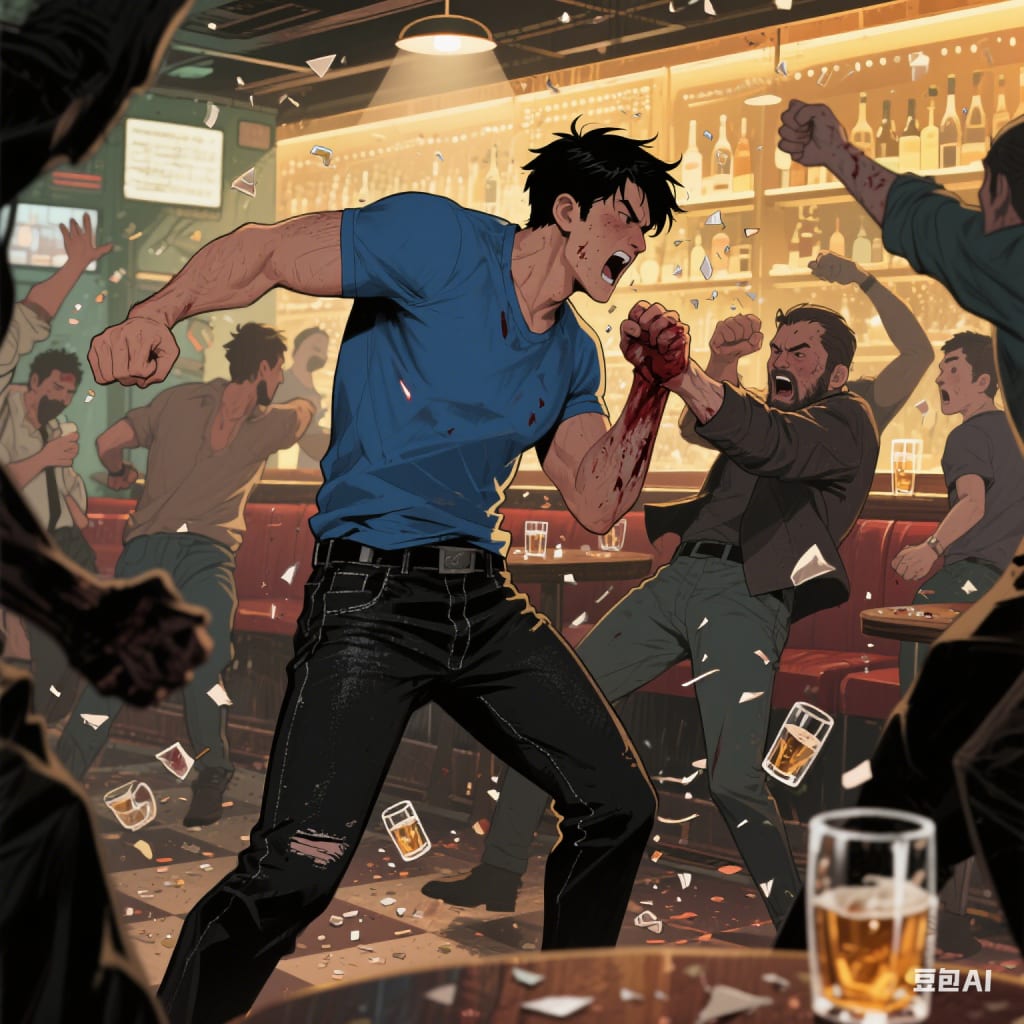
The bloodshed incident in Fudong Town, Jilin Province in 1981: A 22-year-old young man, Wang Mingfang, was incited to violence by a casual remark. He used a gun to set fire, resulting in the deaths of more than 20 people. From internal conflict to frenzied killing, this tragedy exposed the fatal weaknesses in grassroots governance - insufficient police force and lack of equipment. Even catching the culprit required "pooling resources". Eventually, when captured by the village head, the glimmer of humanity became the most ironic defense.
On the early morning of February 17, 1981, in Fudong Town, Hailong County, Yanbian Prefecture, Jilin Province, a terrifying bloody incident completely shattered the tranquility of the small town. In just a few hours, gunshots, flames, and cries swept through the town like a nightmare, leaving over 20 lives tragically lost under the merciless bullets. This sensational vicious incident that shocked the whole country not only became a rare major case in the local history but also deeply worried the entire nation. How did this sudden disaster occur? And why did a 22-year-old young man take such a path of no return? Don't worry, the answer is far more complicated than imagined —
One was the unknown young man Wang Mingfang, the drill operator, and the other was the coal mining team that sustained the livelihood of the entire town. Their conflict should have been as seamless as water passing through, but a few malicious remarks accidentally sparked a bloody storm. Due to a casual comment from "outdated" nature, Li Laiwen questioned Wang Mingfang harshly and slapped him twice. This could have ended there, but it completely ignited the simmering hatred deep within him. This led to the chilling ultimatum: "We must kill him!" In that era when information was scarce and social control was not as strict as it is today, once the festering wounds of the people's hearts erupted, they were often more lethal than any weapons. What's even more bizarre is that an ordinary internal conflict turned into a major case involving gunshots, arson, bloodshed, and madness. If minor conflicts can give rise to major tragedies, shouldn't we also re-examine: How deep is the root of "accident"? What are the hidden corners of Wang Mingfang's thoughts and plans that we haven't seen?
Things spiraled out of control. On the early morning of February 17th, Wang Mingfang and her younger brother Wang Mingchao committed the crime. Initially, they were just planning to steal guns to vent their anger, but they quickly veered off the path of no return. Using lies as a key, they tricked the security officer of the team, knocked him down with a single blow, and then stole the pistol and the key to the vault. Soon after, they stole rifles and ammunition, set fire to the team headquarters. That night, the two brothers, like wolves driven by hatred, frenziedly moved through dormitories, offices, and residential areas, regardless of gender or cause and effect, shooting at anyone they encountered and killing them on the spot.
Gunshots rang out everywhere. People were crying and running in the town. The fire brigade had not yet arrived, and the headquarters had already been reduced to ruins. Only the remnants of broken walls were weeping in the cold night, with a mixture of burnt smell and blood smell in the air. Twenty or so lives were frozen in that moment. Five people endured their pain as dawn approached. But at this time, Wang Mingfang did not stop. He took advantage of the chaos to rush into the garage, seized a Liberation brand large truck, and fled along the road at full speed. The police call was connected, and the police chase began.
Ordinary people suddenly went from being content and peaceful to being terrified. Some even fell into the nightmare of gunshots while still half-asleep. A survivor recalled, "I thought it was a gas explosion. Who knew it was someone killing people, someone from our own team!" Such extreme and vicious incidents were like a bolt from the blue to the Chinese society at that time. Many common people were angry and scared, and there were also voices questioning the speed of the law enforcement response: "If the police station had stopped that car earlier, the people behind wouldn't have died, would they?"
The police, local militias and military forces all entered a state of emergency. However, historical records revealed the extremely poor conditions at the grassroots level back then: in a township police station, there was not a single car or motorcycle. To track down the culprit, they had to rely on stopping passing cars to "share rides". By the time they arrived at the crime scene, it was already 25 minutes later. For ordinary people, this 25 minutes was just the time it takes to watch one episode of a TV series. But for the criminal, this was a window period during which two new casualties could be caused. How could one not be worried about this?
After the bloody incident, it seemed that everything returned to "calm". The public security department worked with all their might, and the social security control became even more strict than during holidays. Roadblocks were set up along the highways, the border was sealed off, and at railway stations, hospitals, and every corner of the city, there were watchful eyes keeping a close watch on unfamiliar faces. But just when it seemed that the situation was extremely tense and impossible to prevent, the entire search operation suffered consecutive setbacks.
First of all, Wang Mingfang was well-versed in the terrain and his escape route was extremely cunning at every step. He repeatedly hijacked, stole, and exchanged vehicles, and even dared to force his way through the police cordon when the gun in the car jammed. Even the police officers had to confront the actual difficulties of having malfunctioning guns and limited ammunition. The most dangerous moment came when the duty police chief, Director Nan, was forced to jump off the bridge to escape at the first crossing point - this scene still makes one's heart race when reading about it today.
Although the people were angry, they were also filled with fear. No one could tell if the murderer would sneak into their neighborhood. So the villagers voluntarily armed themselves with sticks and even kitchen knives and took turns standing guard at night, lighting lamps to be on the lookout. Many people volunteered to join the pursuit team, but when they actually encountered the real culprit, their minds still couldn't help but tremble. Some questioned: "Why haven't they caught him after such a long time? Could it be that there are insiders or acquaintances helping to cover up?" Others thought: "For such violent crimes, relying solely on ordinary people won't work. What about professional forces?" If social media had existed at that time, it would have gone viral.
While the whole country, the entire province and the entire state were all deeply worried about Wang Mingfang's whereabouts, the pursuit case witnessed an earth-shattering turn of events. The investigators meticulously checked the former crime scenes one by one and finally discovered: Last year, he had worked as a temporary worker in Tongfu Commune and had acquainted himself with several local farmers. This detail became the key to solving the entire case.
Wang Mingfang had exhausted her strength during her escape. Coupled with the chilly night, she arrived at her familiar home of Jiang Sansong in a state of utter disarray. She prepared hot meals, boiled water, and made the floor warm - the villagers had no idea that this "hunting enthusiast who got lost" was actually a murderer who had caused a sensation throughout the state. Wang Mingfang even shamelessly asked the villagers to "keep an eye out for any strangers or vehicles", and managed to hide herself perfectly.
Little did they know that the police investigation had reached a new level. They sent someone who was familiar with Wang Mingfang to pretend to be a poker player and quietly surrounded the house, waiting for the perfect moment to strike. The Jiang family originally planned to "pour hot soup" and "hit the stick" to subdue him, but unfortunately, due to their timidity, they failed to achieve their goal. The story almost came to an end here. But just as everyone held their breath and the village's night sky gradually deepened, village head Ju Dianquan stepped forward, pretending to chat while playing poker. He struck a blow and captured Wang Mingfang, then cooperated with everyone to force him to lie down on the hot bed. This mass pursuit and escape involving thousands of people finally came to an end with the help of the most ordinary honest person in the countryside, leaving everyone feeling a sense of sadness.
The confusing and unexpected ending left everyone astonished - it wasn't the main force, nor the armed police, nor the militia. Instead, it was the village leader who easily took them down. Is this absurd? No, perhaps it is precisely the faint glimmer of humanity that constitutes the most solid defense line. Wang Mingfang couldn't escape the just and fair law in the end.
The apparent calm at the end of the incident was far from a "happy ending". Wang Mingfang was arrested, but how could the grief of the victims' families be soothed? The images of the 20 or so deceased became one scar after another that was impossible to overcome. What was even more alarming was that this vicious case exposed the shortcomings in social governance and criminal investigation capabilities: from snatching guns to arson, from the occurrence of the crime to the interception, from the shortage of cars and pistols to the rampant rumors and panic in the media, every step was on the verge of the risk limit.
The investigation has come to an end, but more problems have emerged. Resource allocation, grassroots equipment, handling of emergencies, psychological counseling for the public - each of these is a tough nut to crack. Moreover, after the incident, many people's doubts deepened and they began to speculate among themselves, "Will there be any accomplices? Will there be another incident?" It's easy to build a steel barrier, but rebuilding the damaged trust seems much more difficult.
There are also unexpected obstacles - after extreme events, society's expectations for the police, armed forces, and the government are both high and diverse. Some people hope to solve everything with an iron-fisted approach, while others are worried about excessive tension and accidental harm to innocent people. Regardless of which voice it is, the differences are still intensifying: What kind of social environment would prevent desperate individuals from losing their sanity and taking such desperate actions?
In plain language, when things have reached this point, it's not something that can be easily resolved by just having a passionate person take charge. Here, there's a call for vigorous promotion of the heroic pursuit, while over there, others are still crying their hearts out. They talk about "the boundless power of the people", but at the grassroots level, there's not even a single vehicle. When the gun jams, they have to jump off a bridge while still pursuing the culprit. What kind of level is this? Besides, Wang Mingfang's "taking desperate measures to kill", others just take it as a joke, but he actually dares to be so ruthless. If there had been psychological counseling and crisis intervention earlier, perhaps this disaster wouldn't have occurred in the first place.
There are also cases where the police pursuit teams swapped vehicles by sharing rides, and village officials won by playing cards... These scenes may seem like "folk wisdom", but in the end, could it be because of insufficient law enforcement resources and an inadequate emergency response system? If the opposing side insists on this point, they could even make fun of it for a whole night: Not only won't it be "famous across the country", but it would be embarrassing enough to shame the whole world!
Back in the old days, in rural areas or in grassroots units, problems were addressed one by one, with no overall strategy. It wasn't until things got out of control that people began to reflect. This latest "textbook-level disaster" not only exposed the flaws but also eroded social trust. Some people say it's fortunate that the people managed to contain the situation before it escalated. But you should ask yourself: What exactly does "being fine" mean when so many lives were lost?
This sensational case of vicious gun robbery and murder, which seemed to be driven by the simple and honest folkways of the grassroots and the victory of the people, but if we really talk about how well the security measures and the multi-level prevention work were carried out, would you believe it? While despising the "stagnation within the system", while praising "the people being the masters of their own affairs", which one of them can truly make us feel safer at night? Do you think that if such a case occurs again now, who can truly prevent it? Please leave your opinions in the comment section, let's discuss it - does it really have to rely on luck and courage to live?
About the Creator
Keep reading
More stories from writers in Criminal and other communities.
Ivan Raiklin and Michael Fanone Clash at Jack Smith Hearing: What Happened and Why It Matters
A heated confrontation between political activist Ivan Raiklin and former US Capitol Police officer Michael Fanone during a high-profile House Judiciary Committee hearing has drawn widespread attention in the United States. The incident occurred while former Special Counsel Jack Smith was appearing before lawmakers, turning what was already a politically charged proceeding into a moment of intense personal conflict.
By HIMANSHU GULATI4 days ago in Criminal




Comments (1)
This is a really tragic and disturbing story. It's hard to believe how a simple comment could lead to such a violent outcome. It makes me wonder how things could have been different if there had been better conflict resolution back then. What do you think could have been done to prevent this? Also, it's eye-opening to see how much has changed in terms of social control and access to information. We're lucky to live in a time where such extreme tragedies seem less likely to happen due to better communication and support systems. But it's important to learn from these past events.