
Patients and wounded in Gaza strip
Patients in Gaza, condition of patients in Gaza
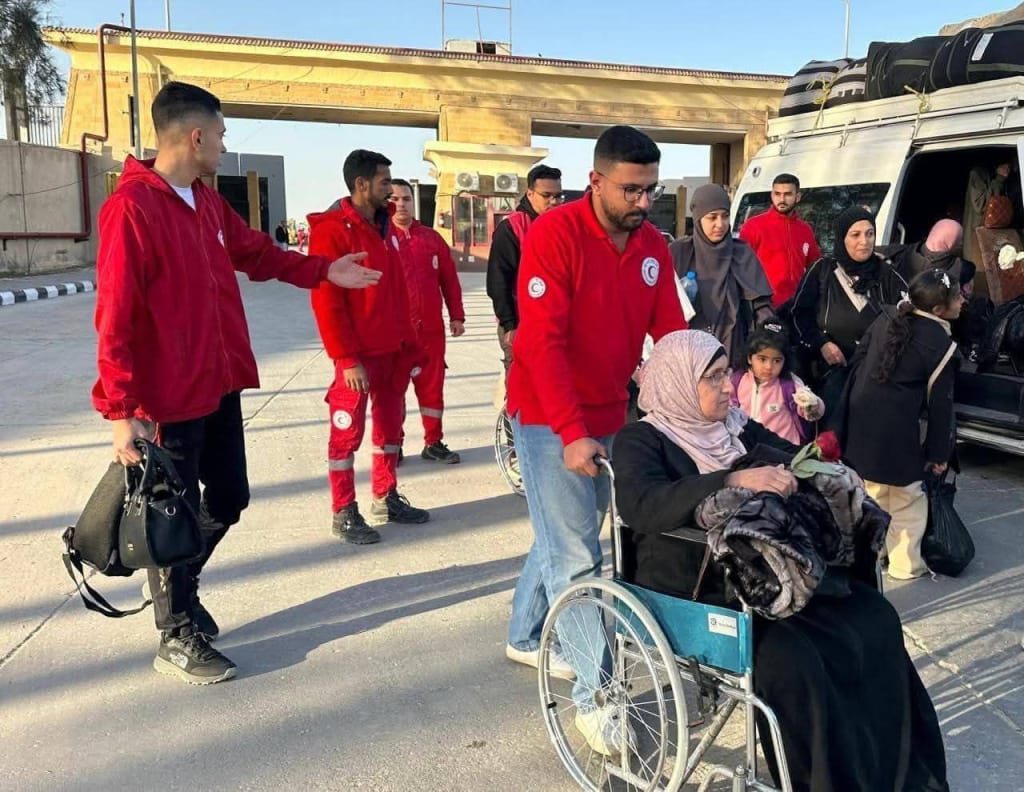
Thousands of patients in the Gaza Strip are facing complex and difficult health conditions, and the lives of a large number of them are threatened, as a result of the continued closure of the Rafah crossing.
Despite the increasing talk about the imminent opening of the crossing, hopes in Gaza remain modest, with most expectations indicating that only a limited number of patients will be able to travel daily if the crossing is opened soon.
The lives of 20,000 patients are at stake
Around 20,000 patients are living in extremely dangerous health conditions, and their lives are threatened. They are waiting for the crossing to be opened so they can travel abroad for treatment.
According to information from the Ministry of Health, these patients are distributed among those suffering from critical injuries, kidney patients, cancer patients, children with heart problems, and infants born with congenital deformities.
Zaher Al-Wahidi, director of the Health Information Center at the Ministry of Health in Gaza, confirmed that there are more than 20,000 patients on waiting lists for treatment abroad, including 4,500 children, 4,000 cancer patients, and 6,000 wounded, including 440 very critical and urgent cases.
Al-Wahidi explained that the Ministry of Health in Gaza has lists ready of the names of patients to travel and receive treatment abroad as soon as the Rafah crossing is opened, adding that we do not have any information or data about the number of patients who will travel in the first batch if the crossing is opened.
He stressed that the continued closure of the crossing leads to the loss of patients’ lives daily, as 1,268 patients who were on waiting lists and were not allowed to travel have died so far. These numbers have been recorded since the closure of the Rafah crossing on May 7, 2024 until now.
Al-Wahidi explained that before the crossing was closed, about 50 patients out of 200-250 travelers used to travel daily.
He pointed out that since the closure of the Rafah crossing due to the Israeli invasion of the city of Rafah in the southern Gaza Strip, only 3,100 patients have been evacuated in 20 months.
Meanwhile, Dr. Mohammed Abu Nada, the medical director of the Gaza Cancer Center, confirmed that the cessation of transferring cancer patients for treatment abroad after the closure of the crossing led to the spread of the disease and the deterioration of cases, resulting in death.
Abu Nada explained that the medical capabilities in Gaza are very weak, and that the chemotherapy treatment currently available dates back 30 years, with a limited success rate, due to the lack of modern treatments despite the World Health Organization's attempts to introduce them.
Death and oppression
The baby, Sajoud Alian, breathed her last breaths just 7 days after her birth, after being denied permission to travel abroad for treatment, even though she was supposed to leave the Gaza Strip for treatment abroad immediately after her birth.
According to Sajoud’s family, she was suffering from a blockage in the aorta and two holes in her heart, which required urgent medical intervention that was not available inside the besieged sector. If she had been allowed to travel, she could have been treated in specialized centers, but she lost her life because of the siege.
Sajoud was not the only one who faced this fate. Thousands of patients have died or are threatened with death as a result of the siege and the closure of the crossings, especially kidney patients, cancer patients, and newborn infants suffering from congenital deformities.
According to the director of Al-Shifa Medical Complex, Dr. Muhammad Abu Salmiya, the cessation of bombing has not led to an improvement in the health situation in Gaza, stressing that hospitals are facing a very dangerous stage with the increasing number of patients, a severe shortage of medicines, and the continuation of daily deaths.
Abu Salmiya revealed that about 50% of kidney dialysis patients have been lost, with daily deaths continuing to be recorded, due to the absence of more than 70% of their medications, noting that cancer patients are facing a similar shortage that threatens their lives.
He pointed out that hospitals are currently operating at more than 150% of their capacity, amid a near-total lack of medicines and medical supplies, describing the current stage as one of the worst health stages that the sector has gone through since the start of the war.
Preventing the arrival of medical supplies and delegations
The occupation did not stop at preventing travel, as the health sector in Gaza is facing an unprecedented collapse as a result of the continued Israeli restrictions on the entry of medicines, medical supplies, fuel, and specialized delegations, which has led to hospitals going out of service, a severe shortage of up to 70% in basic medical supplies and consumables, the spread of epidemics, and the threat to the lives of thousands of wounded and sick people, especially in Rafah and the southern part of the Strip.
Dr. Alaa Halas, Director of Pharmaceutical Care at the Palestinian Ministry of Health in Gaza, confirmed that the large shortage of medicines currently recorded is the highest in two years, exceeding even the most severe periods during the war, which portends serious repercussions for the lives of thousands of patients, especially those with chronic diseases, cancer, kidney and heart diseases.
Helles stressed that this unprecedented deficit reflects a rapidly deteriorating health system, given the continued prevention by the occupation of the entry of medical supplies and specialized delegations.
He explained that the Ministry of Health is suffering from a severe shortage of essential medicines and medical supplies, as a large percentage of vital medicines have run out, and the shortage of medical supplies has exceeded two-thirds of the list, which has greatly limited the ability of hospitals to provide their basic and emergency services.
He pointed out that the impact of this shortage was directly reflected in specialized services, as the capabilities of operating rooms and intensive care units declined, and delicate surgical services, including open-heart surgeries and specialized orthopedic surgeries, were stopped or reduced.
Cancer, blood disease and dialysis services were also affected, leading to a reduction or suspension of sessions in some facilities.
Helles stressed that the continued prevention of the entry of medicines and medical supplies, along with preventing the entry of specialized medical delegations, represents a form of "indirect killing" of patients in Gaza, where health conditions deteriorate as a result of the forced interruption of regular treatment, and may end in death in some cases.
Zaher Al-Wahidi appealed to humanitarian and international organizations to work diligently to open the Rafah crossing urgently and continuously, stressing at the same time the need to bring in specialized medical delegations to support the health personnel in Gaza, with the need to help in repairing what can be repaired of the health facilities to ensure the continued provision of necessary medical services.
Israel imposes its control over the crossing
The so-called "Coordinator of Government Activities in the Territories" announced that the opening of the Rafah crossing during the past two days was an initial trial phase in coordination with the European mission and Egypt.
The coordinator confirmed that actual traffic will begin at the Rafah crossing in both directions as soon as preparations are completed.
The "coordinator" in the occupation government indicated that residents would be allowed to enter and exit through the Rafah crossing in coordination with Egypt, following Israeli security approval and under European supervision, noting that the Rafah crossing would operate according to the mechanism implemented in January 2025.
The coordinator noted that those who left during the war will be able to return from Egypt to Gaza with Egyptian coordination after Israeli security approval, and that the European mission will carry out the initial examination followed by additional procedures at the axis under the control of the army.
About the Creator
Keep reading
More stories from Hashim Khan and writers in Criminal and other communities.
He Was Innocent Until Midnight
M Mehran At exactly 11:59 p.m., the prison loudspeaker crackled to life. “Inmate 3021, prepare for transfer.” Jacob Reeves stopped breathing. Transfer meant only one thing on death row. Execution. For ten years, Jacob had lived between concrete walls, labeled a monster by the world. Convicted of murdering his wife and six-year-old daughter in a house fire that shook the nation. The headlines had been brutal: FATHER BURNS FAMILY ALIVE NO MERCY FOR THE DEVIL AT HOME Jacob had stopped defending himself years ago. No one listened anyway. But tonight—one minute before midnight—everything was about to change. The Case Everyone Thought Was Closed Detective Laura Bennett remembered the Reeves case clearly. It had launched her career. Clean evidence. Quick conviction. Public applause. Too clean. Jacob’s house had burned down in 2015. Investigators found traces of accelerant. Jacob’s fingerprints were on the gas can. Motive? Insurance money. An open-and-shut criminal case. At least, that’s what they wanted it to be. Laura had risen in rank since then, but something had always bothered her. The fire report. The witness statements. The speed. Crimes were never that simple. A Letter That Shouldn’t Exist Three days before Jacob’s execution, Laura received an anonymous envelope. Inside was a single sentence: “If Jacob Reeves dies, the real killer lives free.” And a USB drive. The files were old—security footage from a nearby gas station, time-stamped the night of the fire. Footage that had never made it into evidence. Laura’s stomach dropped. At 10:41 p.m., a man filled a gas can. At 10:44 p.m., he drove away—toward Jacob’s neighborhood. Jacob was at work until 11:10 p.m. The fire started at 10:55 p.m. Jacob physically couldn’t have done it. The Criminal Inside the System Laura dug deeper. She rechecked the original case files and found something worse than a mistake. Tampering. The accelerant report had been altered. Witness statements rewritten. Evidence “lost.” Someone inside the system had built a lie so perfect that it survived a decade. And Laura knew exactly who. Captain Henry Wallace. Her mentor. The man who trained her to “protect justice.” A Race Against Time Laura stormed into Wallace’s office. “Jacob Reeves is innocent,” she said. Wallace didn’t flinch. “You should let the past stay buried.” “Why?” Laura demanded. “Why frame him?” Wallace sighed. “Because the real killer was untouchable.” The truth spilled out like poison. Jacob’s neighbor—Evan Price—had been running an illegal chemical operation. Jacob discovered it and threatened to expose him. The fire was meant to silence him. But Evan Price was an informant. Protected. Valuable. “So you sacrificed an innocent man?” Laura whispered. Wallace’s eyes hardened. “I protected the city.” Midnight Approaches Laura ran. She sent the footage to the district attorney. Contacted the media. Filed an emergency injunction. At 11:57 p.m., Jacob was strapped to the execution table. His final words echoed through the chamber. “I forgive you,” he said calmly. “All of you.” Laura burst into the room screaming, waving the court order. “STOP!” The clock hit 12:00 a.m. The needle never dropped. The Real Criminal Exposed Within hours, Evan Price was arrested trying to flee the country. Captain Wallace resigned “for health reasons” before formal charges could be announced. The media turned savage. INNOCENT MAN NEARLY EXECUTED JUSTICE SYSTEM BUILT ON A LIE Jacob Reeves walked out of prison at dawn—a free man with nothing left to return to. No house. No family. No decade. Laura stood beside him as reporters shouted questions. “Do you hate them?” someone asked. Jacob shook his head. “Hate doesn’t bring back the dead,” he said. “Truth might save the living.” The Quiet After the Storm Months later, Laura visited the burned land where Jacob’s house once stood. Jacob was there, planting a small tree. “For my daughter,” he said. Laura swallowed hard. “I’m sorry.” Jacob looked at her. “You were brave when it mattered.” As Laura walked away, she understood something chilling. The most dangerous criminals don’t carry weapons. They carry authority. Final Thought Jacob Reeves was innocent—until midnight. And the system almost killed him to protect itself. SEO Keywords: criminal story, crime fiction, death row story, false conviction, justice system crime, psychological crime story, true crime inspired, Vocal Media criminal stories, murder mystery
By Muhammad Mehran5 days ago in Criminal
A Love Forboding
The chipped stone slope caused unbearable footing. I slid, skirting on my heels. I cast my shield, relinquishing my guard to stay upright. Left with my double-edge and a prayer to the maker, I skated toward my objective. The earthly stubble gave way to solid ground. I found myself restored, a trail of dust in my wake.
By James U. Rizzi5 days ago in Fiction


Comments
There are no comments for this story
Be the first to respond and start the conversation.