
Osama bin Laden: The Life and Legacy of a Controversial Figure
From a privileged Saudi upbringing to global notoriety—an in-depth look at the man who changed 21st-century geopolitics

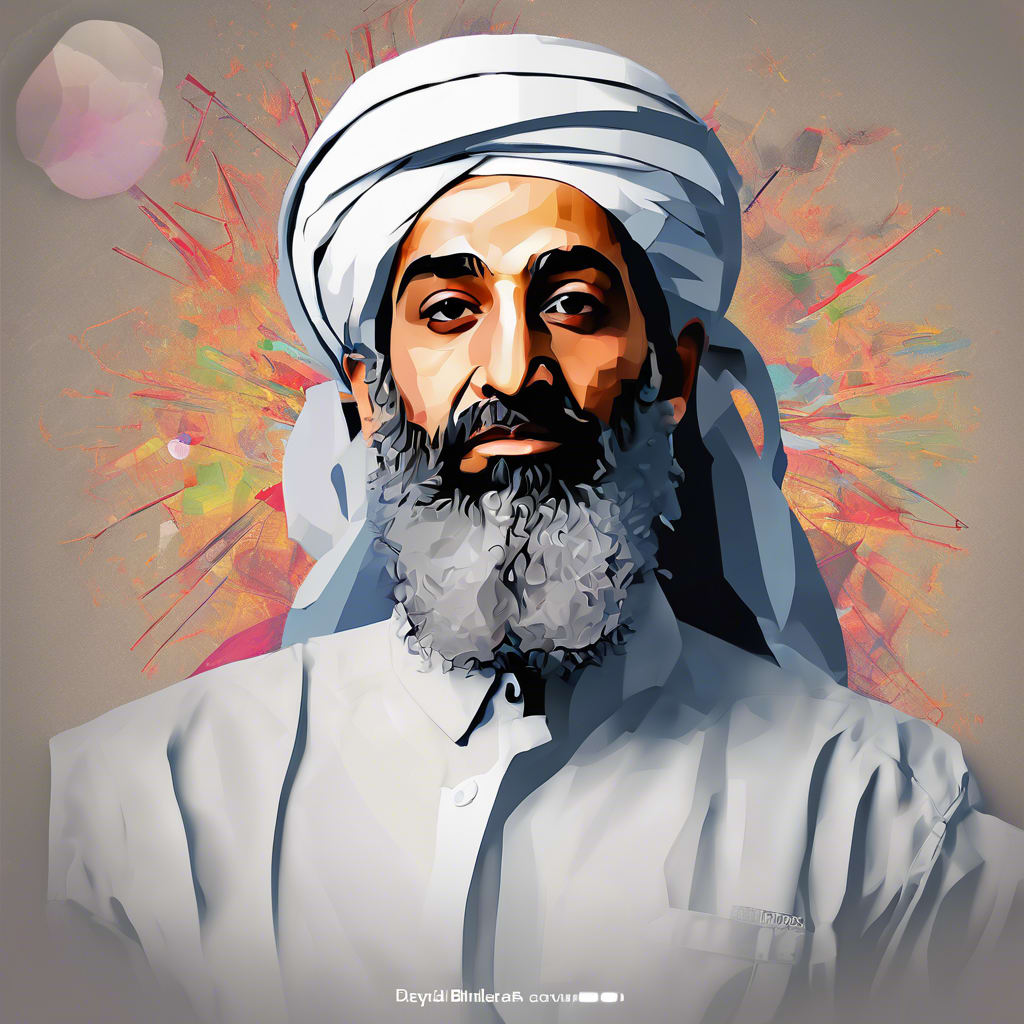
Few figures in modern history have stirred as much global attention and debate as Osama bin Laden. Regarded by some as a revolutionary and by others as a dangerous terrorist, his life was a complex tapestry woven through war, ideology, politics, and tragedy. From a wealthy upbringing in Saudi Arabia to orchestrating one of the deadliest terrorist attacks in modern history, bin Laden’s story is inseparable from the geopolitical narrative of our time.
---
Early Life and Family Background
Osama bin Laden was born on March 10, 1957, in Riyadh, Saudi Arabia, into the influential and wealthy bin Laden family. His father, Mohammed bin Awad bin Laden, was a Yemeni immigrant who became one of the richest men in the Kingdom through construction contracts, many of which were awarded by the Saudi royal family. Osama was one of over 50 children fathered by Mohammed bin Laden with multiple wives.
Despite his affluent background, Osama was described as quiet, pious, and reserved from an early age. He grew up during a time of religious and political transformation in the Islamic world, which shaped his worldview profoundly.
---
Education and Ideological Formation
Osama attended King Abdulaziz University in Jeddah, where he studied business administration and Islamic studies. It was here that he encountered radical Islamic ideologues, including Abdullah Azzam, a Palestinian cleric who would become a key influence on bin Laden’s thinking.
During his university years, bin Laden absorbed ideas about global jihad, Islamic governance, and opposition to Western political influence in Muslim lands. These ideas were fermenting across much of the Muslim world at the time, catalyzed by a growing dissatisfaction with authoritarian regimes and Western-backed interventions.
---
The Soviet-Afghan War and Rise of al-Qaeda
In 1979, the Soviet Union invaded Afghanistan, prompting a jihadist response from across the Muslim world. Osama bin Laden saw this as a religious obligation and joined the resistance. Using his wealth and connections, he financed training camps, provided logistics, and recruited fighters from the Arab world.
During this time, he established ties with various mujahideen factions and eventually formed an organization that came to be known as al-Qaeda (Arabic for “The Base”). Founded in 1988, al-Qaeda aimed to establish an Islamic caliphate and oppose all perceived enemies of Islam, including corrupt Muslim governments and foreign powers like the United States.
While the U.S. and other Western nations initially supported Afghan fighters during the Cold War, their relationship with bin Laden and other Islamist factions deteriorated after the war ended and American troops remained in the Middle East.
---
Conflict with the West
In the early 1990s, Osama bin Laden became increasingly vocal in his opposition to the U.S. presence in Saudi Arabia, particularly following the 1990–91 Gulf War. He viewed the stationing of American troops in the land of Islam’s two holiest sites as a grave insult and betrayal.
In 1996, bin Laden was expelled from Sudan under international pressure and moved to Afghanistan, where he began building al-Qaeda's global infrastructure. He issued multiple fatwas declaring jihad against the United States and its allies, accusing them of oppressing Muslims worldwide.
This ideological battle turned violent with a series of deadly attacks, including:
1998: Bombings of U.S. embassies in Kenya and Tanzania, killing over 200 people.
2000: The bombing of the USS Cole in Yemen, killing 17 American sailors.
These attacks placed bin Laden at the top of the FBI’s Most Wanted list and set the stage for what was to come.
---
September 11, 2001: The Defining Moment
On September 11, 2001, al-Qaeda operatives carried out the most devastating terrorist attack on American soil, hijacking four commercial airliners. Two planes crashed into the World Trade Center towers in New York City, one into the Pentagon, and the fourth in Pennsylvania. Nearly 3,000 people were killed.
The U.S. quickly identified Osama bin Laden and al-Qaeda as the perpetrators. Within weeks, the U.S. invaded Afghanistan to dismantle the Taliban regime that had provided bin Laden with sanctuary.
This event marked the beginning of the War on Terror, a global military and intelligence campaign that would span decades and redefine international relations.
---
Years in Hiding and Final Operation
Following the U.S. invasion of Afghanistan, Osama bin Laden went into hiding. Despite a massive international manhunt and multimillion-dollar bounty, he eluded capture for nearly a decade.
On May 2, 2011, U.S. Navy SEALs located and killed him in a compound in Abbottabad, Pakistan, in a covert operation code-named Neptune Spear. His death was announced by President Barack Obama, and he was buried at sea according to reports, though many aspects of the operation remain classified and controversial.
---
Legacy and Global Impact
Osama bin Laden's death closed a significant chapter in the post-9/11 era but did not end the ideological and militant movements he helped shape. His legacy is deeply polarizing:
To many in the West and within mainstream Muslim communities, he remains a symbol of extremism and violence.
To a minority, he is seen as a resister of Western imperialism, albeit through controversial and violent means.
Bin Laden's life continues to influence global counterterrorism policy, civil liberties debates, and the broader discourse around Islam, politics, and the West.
---
Conclusion
Osama bin Laden’s life cannot be understood in isolation from the complex historical, political, and religious forces that shaped it. His actions sparked wars, redefined security policies, and altered how nations interact in the 21st century.
Whether seen as a militant ideologue or a misguided revolutionary, one fact remains clear: his legacy changed the world—and it continues to do so.
About the Creator
The Forsyth House Fire
Since 1851, Forsyth House has stood on the corner of Union Street and Gordon Street in the heart of Glasgow. Its iconic, or was... because on Sunday 8th of March, 2026, a fire broke out in a small, seemingly un-named shop in the building and tore all that history down. As I write, the rubble is still unsettled and the street is still blocked off. Central Station is quiet on the upper level, and around 30 small businesses have quite literally gone up in smoke.
By S. A. Crawford3 days ago in The Swamp


Comments (1)
Bin Laden's story is wild. His upbringing, education, and the events around the Soviet-Afghan War all played into his radical turn. It's a complex piece of history.