
Nowhere and Everywhere: A Prison Without Walls
When Silence Becomes the Weapon, and Identity the Crime

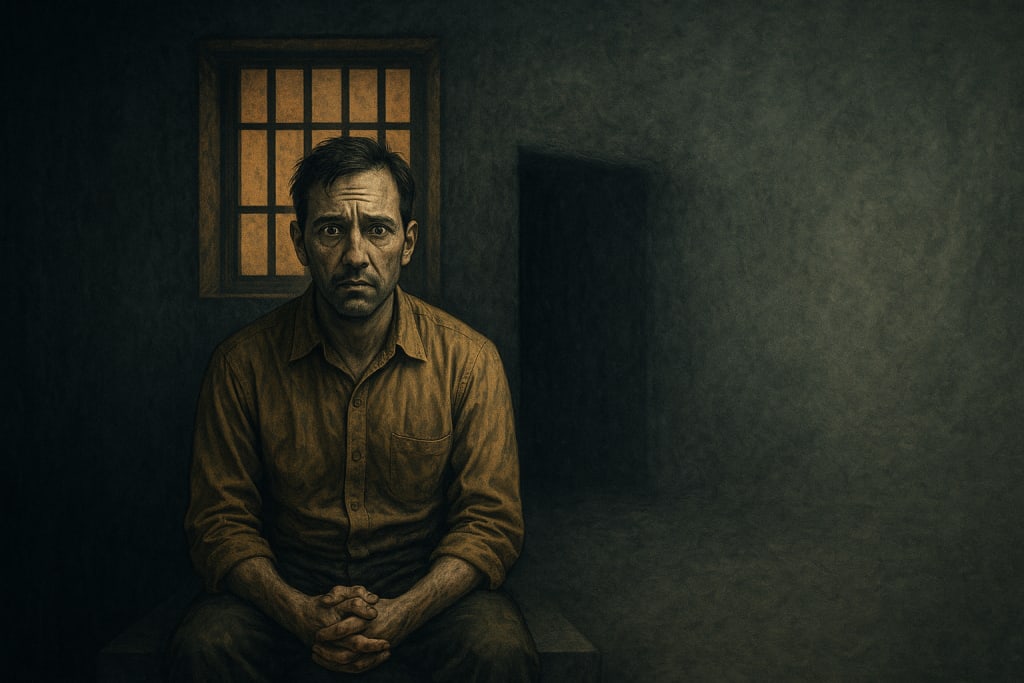
He didn’t know where he was.
Nor why he was there.
He only knew that his name, his voice, his very existence—was slowly vanishing.
The walls around him weren’t made of bricks.
They were made of doubt.
It hadn’t begun with violence.
There were no sirens, no court dates, no calls.
Just a moment—he was home.
And the next—he wasn’t.
His captor wore no uniform.
Spoke calmly, like a man discussing the weather.
"You are not here because of your opinions," he said.
"You are not here because you protested."
"You are not here because of your skin."
"Then why?" the man asked, confused but not yet afraid.
"You are here," came the reply, "because you could be a threat."
"Not because you are a threat."
The words hung in the air like smoke.
The captive tried to reason with him.
"I’m a citizen. I have documents, ID, a passport."
His voice trembled, not from fear—but from disbelief.
"A citizen of what?" the voice laughed.
"You still think countries matter here?"
"You are not anywhere now. You're just here—with me."
It was a room with no clock, no calendar, no noise.
No sound except the hum of his own heartbeat.
And the voice.
The voice that returned daily, always with questions.
"Do you know why you’re here?"
The man remained silent.
"You must figure it out yourself," said the voice.
"If I tell you, you’ll forget."
"But if it comes from within, it will stay with you."
The man looked down at his hands.
They were still his, but somehow… unfamiliar.
He asked, "Where is here?"
"It’s nothing," came the answer.
"And everything."
"There is no world beyond this room—for you."
He fought the silence.
Tried to remember his family.
His home.
His dog’s name.
His sister’s laugh.
He whispered their names like prayers.
But each day, they faded a little more.
Until they felt like dreams.
"That’s how it begins," said the voice.
"First, you forget their faces."
"Then their voices."
"Then yourself."
The man grew desperate.
"You cannot make me forget who I am!"
But doubt had begun to eat at him like rust.
Was he even real?
Was he ever real?
"If there’s no one to remember you," said the voice, "do you still exist?"
"You’re mad," said the man.
"No," said the voice. "I’m free."
"And I’m your only company."
"And if I’m not real?" the man asked.
"Then neither are you."
He screamed.
But the room absorbed the sound.
Like a grave.
He spoke of justice.
Of lawyers.
Of courts.
"They’re looking for me," he insisted.
The voice laughed softly.
"They’re searching every database."
"Every state."
"Even Guantanamo Bay."
"But they never find what we don’t want found."
"And even when they do?"
"The courts no longer matter."
"You think democracy protects you?"
The man didn’t reply.
"You are not a person," said the voice.
"You are a lesson."
"A warning to others."
"They will see what happened to you—"
"—and stay silent."
The man felt cold, though the room was warm.
"You can’t scare everyone," he whispered.
The voice paused.
"No. But enough."
"Enough to keep the others quiet."
"Enough to keep the machine running."
"This place—it’s not for punishment."
"It’s for forgetting."
"Because when the world forgets you existed—"
"You truly disappear."
The man cried quietly that night.
Not from pain.
But from invisibility.
He had become a ghost.
Trapped not in chains—but in memory.
Or lack of it.
Yet still, he whispered their names.
One by one.
As if by doing so, he could anchor himself.
"I still exist," he said.
The voice did not answer that day.
Or the next.
Silence, finally, was complete.
But he kept whispering.
And one day—
Perhaps—
Someone, somewhere, would whisper back.
And the world would remember.
About the Creator
Keep reading
More stories from Abuzar Khan and writers in Criminal and other communities.
He Confessed to Murder in My DMs: The Dark Side of Going Viral
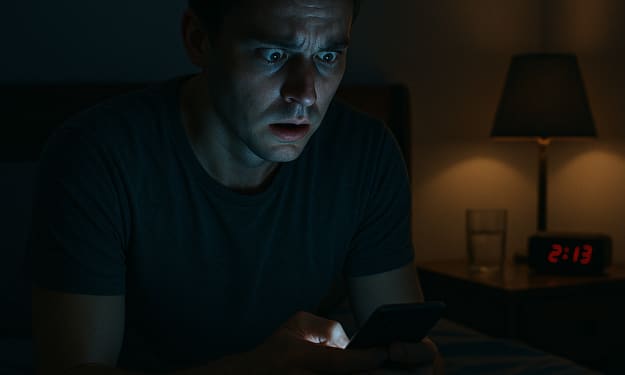
When your most-liked story becomes someone else's confession booth The message came in at 2:13 a.m. I saw the notification glow on my nightstand, that soft blue light that usually means spam, or a heart emoji, or someone asking, “Did this really happen?”
By abualyaanart4 days ago in Criminal


Comments
There are no comments for this story
Be the first to respond and start the conversation.