
Matthew Shepard: Hate Crime Impact
The 1998 murder of gay college student Matthew Shepard in Wyoming highlighted the dire need to address hate crimes against the LGBTQ+ community.
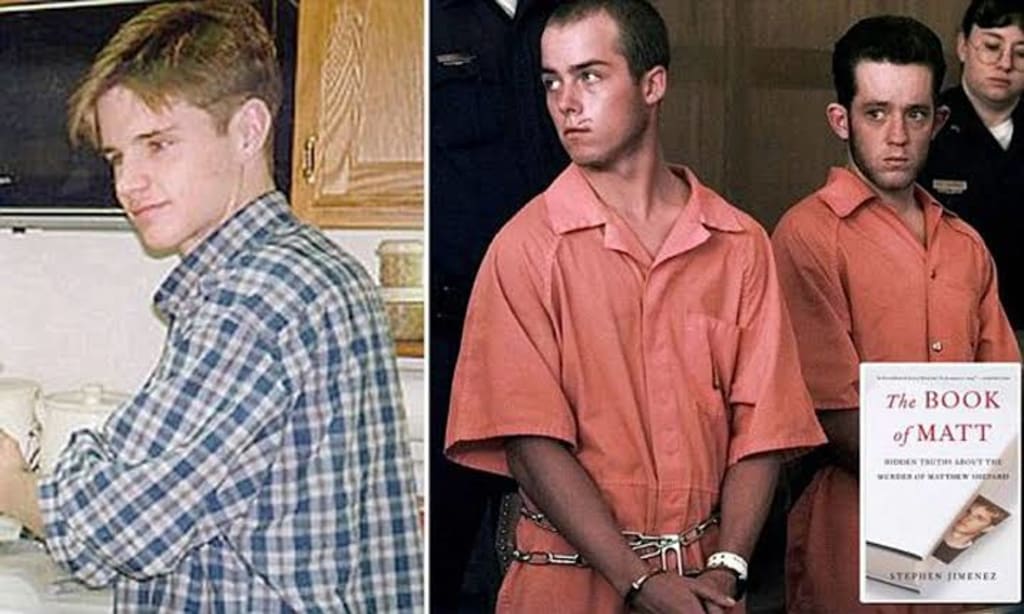
The Matthew Shepard Case of 1998 remains a poignant reminder of the brutality and intolerance that once plagued society. The tragic murder of Matthew Shepard, a gay college student from Wyoming, sent shockwaves through the nation and galvanized a movement for change. This incident not only highlighted the severity of hate crimes against the LGBTQ+ community but also sparked efforts to pass hate crime legislation to protect marginalized individuals.
Matthew Shepard was a 21-year-old student at the University of Wyoming when he was targeted and brutally attacked by two men, Aaron McKinney and Russell Henderson, on the night of October 6, 1998. The assailants lured Shepard to a remote area, tied him to a fence, and savagely beat him, leaving him for dead. Shepard was discovered 18 hours later, barely clinging to life. He succumbed to his injuries on October 12, 1998, drawing widespread media attention and a collective sense of outrage.
The heinous nature of Shepard's murder shed light on the pervasive hate and discrimination faced by LGBTQ+ individuals. The case ignited a passionate outcry from activists, allies, and concerned citizens across the country, sparking a renewed determination to combat bigotry and violence. Vigils, protests, and rallies sprang up in memory of Shepard, becoming a catalyst for increased awareness of hate crimes against the LGBTQ+ community.
The aftermath of Shepard's tragic death prompted legislative action aimed at preventing such atrocities in the future. While federal hate crime legislation did not exist at the time, the Matthew Shepard and James Byrd, Jr. Hate Crimes Prevention Act was eventually signed into law by President Barack Obama in 2009. This landmark legislation expanded the definition of hate crimes to include those based on gender, sexual orientation, gender identity, and disability. It empowered federal authorities to intervene in cases where local authorities might not effectively address hate-motivated crimes.
Matthew Shepard's legacy also extended to the realm of public discourse, inspiring discussions around LGBTQ+ rights, acceptance, and inclusion. His story humanized the struggle for equality and compelled many to confront their own prejudices and biases. Shepard's mother, Judy Shepard, became a prominent advocate for LGBTQ+ rights, using her platform to raise awareness about hate crimes and promote acceptance.
The case also reverberated globally, sparking conversations about hate crimes and LGBTQ+ rights beyond American borders. The senseless violence inflicted upon Shepard resonated with individuals worldwide, fostering a broader dialogue about discrimination, intolerance, and the urgent need for change.
In summary, the murder of Matthew Shepard in 1998 was a tragic event that had far-reaching consequences. His death shone a harsh light on the deeply rooted hate and violence faced by the LGBTQ+ community. The national and international response to his murder spurred activism, awareness, and legislative changes that sought to address and prevent hate crimes. The passing of the Matthew Shepard and James Byrd, Jr. Hate Crimes Prevention Act marked a significant step forward in protecting marginalized communities from such violence. While progress has been made, challenges persist, reminding us of the importance of ongoing efforts to create a world where all individuals can live free from fear and discrimination, regardless of their sexual orientation or gender identity.
About the Creator
Keep reading
More stories from Kure Garba and writers in Criminal and other communities.
Bella Murder Case: Unveiling Tragedy, Seeking Justice
In 2015, the Bella Bond case shocked the nation when the lifeless body of a young girl was discovered on the shores of Boston Harbor, wrapped in a trash bag. The child's identity remained a mystery until investigators were able to piece together the puzzle and unravel the tragic story behind her death.
By Kure Garba3 years ago in Criminal
The Last Train from Platform Seven
M Mehran Every night at 11:40 PM, the last train departed from Platform Seven. Commuters rushed aboard with tired eyes and half-finished thoughts. The station lights hummed. The city slowed. Routine settled over everything like dust. Nothing unusual ever happened on the last train. Until the night one passenger never arrived — yet his briefcase did. By sunrise, the case was linked to one of the most calculated crimes the city had ever seen. The Routine That Made It Possible Central Station was a monument to predictability. Security cameras rotated in fixed patterns. Patrol officers walked identical routes. Ticket scanners recorded entries down to the second. Routine keeps cities moving. But routine also creates patterns. And patterns can be exploited. For six months, someone had been studying Platform Seven — timing security rotations, passenger flow, and maintenance shutdowns. They weren’t looking for a victim. They were engineering an opportunity. The Man with the Silver Briefcase Witnesses remembered him clearly because he appeared forgettable. Mid-forties. Gray coat. Clean-shaven. No distinguishing features except a polished silver briefcase that never left his hand. Every weekday for three weeks, he boarded the last train and exited three stops later. He spoke to no one. Made no phone calls. Kept his gaze lowered. Invisible. Reliable. Predictable. Exactly what he wanted to be. The Night Everything Changed On Tuesday evening, the station was unusually crowded after a football match. Noise echoed through the terminal. Announcements overlapped. Security struggled to manage the surge of passengers. At 11:38 PM, the man with the silver briefcase entered through Gate C. At 11:39 PM, surveillance cameras briefly lost signal during a system reboot. At 11:40 PM, the last train departed. But the man never boarded. The briefcase did. Discovery at Dawn The train completed its route without incident. It was cleaned overnight and prepared for morning service. At 5:12 AM, a maintenance worker discovered the briefcase beneath a seat in the second carriage. Inside were neatly arranged bundles of cash, multiple passports, and a sealed envelope containing a handwritten message: “This is only the beginning.” Within hours, investigators confirmed the money totaled €780,000 — linked to a corporate embezzlement case that had gone unsolved for eight months. The case had just reopened itself. A Crime Beyond Theft Detective Lena Vogt quickly determined the briefcase was not abandoned. It was delivered. The cash belonged to Helios Infrastructure Group, a multinational engineering firm under investigation for financial irregularities. Funds had disappeared through layered shell companies and offshore accounts. No arrests had ever been made. Until now, someone wanted attention. But why return stolen money? And why in such a theatrical way? The Hidden Message Forensic analysis revealed microscopic markings inside the envelope — numbers written in nearly invisible ink. They corresponded to internal project codes within Helios Infrastructure. Each code linked to construction sites across Europe. Each site had cost overruns totaling millions. This wasn’t a confession. It was an accusation. Someone was exposing a system. The Whistleblower Who Became a Criminal Authorities soon identified the man with the silver briefcase as Markus Feldmann, a former financial auditor employed by Helios. Two years earlier, Markus had raised concerns about irregular financial transfers tied to subcontractors. His warnings were ignored. Months later, his position was eliminated during “restructuring.” After losing his job, Markus disappeared from professional networks. But he hadn’t vanished. He had been collecting evidence. Crossing the Line Investigators believe Markus initially intended to expose corporate fraud legally. But when regulatory complaints stalled and legal threats mounted, he chose a different path. He hacked internal systems. Intercepted transfers. Redirected illicit funds. Then redistributed portions to anonymous charity networks. And finally, he staged the Platform Seven drop — returning part of the money to authorities while exposing the corruption behind it. His actions blurred the line between criminal and whistleblower. He committed cybercrime, fraud, and financial theft. Yet he also revealed a corruption network worth hundreds of millions. The Citywide Manhunt When news broke, public opinion fractured. Some called Markus a criminal mastermind. Others called him a hero. Helios Infrastructure denied wrongdoing, but European regulators reopened investigations across multiple jurisdictions. Meanwhile, Markus remained missing. Authorities tracked digital traces through encrypted networks, but he stayed ahead — using public terminals, temporary devices, and anonymized routing. He understood systems. He understood surveillance. And he understood how to disappear inside modern infrastructure. The Platform Seven Sighting Three weeks later, a transit officer reported seeing a man matching Markus’s description standing near Platform Seven minutes before midnight. By the time officers arrived, he was gone. But this time, he left something behind. A folded newspaper with a circled headline: “Audits Expanded Across Three Countries.” Inside the paper was a single handwritten line: “Truth arrives on schedule.” Crime, Morality, and the Gray Zone Markus Feldmann’s actions ignited debate across legal and ethical communities. Was he a criminal who stole and hacked his employer? Or a whistleblower forced into illegal methods by institutional silence? Modern crime is no longer defined solely by violence or theft. It now exists in complex gray zones where digital access, corporate secrecy, and systemic corruption intersect. Markus broke the law. But he also broke open a system designed to protect itself. Why Stories Like This Captivate Us Criminal stories resonate because they challenge our understanding of right and wrong. They expose the fragility of systems we trust — financial institutions, corporate governance, public infrastructure. They force us to confront uncomfortable questions: Is breaking the law ever justified? Who decides what justice looks like? And how far would someone go to expose the truth? The Train Still Runs Platform Seven remains operational. The last train still departs at 11:40 PM. Passengers still glance at their phones, lost in routine. But some nights, commuters pause and look around — wondering if the man with the silver briefcase might step from the shadows once more. Because in a world built on systems and schedules, the most disruptive force is not chaos. It is precision. And somewhere, someone may still be watching the clock.
By Muhammad Mehran7 days ago in Criminal




Comments
There are no comments for this story
Be the first to respond and start the conversation.