
Martin Scorcese’s Hitchcockian ‘Cape Fear’
I'll take any chance to break out the word, "Hitchcockian".

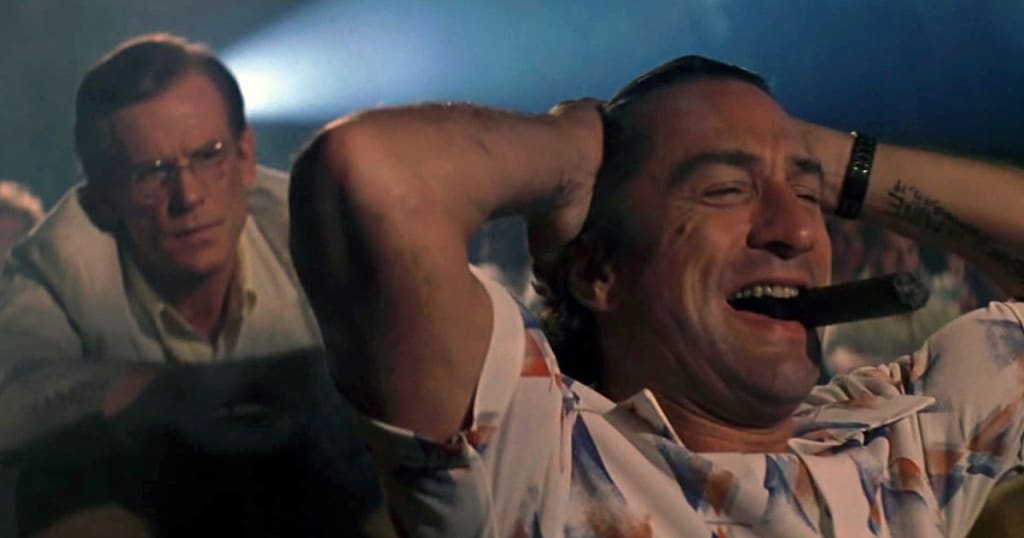
Cape Fear is a Hitchcock film without Hitchcock. Who better to make it than Martin Scorcese, the master of all things bloody and dark? It’s the kind of film that theaters were made for.
Cape Fear is a remake of the 1962 film of the same name, starring Robert Mitchum and Gregory Peck (who make cameos in the 1991 version). Nick Nolte stars as Sam Bowden, an attorney whose former client, Max Cady (Robert DeNiro) is out for revenge after being released from jail. Quick warning: this movie takes on some pretty heavy stuff. There are scenes of rape, assault, and murder as well disturbing depictions of predatory relationships with minors. Definitely not one to step into without a little wariness.
This movie is more Hitchcock than Scorcese. Some of the same tropes and cinematography are used to create that sense of uneasiness and suspense that The Master himself perfected. Some of Hitchcock’s most famous films — Vertigo, Psycho, Rear Window — have strong influences on this film. Cape Fear is the modern homage to the past of the thriller genre.
Vertigo Lighting
Cape Fear mirrors some of the brilliant lighting techniques from Vertigo. In the 1958 film, there is a dream sequence that bathes James Stewart in psychedelic colors to mirror his descent into madness. Similarly, though not in a dream sequence, there are several portions of Cape Fear where changing colors signal Sam’s growing uneasiness. They almost have the same pattern as the lights in Vertigo, alternating between muted blues, greens, and reds.
Of course, Cape Fear is a more modern film, so there would be more modern, daring uses of color. One of the more brash uses is when Cady kills Kersek, leaving a bloody pool on the kitchen floor of the Bowden’s home. Sam, going to investigate the scene, slips and falls in the dark red blood, covering himself in it. It’s a traumatizing moment but, once again, brilliant use of color.
Rear Window
Like the classic James Stewart film about spying on your neighbors, this movie also gives the uncomfortable feeling of living in a fish bowl. When the Bowden family is trying to sleep at night, Max Cady sits on the border of their property, waiting and watching. While his intentions are more sinister than James Stewart’s in Rear Window, the impropriety of peeping into people’s windows is still an unsettling similarity.
Of course, we aren’t rooting for Max Cady like we were for L. B. Jefferies in Rear Window. Yet, it brings up a good point — should we have been rooting for him? After all, he was spying on his neighbors, which is pretty reprehensible. He did end up solving a murder because of it, but he broke his neighbors’ right to privacy. It brings up the fact that Hitchcock’s main characters are not necessarily all good or all bad — they are morally gray.
Psycho Echoes
While the whole film has creepy Psycho vibes, one thing I noticed, in particular, was the casting of Jessica Lange. In this film, she wears her blonde hair short, reminiscent of Janet Leigh’s hair in Psycho. Even their names have the same initials. Probably just a coincidence, but with all the other Hitchcock references and tributes, I found this pretty cool. It’s no wonder that Lange was later part of the cast of American Horror Story.
That’s generally where the similarities in casting stop, but there are other aspects of Cape Fear that could echo some of Psycho’s characteristics. For example, Psycho deals with cross-dressing; in Cape Fear, Max Cady isn’t a crossdresser, but he does wear feminine underwear and he dressed as the Bowden’s maid to fool Kersek. These are pretty clear callouts to that famous 1960 thriller.
...
READ THE REST OF THIS ARTICLE ON OUR WEBSITE: https://moviebabble.com/2021/11/29/martin-scorceses-hitchcockian-cape-fear/
About the Creator
MovieBabble
The Casual Way to Discuss Movies! Head over to moviebabble.com to see all our content!
Keep reading
More stories from MovieBabble and writers in Criminal and other communities.
‘The Many Saints of Newark’: Remember the Little Moments
Due to the pandemic, a lot of people have ventured into the streaming abyss, picking up on shows they’ve never finished or starting shows that have been on their radar for quite some time. One show, in particular, has seen a resurgence of popularity: HBO’s, one and only, The Sopranos.
By MovieBabble4 years ago in Criminal
Lured, Killed, Decapitated – A Jealous Husband’s Brutal Crime in the Woods
In a chilling case that unfolded in rural New Hampshire in September 2020 Britany Barron then 33 was found guilty of falsifying physical evidence connected to the brutal murder of her co-worker Jonathan Amerault. The crime involved her husband Armando Barron 32 at the time who became convinced she was having an affair with Amerault after discovering flirtatious messages on her phone. This jealousy-fueled rage led to a violent chain of events that ended in kidnapping, torture shooting, decapitation and attempts to conceal the body.The tragedy began on the night of September 19-20 2020 in Jaffrey New Hampshire where the Barrons lived. Armando reportedly abusive in the marriage confronted Britany over Snapchat exchanges with Amerault a 25-year-old attractive co-worker from Keene. Enraged, Armando allegedly used Britany's phone to lure Amerault to Annett Wayside Park (also known as Annett State Park) in Rindge New Hampshire—a secluded spot just north of the Massachusetts border—under the pretense of meeting her.
By Kure Garba7 days ago in Criminal
Thief In The Night
To the thief in the night that took and replicated what once was mine: Honestly, I feel kind of bad for you. It’s funny, because we hardly know each other. I only know of you through the magazines you’ve written and the broadcasts you have televised in the past — as well as through the public mentions of you from your show business connections there.
By Snarky Lisa8 days ago in Humans


Comments
There are no comments for this story
Be the first to respond and start the conversation.