
Lost Innocence: The Tragic Story of 40 Lives Taken
Unveiling Darkness
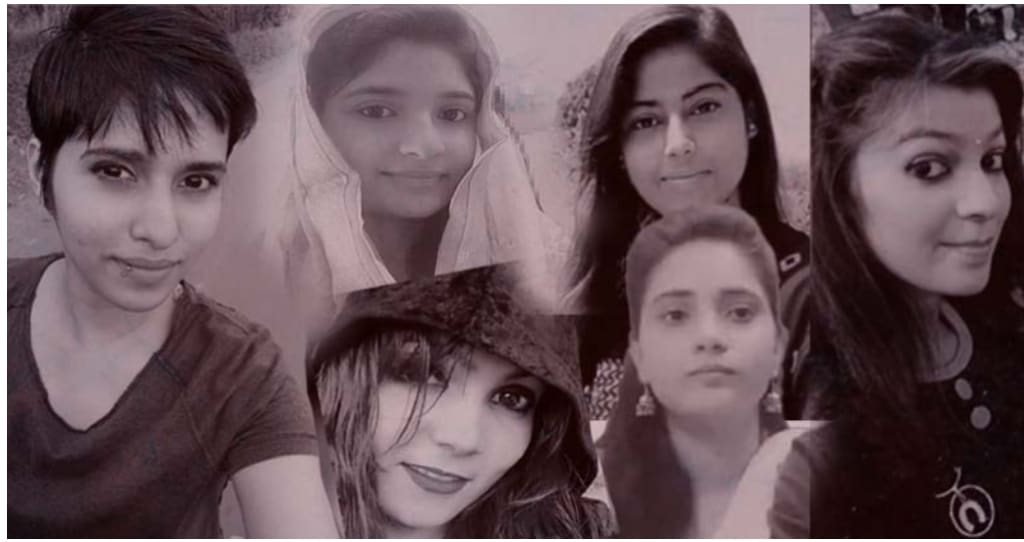
Introduction: The Enigma of a Serial Killer
In the mystifying labyrinth of human psychology, an unsettling juxtaposition emerges between the teachings of the Bhagavad Gita and the gruesome reality of a serial killer. A lawyer finds himself grappling with this paradox as his client, accused of the heinous murder of 40 young girls, justifies his actions through an eerie interpretation of the sacred text. A chilling calmness surrounds the accused, whose heinous acts stand in stark contrast to his seemingly tranquil demeanor.
Unveiling the Horror: 20th October 2006
The tale unfolds in the corridors of Tihar jail, Delhi's most notorious detention facility. On that fateful day of October 20, 2006, an anonymous phone call jolts the prison's serenity. The call reveals a ghastly scene at Gate No. 3 – a lifeless body placed in a basket. The audacious act shocks everyone, as it takes an unparalleled audacity to challenge the very core of a formidable institution. The gruesome display is accompanied by a letter, an indictment of the entire judicial system. In essence, the message reads, "Catch me if you can." The audacious display sets the stage for a serial killer's enigmatic spree.
A Gruesome Pattern: A Serial Killer's Signature
The unsettling sequence continues in 2007, as another headless body surfaces at the same spot. The police grapple with the puzzle of the bodies, deliberately headless, in and around Tihar jail. The criminal, it seems, relishes in the fear he has sown among law enforcement and society. His audacity is matched only by the meticulousness with which he orchestrates his macabre displays. A chilling letter accompanies the body, boasting of a murderous career spanning years. A disturbing revelation emerges – this killer revels in his psychopathic traits, hinting at more horrors to come.
Unraveling the Web: A Desperate Investigation
The police launch a relentless manhunt, spurred by memories of a similar case in 1998 that remained unsolved due to lack of evidence. The investigation takes a fascinating turn when a regular visitor to a doctor's clinic, bearing a Bihari accent, becomes a person of interest. The pursuit intensifies under the leadership of Narendra Pehelwan. The suspect is identified as Chandrakant Jha, a man with a seemingly normal life – a father to five daughters who had sought solace in a mundane profession of vegetable vending.
A Web of Shadows: The Making of a Killer
Chandrakant Jha's journey from a humble immigrant to a serial killer is marked by incidents of violence, trauma, and a thirst for power. A near-fatal confrontation with a gangster transforms him from victim to a seeker of power, leading him to learn martial arts. A confrontation with union leaders further fuels his path towards violence. The pattern is set in 1998, with the murder of a union leader, igniting a dark compulsion that drives him to take lives.
Method to Madness: A Friend's Betrayal
Chandrakant's modus operandi involves befriending his victims, most of whom hail from his village or neighboring areas. These "friends" become unwitting pawns in his game, as he lures them into his abode under the guise of friendship, only to reveal his monstrous intentions. His victims are trapped in a web of deceit, with even the smallest transgressions triggering his violent tendencies.
The Unmasking: A Revelation of Darkness
The narrative takes a chilling turn when one intended victim, Bhidu Jadhav, escapes Chandrakant's clutches, revealing the intricate layers of his twisted psyche. The revelations are further substantiated by a director's documentary featuring Chandrakant's photos, a glimpse into the abyss of his psychopathy. The narrative delves into Chandrakant's upbringing and experiences, which, coupled with a society ignorant of mental health in the labor class, culminate in the making of a fearsome serial killer.
The Lingering Fear: Ghosai's Ominous Shadow
Chandrakant's reign of terror ends with his arrest, but the memory of his atrocities continues to haunt the inhabitants of Ghosai village. The unease lingers, a constant reminder of the lurking danger he posed. The story concludes with a reflection on the importance of considering the mental health of immigrants and the labor class. Chandrakant's case serves as a somber reminder of the hidden struggles that many like him face, leading to tragic outcomes.
Conclusion: A Dark Chronicle Unveiled
As the curtains draw on this unsettling narrative, the eerie confluence of spirituality and psychopathy leaves an indelible mark on the psyche. The story of Chandrakant Jha serves as a chilling testament to the complexities of the human mind and the sinister forces that can shape a life into an unthinkable nightmare.
About the Creator
Ivan Raiklin and Michael Fanone Clash at Jack Smith Hearing: What Happened and Why It Matters
A heated confrontation between political activist Ivan Raiklin and former US Capitol Police officer Michael Fanone during a high-profile House Judiciary Committee hearing has drawn widespread attention in the United States. The incident occurred while former Special Counsel Jack Smith was appearing before lawmakers, turning what was already a politically charged proceeding into a moment of intense personal conflict.
By HIMANSHU GULATIabout 22 hours ago in Criminal
Ephrata Mayor Ralph Mowen & The 'House of Skulls': The Man Who Was Actually in Charge
The Great Escape Timing is everything. On Monday, January 5, 2026, Ralph Mowen walked out of Ephrata Borough Hall for the last time. After 30 years as Mayor, he was given a hero’s farewell. There were handshakes, a commemorative plaque, and speeches about his "legacy of service." He was the friendly grandfather of the Borough, the man who handed out candy at the Fair and cut the ribbons at the Rec Center. He got to retire on his own terms, with his reputation sparkling clean.
By Sunshine Firecracker7 days ago in Criminal



Comments
There are no comments for this story
Be the first to respond and start the conversation.