
Lillian Armfield: Australia's First Female Detective
Armed only with her handbag, Lillian Armfield investigated crimes and criminals including Sydney's infamous Razor Gangs.


Lillian May Armfield, born in 1884 in Mittagong, New South Wales, defied the conventions of her time and left an indelible mark on Australian law enforcement as the nation's first female police officer. Her pioneering career, spanning the early 20th century, was characterized by resilience, dedication, and a commitment to justice.

The late 19th century witnessed the dawn of the feminist movement, advocating for women's suffrage and civic representation. In this backdrop, Lillian, inspired by the changing tide, aspired for a life beyond the limitations set for her gender. Her mother's emphasis on education further fuelled Lillian's ambition to contribute to the world outside the home. The year 1902 marked a milestone for Australian women as they gained the right to vote in state and federal elections, a development that resonated with Lillian's progressive upbringing.
In 1907, Lillian ventured to Sydney, leaving behind the tranquillity of Mittagong for the bustling opportunities of the city. Her first employment was at Callan Park Asylum on Lilyfield, a formidable institution housing the poor, mentally ill, and criminally deemed patients. Lillian, appointed to care for female patients labelled as 'wayward girls,' quickly recognized the injustices these women faced. Some were societal outliers, unmarried pregnant women, or those associated with criminal elements. Lillian's compassionate approach set her apart, challenging the prevalent notion that these women were inherently bad.
As World War I unfolded, societal dynamics shifted, creating openings for women in various professions. In June 1915, Lillian seized an opportunity that aligned with her desire to make a positive impact – the newly formed Women's Police. The positions, with the backing of Inspector General of Police James Mitchell, sought women under thirty with a fair education, good character, and the ability to endure hardship and fatigue. Over 400 applications poured in from New South Wales, South Australia, Victoria, and even New Zealand.
Maude Rhodes, a compassionate soul with experience in caring for young girls in state care, became the first appointee as Special Constable 64. Lillian Armfield, appointed as Special Constable 65, joined her in breaking barriers. Their primary roles focused on the welfare of girls and women, a daunting task considering the societal challenges of the time. Their duties included keeping children off the streets, preventing truancy, tracking down those leading young girls astray, patrolling vulnerable areas, and enforcing pedestrian traffic rules. By 1919 Maude Rhodes had left the Police Force. Lillian remained and her career was marked by numerous accomplishments and notable cases that showcased her investigative skills and dedication to justice.
Lillian's most significant contributions came during the notorious era of organized crime in Sydney during the Roaring Twenties as the first female detective. Gangsters like Tilley Devine, Kate Leigh, and 'Botany May' Smith ruled the streets, engaging in prostitution, sly-grog, cocaine, and murder. In this tumultuous environment, Lillian, dressed in plain clothes and often working solo undercover, played a pivotal role in dismantling the criminal networks that plagued Sydney. Her fearless dedication and strategic approach earned her the respect of her colleagues and struck fear into the hearts of criminals.
Another notable case was her involvement in solving the infamous "Shark Arm" case in 1935. This case, involving a severed human arm found inside a shark caught off the coast of Sydney, captured the public's imagination. Armfield's meticulous investigative work played a crucial role in solving the mystery and bringing the perpetrator to justice.

Armfield's success in high-profile cases like the "Shark Arm" case not only showcased her competence as a detective but also helped shatter stereotypes about women's capabilities in law enforcement. Her achievements paved the way for the acceptance of women in various roles within the police force, challenging the notion that certain tasks were exclusively reserved for men.
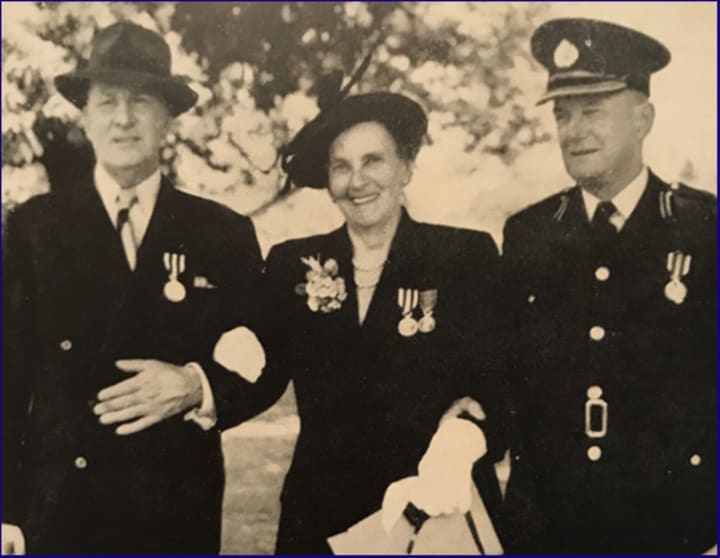
Although her contribution was praised and officially recognised, promotion throughout her 34 year career was slow. By 1 November 1923 Lillian had become a special sergeant, 3rd class, and by 1 January 1943 had risen to 1st class. In 1947 she was awarded the King’s Police and Fire Service Medal for outstanding service and, after her retirement on 2 December 1949, aged 65, she was awarded the Imperial Service Medal in recognition of her contribution and service to the community.
Lillian Armfield's journey from a small town in New South Wales to becoming Australia's first female police officer is a testament to her resilience, dedication, and trailblazing spirit. In the face of societal norms and gender biases, Armfield carved out a path that not only defied expectations but also paved the way for future generations of women in law enforcement. Armfield's legacy is a reminder that progress often comes from those who are willing to challenge the status quo and break down barriers
About the Creator
Nicole Gibson
Running on coffee and true crime.
I am passionate about self-development and personal growth. I find immense fulfillment in the continuous journey of learning, honing new skills, and embracing personal evolution.
Keep reading
More stories from Nicole Gibson and writers in Criminal and other communities.
Lady Justice Smiles for Kathleen
Kathleen Folbigg was once known as Australia's worst serial killer. On 23 May 2003 she was found guilty by jury for the murder of her children Patrick, Sarah and Laura, and the manslaughter of Caleb. There was no physical evidence that the children were murdered. The prosecution relied heavily on circumstantial evidence. Kathleen has always maintained her innocence. In June 2015, three Newcastle-based barristers petitioned the New South Wales governor to review Kathleen's case. The petition included fresh and compelling evidence consistent with Kathleen’s innocence, including a report from one of Australia’s leading forensic pathologists who concluded that there is no basis in forensic pathology that any of the children were smothered.
By Nicole Gibson3 years ago in Criminal
What DHS Secretary Kristi Noem said vs. what the videos show
NBC News and PBS recapped the competinBelow is a structured, evidence-backed analysis of the Minneapolis ICE shooting and the claims made by DHS Secretary Kristi Noem—including the applicable federal laws/policies and how intent vs. recklessness factor into a potential case. I’ll keep this clear, precise, and grounded in the video evidence and governing law.
By Organic Products about 3 hours ago in Criminal
The Charlie Kirk Phenomenon
September 10, 2025, will be etched into the recent history of the United States not as a mere day of campaigning or academic debate, but as the moment when political polarization reached a point of no return. Charlie Kirk, one of the most influential and simultaneously controversial figures of modern conservatism, was the victim of a brutal assassination during a public event at Utah Valley University. This event did not just mark the tragic end of a 31-year-old thought leader; it triggered a wave of reactions that exposed deep social tensions, wild conspiracy theories, and a fierce debate about the limits of hatred in the digital age.
By Teodor Monescu5 days ago in Criminal
📢 Raise Your Voice Thread: 01/08/2026
Our “Raise Your Voice Threads” are hosted most alternating Thursdays at 12PM ET to offer creators more avenues to uncover exceptional stories on Vocal. As we are continuously searching for fresh creators and inspiring stories, this thread provides an opportunity to exchange and discuss the stories that have moved and motivated us on Vocal.
By Raise Your Voice by Vocal5 days ago in Resources


Comments
There are no comments for this story
Be the first to respond and start the conversation.