
Learning of Kathy's Kidnap, Rape, and Murder
It's been decades, and I can't forget.

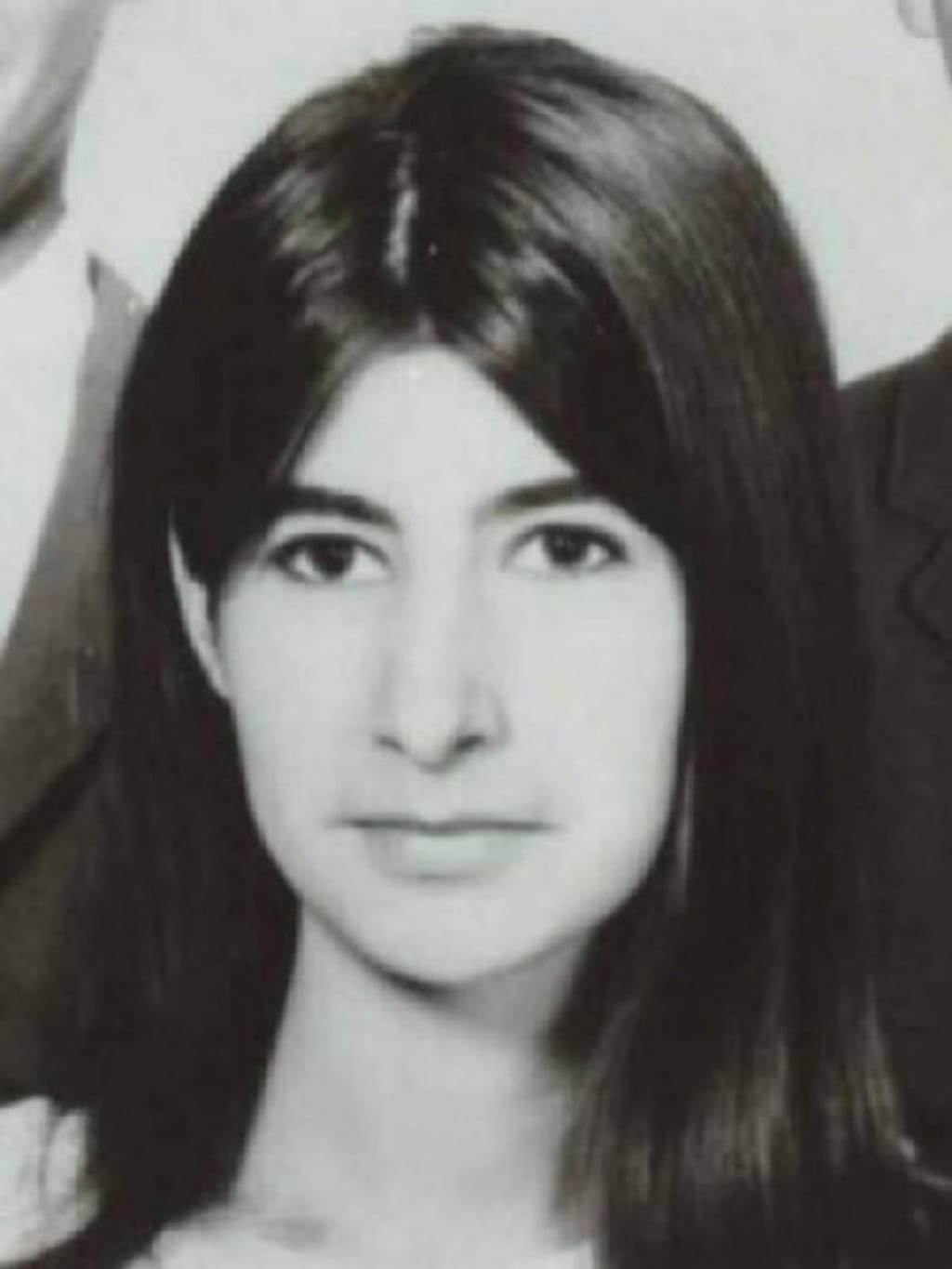
On August 24, 1974, college student Kathryn McCoy-Grady celebrated her 25th birthday. She and her art student husband looked forward to their upcoming wedding anniversary. Life was beautiful. However, six days after her birthday, something unspeakable happened to Kathy. I was 11 years old.
In 1993, I turned 30 and worked as a legal assistant at the oldest, largest, most prestigious law firm in our city. In those days, Donald W. McCoy was the senior partner of McCoy, Weaver, Wiggins, Cleveland, and Raper, albeit semi-retired.
During the first days of my employment, I quickly learned that Mr. McCoy was a Navy veteran, deeply respected — a man who put values, morality, and the law first. I found that description to be quite accurate: Mr. McCoy was the embodiment of a man of honor.
I have memories of him strolling the halls of the law firm with hands shoved deep in pockets, weathered brow downward cast. My uncle, who served in Vietnam, had that same mystique of pain, silence, and shadow. It was easy to imagine Mr. McCoy’s Navy years gave birth to this same melancholy.
In any case, life was busy in the firm. That might explain why, over a two year period, I only had a couple of conversations with Mr. McCoy. For a man with a reputation bigger than life, he could slip in and out of the shadows as if he wasn’t there. In a way, it spoke to his humility. I confess, here and now, that everything I knew about the man who was Donald W. McCoy made me nervous as hell (through no fault of his own) and created in me a deep desire never to disappoint him.
One long afternoon, about two years before his death, Mr. McCoy’s legal assistant was absent from the office. Legal matters, however, do not wait. I was chosen to assist Mr. McCoy in the afternoon.
My gut silently begged for him to choose someone else, anyone else, but that was not to be. The weight of his reputation and the dignified, quiet way in which he lived his life had my knees knocking by the time I entered his office, notepad and pen in hand. I think he sensed this and, being the man that he was, tried to set me at ease by making small talk. Nevertheless, my hand trembled when I pushed a strand of hair away from my eyes.

The most eye-catching object in the room was a huge family photo hanging on the wall to the left as you entered. There sat Mr. McCoy and his wife, surrounded by adolescents who, I safely assumed, were their children. The young woman sitting up front was incredibly beautiful and bore a striking resemblance to Mr. McCoy.
I pointed to the photo. “Is that your daughter in the foreground? I don’t think I’ve met her yet. She’s lovely.” To my surprise, Mr. McCoy did not look up to admire his daughter. Instead, he turned his back to the wall and moved slowly to the chair behind his massive desk, eyes down, as always.
Finally seated, I saw something I’ve never seen before or since. It was dreadful. The dark shadow of a heavy and unbearable thing began to creep, beginning at his forehead and finally ending at his chin. It was as though an invisible mask was being pulled over his face by an unseen force. When it was done, the muscles had morphed into a struggling mass of twitches and pops. I recognized it as the face of someone desperately fighting to maintain his composure.
“That’s my Kathy,” he muttered to the air more than to me, his eyes staring at the sky of the room. Gone were the strength and confidence that had accompanied every word that I had ever heard leave his mouth. These words, instead, twisted in and out of pain so that the hero’s voice resembled the whimper of a man undone.
“My Kathy was murdered while away at college.”
That last sentence came at the room like a prickly tumbleweed, bouncing off the walls randomly from some long-forgotten wind. It left his throat softly before spinning into unmentionable chaos. In horror, I noticed that Mr. McCoy’s mouth had forgotten to close at the end of that ungodly sentence, a testament to the severity of the pain he endured.
It later occurred to me that I was grateful for the chairs in front of Mr. McCoy’s desk, because it was either sit down or fall down for me. I cannot begin to remember what I muttered, but I imagine it was something like, “I’m so, so sorry for your loss, Mr. McCoy. I had no idea. Oh, my God.” Suddenly, his face returned to me, and his lips came together once again in a sad smile that quieted the flailing muscles.
Still, saltwater threatened to spill from old, vulnerable eyes that, only seconds ago, had been wild with grief and remembrance. It should not surprise you that Mr. McCoy graciously forgave me. Then, we promptly moved on to business. It was after Mr. McCoy passed away that I discovered exactly what happened to his dearest Kathy.

Kathryn Lutie McCoy-Grady and Michael John Grady both attended a Christian college in 1974, living off-campus as a young, married couple. While Michael was an art student, Kathy had changed her major from art to journalism.
She wrote a weekly article for the college newspaper, and her submissions focused on injustice in various forms, such as the surge in violence against women. Also, Kathy actively supported women’s rights and the feminist movement, as evidenced by her volunteerism in a popular downtown feminist bookstore. She had a soft spot for animals; Kathy rescued stray cats whenever she came across one.
Kathy McCoy-Grady’s love of righting wrongs is something she shared with her attorney father. Her love of people and nature is, perhaps, something she shared with her mother, who worked tirelessly to protect the environment and its creatures.
With her birthday behind her, Kathy finished up work on the following Friday night and decided to head home. Hitchhiking was popular in the 1970’s, and she often did so to get around town. Perhaps it was a belief in her own power and self-sufficiency or simply the times in which she lived that encouraged Kathy ultimately to decide to get into a pickup truck driven by 19 year old Harry Edward Brooks.
According to Brooks’ testimony, he smoked several marijuana cigarettes before he dropped off his pregnant wife at a friend’s house. Brooks continued to smoke until he spotted Kathy, hitchhiking. When he pulled over to offer her a ride, she accepted.
Brooks fabricated a story that he needed to stop at a friend’s house to borrow some money before he could take Kathy home. When he drove to a secluded area instead, Brooks forced her into the adjacent woods and began raping her. He later testified that Kathy begged him not to hurt her.

Brooks also revealed that, when he heard a motorcycle approaching, he panicked because Kathy would not remain quiet and still. So, he choked her “until she didn’t move.” Not satisfied, Brooks bashed her skull repeatedly with a claw hammer so that the hammerhead actually flew off the handle. Finally, he cut Kathy’s throat with a steak knife before fleeing the scene.
Almost immediately after Brooks pulled away, the motorcyclist, a doctor by profession, arrived at the scene and discovered Kathy’s body. She was completely nude except for her tank top shirt that was pushed above her head and tangled around her arms. There was nothing he could do for her. It was too late.
Dr. Lois R. Shanks’ coroner’s report cited the cause of death to be two skull fractures created by a hammer, and it noted cuts to the neck and a stab wound through the neck made by a knife. That knife eventually was recovered at the scene.
Later that same night, Brooks, still driving the pickup truck, was stopped for a traffic violation. He was arrested and charged with second-degree murder.
In December 1974, Brooks was found guilty of kidnapping, raping, and murdering Kathy. He has spent the last 46 years incarcerated in state prison.
However, he was scheduled for release in 2021.
I am loathe to see Kathy’s story end here. In 2010, Kathy’s husband, Michael Grady, passed away at the age of 60. Many whose lives were forever changed by Harry Brooks’ violent, vicious attack against Kathy have passed on. Their leaving should not create an outcome of opportunity for Brooks to be absolved from paying the full price for his crime. Any idea that Brooks’ penance has ended because the primary players are deceased should be squashed immediately, like an out-of-control wildfire.
Kathy was robbed of her very existence, her chance to have children, her opportunity to effect positive change in this tired world, her right to live. Likewise, Kathy’s family has been forced to carry on without her, forever mangled by that unwelcome void. In fact, Harry Edward Brooks violently ensured that their suffering is everlasting — the result of selfish, brutal acts he knowingly and willingly committed on a Friday night long, long ago.
As they have suffered, by God, so should he.
***************
I'd be so grateful if you'd ❤️ this essay. Also, please click here to read more of my writing and subscribe to my publications. Feel free to leave a much-appreciated tip or small, recurring pledge if my words move or enlighten you in some way as I work hard to become a writer extraordinaire. I can't thank you enough!
About the Creator
KD Fox
KD Fox has been writing creatively since she could put pen to paper.
A Warning from My Near-Death Experience
In November 2021, I was in my home, stupidly walking as I ate. I was passing through the bathroom from the kitchen into the bedroom when I slipped and tried to catch myself. As I was falling, I inhaled the food whole, without chewing, and it became lodged in my windpipe. I have a vague memory of my head glancing the bathroom sink as I fell.
By KD Fox4 years ago in Confessions
Casting Stones from Crystal Walls: Tracing the 'Corrupt Crusade' Against Kiernan Major
Ever since the dubious arrest of upstate New York native Kiernan Major, an unforgiving odor has lingered among his close associates, friends and supporters—an odor that calls into question nearly everything that has lead up to and followed his incarceration. More than two years prior to his arrest, Major had founded a private intelligence and security consulting firm based in San Francisco's financial district. Stacked with ex-military and intelligence personnel. The founding members spent years methodically scanning military, academic, and intelligence networks for their shared antipathy toward the so-called "military-industrial complex."
By Charlie A. Millerabout 10 hours ago in Criminal




Comments
There are no comments for this story
Be the first to respond and start the conversation.