
How Science Cracks the Case
Inside the Real Work That Turns Evidence Into Justice


The Truth Behind the Podcast
You hear a lot about “forensic breakthroughs” on the news. DNA this, ballistics that. But most folks don’t know what it really takes to turn a hunch into a conviction. That’s what I set out to show in my latest episode, “How Science Cracks the Case”. After thirty years chasing the truth, I can tell you — science isn’t just another tool in the investigator’s kit. It’s the difference between a cold case and a closed case.
Most people see the headlines and think the story ends there. But the real work happens in the background, in the labs and evidence rooms, where patience and persistence matter more than a badge or a gun. The public wants answers fast, but science takes its time. It doesn’t care about pressure from the brass or the media circus outside the courthouse. It cares about the facts, and it keeps digging until the truth comes out.
The Evolution of Forensics
Let’s get one thing straight: science doesn’t care about your gut feeling. It doesn’t care about the suspect’s alibi or the tears in the courtroom. Science cares about facts. Blood spatter, fiber analysis, the way a bullet spirals through a barrel — these are the things that don’t lie. And when you’re standing over a body, or staring at a pile of evidence that doesn’t add up, you need something that won’t blink.
In the episode, I walk listeners through the evolution of forensic science. Back in the day, a detective’s best friend was a notebook and a good pair of shoes. You knocked on doors, listened to whispers, and pieced together stories. But as crime got smarter, so did the people chasing it. Fingerprints were the first real game-changer. Suddenly, you could put a name to a print left on a windowsill. Then came blood typing, and later, DNA — each step making it harder for the guilty to hide.
Today, the science keeps moving forward. Digital forensics, chemical analysis, even the way we reconstruct crime scenes with 3D imaging — these tools give investigators a fighting chance against criminals who think they can outsmart the investigators. The playing field keeps changing, but the goal stays the same: find the truth, no matter how well it’s hidden.
The Power of Small Details
Science isn’t just about the big, flashy breakthroughs. Sometimes, it’s the small stuff that cracks a case wide open. A single hair, a trace of paint, the way a cell phone pings off a tower at just the right (or wrong) time. I talk about real cases where the smallest detail — a fiber, a footprint, a chemical trace — turned a dead end into a confession.
I’ve seen cases where a single thread from a jacket or a partial print on a doorknob made all the difference. The devil’s in the details, and science is relentless about chasing them down. It’s not glamorous work, but it’s the kind that gets results.
Legends and Lessons
I tip my hat to the legends of the field. Folks like Dr. Edmond Locard, who gave us the principle that every contact leaves a trace. Or Dr. Henry Lee, who could walk into a blood-soaked room and see the story written in red. These are the people who taught us that the crime scene always talks back, if you know how to listen.
But here’s the thing: science doesn’t solve crimes on its own. It needs people — curious, stubborn, sometimes downright obsessive people — who know how to ask the right questions. I’ve seen cases where the evidence was all there, but nobody looked at it the right way at first. And I’ve seen cases where a single lab tech, working late, found the thread that unraveled a killer’s story.
Conclusion: The Relentless Pursuit of Truth
Science is relentless. It doesn’t care about stories or excuses. It cares about what happened, and it keeps digging until it finds the answer. Behind every headline, every courtroom drama, there’s a team of people and a mountain of evidence. At the heart of it all, there’s science — quiet, stubborn, and always looking for the truth.
If you want to know how the sausage gets made, give the episode a listen. It’s not always pretty, but it’s real. And in this line of work, that’s what counts. The truth doesn’t care about comfort. It just wants to be found. Remember. Every crime has a story. My mission. Tell it.
If you enjoy my writing, would you consider a $1.00 tip using the Vocal Media tipping link? Thank you!
About the Creator
MJonCrime
My 30-year law enforcement career fuels my interest in true crime writing. My writing extends my investigative mindset, offers comprehensive case overviews, and invites you, my readers, to engage in pursuing truth and resolution.
He Confessed to Murder in My DMs: The Dark Side of Going Viral
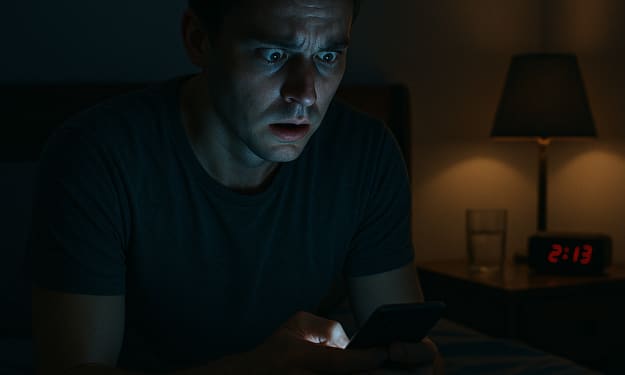
When your most-liked story becomes someone else's confession booth The message came in at 2:13 a.m. I saw the notification glow on my nightstand, that soft blue light that usually means spam, or a heart emoji, or someone asking, “Did this really happen?”
By abualyaanart4 days ago in Criminal
Review of 'Man on the Run'
My wife and I saw Man on the Run, a nearly 2-hour documentary on Amazon Prime, about Wings, Paul McCartney's group that flew around the world from shortly after The Beatles broke up in early 1970 to shortly after John Lennon was murdered at the end of 1980, making a Beatles reunion forever impossible.
By Paul Levinsonabout 18 hours ago in Beat


Comments
There are no comments for this story
Be the first to respond and start the conversation.