
Gaza at the Two-Year Mark: A War Without End, a People Without Respite
As the world marks the second anniversary of the October 7 conflict, Gaza faces deepening devastation, broken ceasefires, and mounting evidence of systemic violations-with over 66,000 Palestinians killed and no peace in sight.

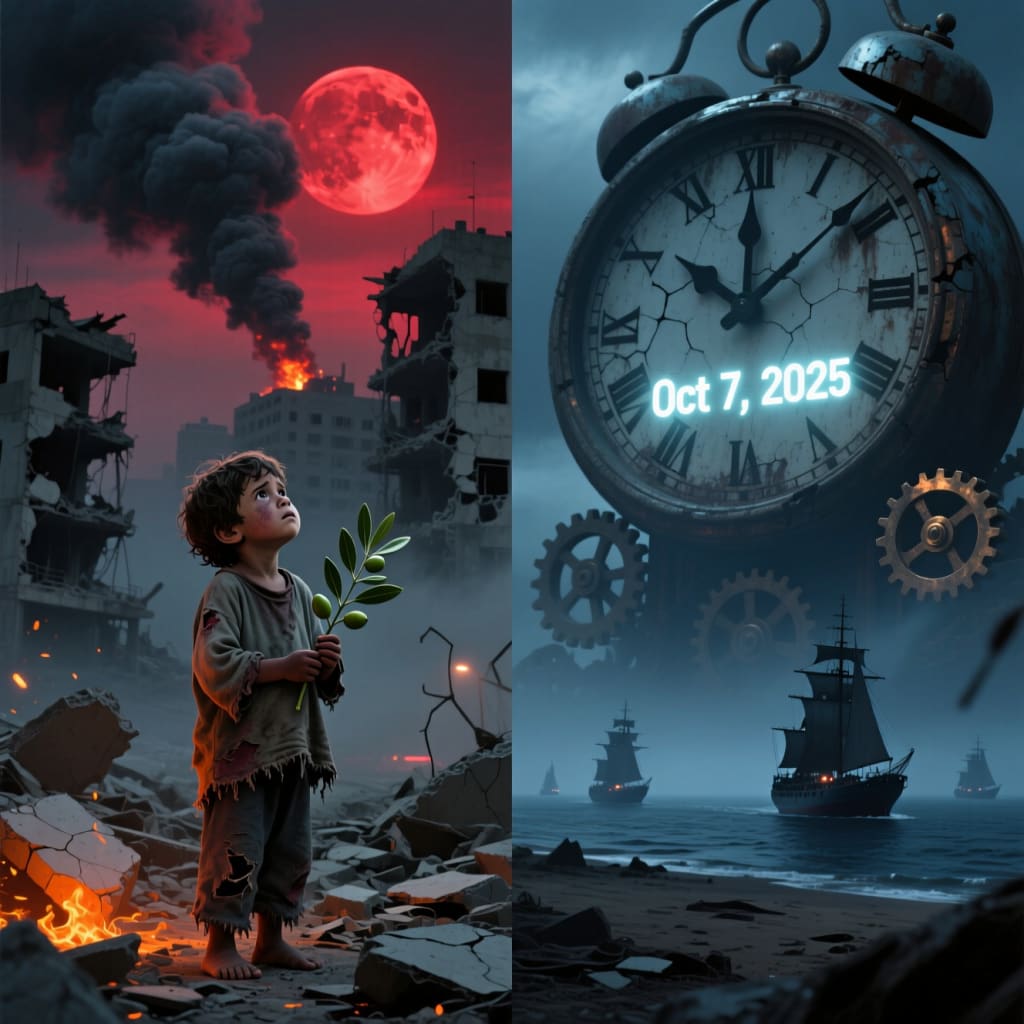
Gaza at the Two-Year Mark: A War Without End, a People Without Respite
October 7, 2025, marks a grim milestone: two years since the Hamas-led attacks on Israel and the beginning of what observers now describe as “a war against civilians” in Gaza
. What followed was not just a military response but, according to the United Nations Independent International Commission of Inquiry, an act of genocide—a finding formally issued in September 2025
. At least 66,000 Palestinians have been killed in Gaza since the war began, with tens of thousands more missing under rubble, injured, or displaced
.
The conflict briefly paused in early 2025 under a fragile ceasefire, but on March 18, 2025, Israel launched surprise airstrikes that shattered the truce, reigniting full-scale hostilities
. Since then, humanitarian conditions have deteriorated to catastrophic levels. According to the UN Office for the Coordination of Humanitarian Affairs (OCHA), food, clean water, medicine, and fuel remain critically scarce across the Strip, with 90% of the population internally displaced and entire cities reduced to uninhabitable wastelands
In recent weeks, violence has intensified. Israeli forces killed 73 Palestinians in a single day in early October 2025, while simultaneously arresting international activists linked to the Global Sumud Flotilla—a civilian aid initiative attempting to breach the naval blockade
. These arrests underscore Israel’s broader strategy: not only military containment but political and geographic control. In a September 2025 report, UN experts warned that the Israeli government has demonstrated “a clear and consistent intent to establish permanent control over the Gaza Strip” and to ensure a “Jewish majority” through forced displacement and demographic engineering
The human toll defies comprehension. Hospitals operate without anesthesia, electricity, or staff—many medical workers have been killed or detained. Children scavenge for scraps in bombed-out markets. Families live in tents amid winter rains and summer heat, with no sanitation or safe shelter. Yet amid this devastation, resilience persists. Community kitchens, underground classrooms, and makeshift clinics continue to function—often run by teenagers who have lost their parents but not their purpose.
Meanwhile, the international legal front is heating up. The UN’s genocide determination
adds weight to cases already before the International Court of Justice (ICJ) and the International Criminal Court (ICC). South Africa, Türkiye, and several human rights organizations have called for immediate enforcement of ICJ provisional measures, including an arms embargo on Israel. But geopolitical divisions—particularly in the UN Security Council—have stalled meaningful intervention.
Back in Israel, the trauma of October 7, 2023, remains raw. The initial attacks killed 1,139 people and resulted in about 200 taken hostage
While over half the hostages have been released or rescued, dozens remain unaccounted for—some believed to be held in Gaza, others feared dead. The Israeli public is deeply divided: some demand total military victory, others plead for a negotiated end to a war that has cost both sides dearly.
Yet the asymmetry of suffering is undeniable. Gaza’s population—2.3 million people in a territory smaller than New York City—has endured the highest per capita bombing rate in modern history. Satellite imagery shows more than 60% of all buildings damaged or destroyed. Agricultural land is contaminated with unexploded ordnance. The aquifer is poisoned. Experts warn that even if the war ended today, recovery would take decades.
As the second anniversary approaches, vigils are being held worldwide—from Johannesburg to Jakarta, from Berlin to Buenos Aires. Artists, students, doctors, and faith leaders are calling not just for ceasefires, but for justice, accountability, and a reimagined future. The Global Sumud Flotilla, despite arrests and naval blockades, plans to sail again—carrying not just aid, but witness.
The war in Gaza is no longer just a regional conflict. It has become a moral litmus test for the international order. Two years in, the world can no longer claim ignorance. The question is no longer what is happening, but what will we do about it?
About the Creator
Wings of Time
I'm Wings of Time—a storyteller from Swat, Pakistan. I write immersive, researched tales of war, aviation, and history that bring the past roaring back to life
Keep reading
More stories from Wings of Time and writers in Criminal and other communities.
The Global Sumud Flotilla and the Shadow of Arrests
Waves of Defiance: The Global Sumud Flotilla and the Shadow of Arrests The Mediterranean was calm that morning, its blue waters shimmering under the October sun. On the horizon, a cluster of small boats sailed steadily forward, their sails painted with words of hope, their decks carrying boxes of medicine, food, and blankets. They called it the Global Sumud Flotilla—“sumud” meaning steadfastness in Arabic.
By Wings of Time 4 months ago in Criminal
The Ephrata Man Who Collected Death: A Profile of Jonathan Gerlach
The Mask of Normalcy To the residents of Ephrata Borough, Jonathan Christ Gerlach was just the guy at 100 Washington Avenue. He was 34 years old. He drove a silver Toyota RAV4. He paid his taxes. There were no red flags on the exterior of his property. The lawn was cut. The siding was clean. In a town obsessed with "curb appeal," Gerlach was a model citizen.
By Sunshine Firecrackerabout 24 hours ago in Criminal




Comments
There are no comments for this story
Be the first to respond and start the conversation.