
From streets to controlling Mumbai
For Decades


All the image credits go to, Times of India, and Indian Express.
It wasn’t luck, it was pure calculated power.
For decades, one man exerted full control over Mumbai's vast criminal underworld and his name was Dawood Ibrahim.
He rose to power and endured influence over India's largest city Mumbai, this reveals the complex connection of organized crime, politics, and law enforcement.
This is how a single gangster dominated Mumbai for so long.
Backstory
Ibrahim's criminal work started in 1970s amid Mumbai's bustling black markets and smuggling operations.
Born into a lower-middle-class family, he started as a small-time criminal but quickly displayed a talent for organization and strategic thinking
With his combination of ruthlessness, strategic alliances, and corruption of officials, he expanded his crime network real fast.
By the 1980s, Ibrahim's D-Company gang had become the dominant force in Mumbai's underworld, involved in extortion, smuggling, drug trafficking, and contract killings.
This is how Ibrahim controlled Mumbai
1. Strong Political connections,
Ibrahim cultivated relationships with politicians and government officials, offering campaign funding and other favors in exchange for protection and influence.
The political cover made it difficult for law enforcement to effectively target his operations.
2. Police corruption,
By bribing police officers and officials, Ibrahim ensured that many of his activities went uninvestigated.
3. Business interests,
Ibrahim invested in legitimate businesses, blurring the lines between his criminal and legal operations. This allowed him to launder money and gain lots of respect.
4. International connection,
After fleeing India in the 1980s, Ibrahim established bases in Dubai and Pakistan. These international connections made it extremely difficult for Indian authorities to capture him.
5. Community support,
In some poor areas of Mumbai, Ibrahim got an image as a Robin Hood figure, providing charity and assistance to gain popular support and protection.
6. Fear and intimidation,
Ibrahim's willingness to use extreme violence against rivals and informants created a climate of fear that discouraged opposition.
Why was it difficult to combat D-company?
The challenges in combating D-company showed issues within India's criminal justice system.
Understaffed and under-resourced police forces struggled to gather evidence and build cases against well-connected criminals.
The slow pace of court proceedings also worked in favor of gangsters with the means to delay trials indefinitely.
Ibrahim's control over Mumbai came at a devastating cost to the city and its residents. Extortion rackets stifled small businesses. Turf wars between gangs led to bloody street violence.
While Ibrahim himself eventually fled India and his direct control waned, the systems and networks he established continued to shape Mumbai's underworld for years.
His legacy demonstrates how organized crime can become entrenched when it successfully exploits weaknesses in law enforcement, politics, and socioeconomic conditions.
Impact on Mumbai
The cost of Ibrahim's control over Mumbai was immense. Extortion rackets stifled small businesses and economic growth. Turf wars between rival gangs led to bloody street violence that claimed innocent lives. The injection of criminal money into legitimate enterprises distorted markets and encouraged further corruption.
Moreover, the D-Company's involvement in the 1993 Mumbai bombings, which killed over 250 people, demonstrated the potential for organized crime to evolve into terrorism with devastating consequences.
Conclusion
Mumbai became his playground, and law enforcement couldn’t keep up. His network expanded internationally, and even decades later, his influence is still felt in the city.
The shocking story of how one man controlled Mumbai's underworld for decades serves as a stark reminder of the vigilance required to prevent organized crime from gaining such a stranglehold on urban centers.
It underscores the need for strong institutions, public engagement, and efforts to create societies where the rule of law prevails over the law of the crime.
Hit follow for more on India’s deadliest gangsters.
About the Creator
Johnny Hembrom
I write on crime, thriller, and mysteries of India, and sometimes from across the world.
Come, join me on this journey!
Keep reading
More stories from Johnny Hembrom and writers in Criminal and other communities.
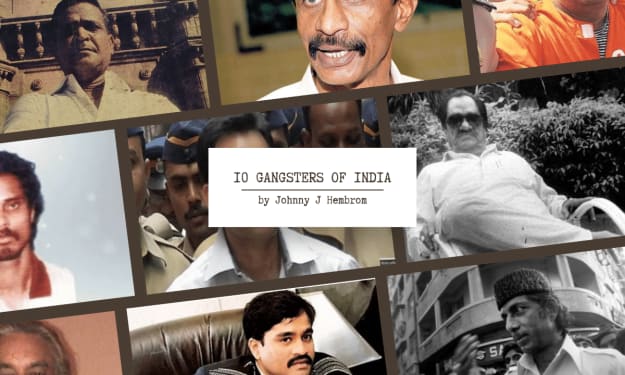
Uncover 10 Gangsters of the India World Didn't know about
India has a rich tapestry of history, filled with tales of valour, mystique, and even a few rogues. Among them are some fascinating characters who carved their names in the annals of crime. From daring heists to legendary turf wars, these historical gangsters have left an indelible mark on Indian folklore.
By Johnny Hembrom2 years ago in Criminal
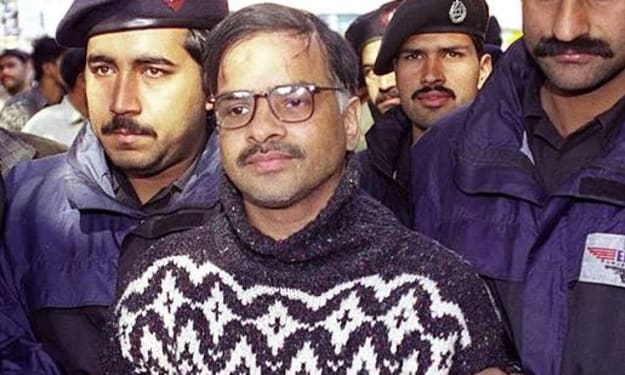
Javed Iqbal: The Monster Who Murdered 100 Boys in Six Months
Javed Iqbal Mughal stands as one of the most horrifying and prolific serial killers in modern history earning the grim distinction of being Pakistan's worst serial killer. Born around 1961 in Pakistan Iqbal came from a relatively affluent background. His family provided him with significant privileges early in life by his late teens his father had purchased a villa for him and gifted him a powerful 200cc motorbike. These luxuries would later become tools in his predatory schemes.In the early 1990s Iqbal's dark tendencies first came to light when he was arrested following allegations from one of his victims. He faced accusations of sexually abusing young boys luring them to his residence with promises of food money or shelter. However, the case did not result in lasting consequences—no formal charges stuck, and he was released. This brush with the law left a deep scar on Iqbal. He later claimed that the stress and humiliation his mother endured during his arrest and the surrounding scandal contributed to her suffering a fatal heart attack. Consumed by grief and rage Iqbal vowed revenge—not directly against the authorities, but against society itself. He declared his intention to inflict the same level of anguish on 100 other mothers by taking their sons' lives.
By Kure Garba5 days ago in Criminal
The Ken Childs Controversy: Inside a Private Investigator Scandal Involving Surveillance, Cybercrime Allegations
Los Angeles is a city built on stories. Some are scripted in movie studios. Others unfold quietly in courtrooms, investigative offices, and digital networks far from the spotlight.
By Shane Smith4 days ago in Criminal


Comments
There are no comments for this story
Be the first to respond and start the conversation.