
From Antwerp to Rotterdam: The Rise of Europe’s Drug Smuggling Superhighway
How Northern Europe’s two largest ports became the epicenter of international drug trafficking.

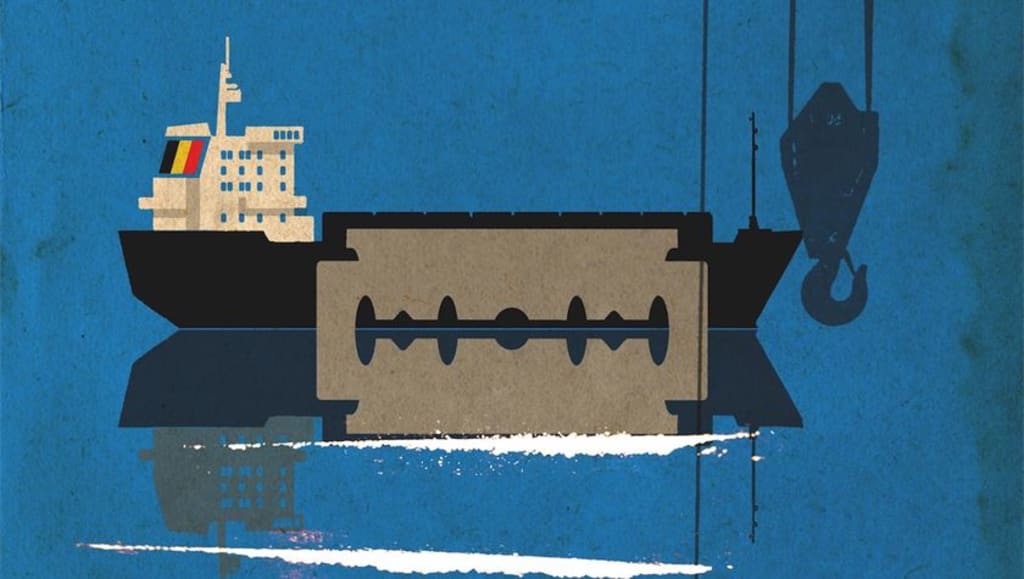
Organized Crime on the Rise
For several years, organized crime has been expanding its influence in European markets. Traditionally involved in illegal activities such as prostitution and extortion, a new generation of criminal networks has moved into more complex operations. The drug trade, in particular, has propelled them to the top of the crime hierarchy. According to Europol, the cocaine supply chain is one of the most active and lucrative illegal trafficking networks in the world, largely due to its presence in two of Europe’s most critical entry points: the ports of Antwerp and Rotterdam.
But how did Albanian-speaking criminal groups become such dominant players in the European drug trade?
The Albanian Mafia’s Rise in the Drug Trade
The Albanian mafia holds a strategic position in the Balkan region, long known as a key transit point for heroin trafficking. Heroin often originates in Afghanistan, passes through Turkey, and reaches Albania, where it is frequently cut and distributed. According to the Italian Anti-Mafia Directorate, Albania is also one of the primary sources of cannabis in Europe, with Albanian criminal groups working alongside traditional Italian mafia organizations in drug trafficking operations.
The “Vlora” Exodus and Criminal Expansion
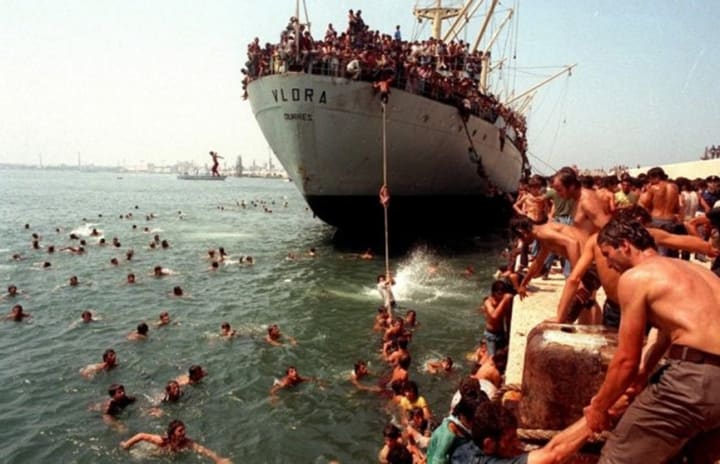
The geographical proximity between Albania and Italy played a crucial role in the development of this criminal network. In the 1990s, large waves of Albanian migrants arrived in Italy aboard ships such as the infamous Vlora, seeking better lives. Some of these migrants, however, were recruited into Italian criminal groups, initially working in smuggling and later taking part in the drug trade. Albanian groups learned from Italy’s Ndrangheta and other mafia organizations, gradually taking control of cannabis distribution in Italy, one of their largest markets.
Over the past two decades, these groups have expanded into the cocaine trade. In the early 2000s, Albanian-speaking criminals established operations in South America, initially as intermediaries for the Italian mafia, which had strong connections with Colombian cartels. At first, they worked as contractors, transporting cocaine from South American ports to Europe. However, their growing experience and network of contacts soon allowed them to establish their own independent supply chains. Today, Ecuador has become a major hub for Albanian criminal syndicates, as cocaine production in Colombia has skyrocketed—quadrupling between 2013 and 2019—to meet the increasing demand in Europe.
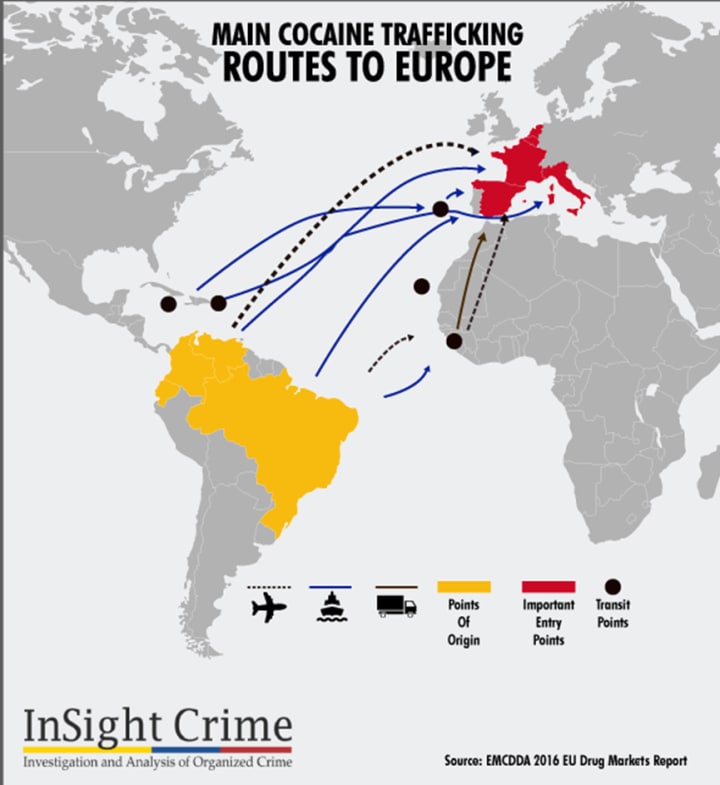
Thu,s the Italian mafi,a the Ndrangeta would control 80 per cent of the cocaine that reaches Europe. According to an Italian prosecuto,r the Italian Mafia, not being able to handle all these huge quantities on their own,led the Colombian suppliers to start to look for additional partner,s including the Albanians, who were already well positioned. Eventually, the Albanian mafia has gone from an organization that gives a logistical hand to the Italian mafi, to one that is able to run its own supply chain in Europe.
But what the Albanian mafia has done, is change the whole business model. Traditionally those who import wholesale and sell on the street work separately. Instead, Albanian criminal groups have taken over the entire process, from ordering to distributing the goods to Albanian-speaking affiliates in Europe such as the UK-based Albanian gangs.
The two primary entrance ports used by this "super cartel" that supplied a third of Europe's cocaine, are Rotterdam and Antwerp in neighbouring Netherlands and Belgium.
Rotterdam
Europe’s biggest port Rotterdam "drowning in cocaine"
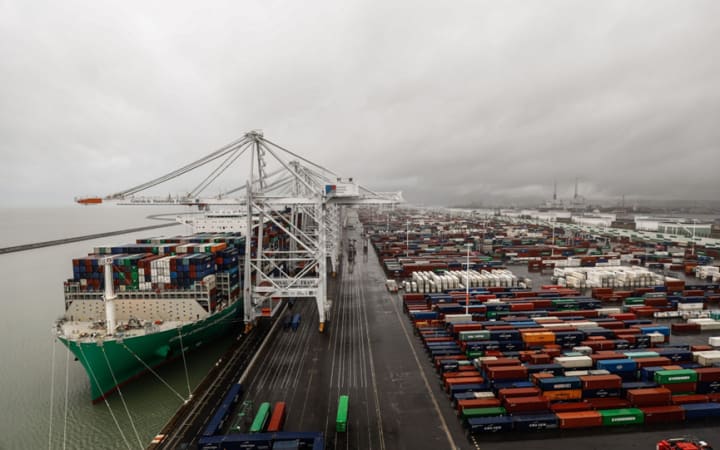
Rotterdam, the largest port in Europe, is famous for its vast shipping infrastructure. However, it is also a major gateway for illegal drugs. In 2021 alone, Dutch authorities seized a record-breaking 70 tonnes of cocaine, a staggering 74% increase from the previous year.
‘Needle in a haystack’
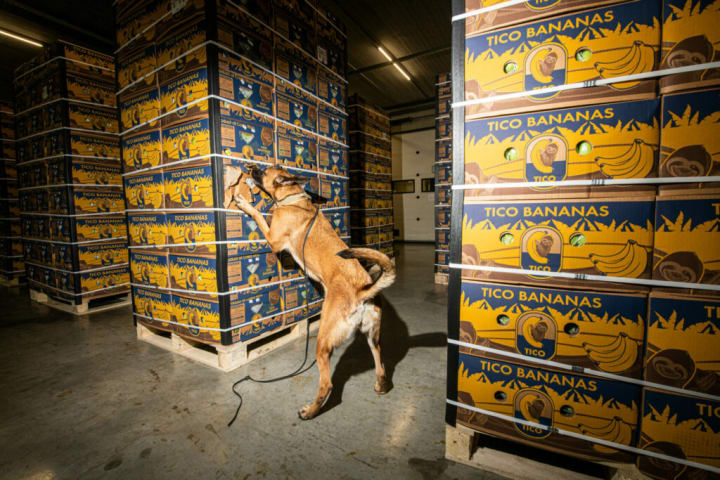
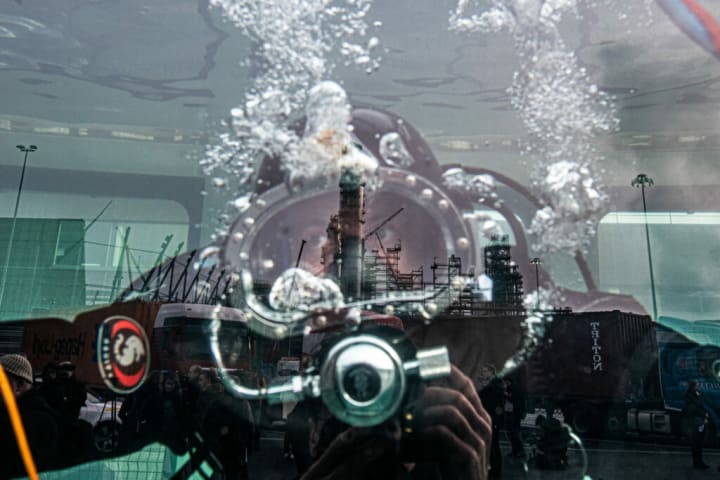
Smugglers use increasingly sophisticated methods to conceal cocaine, often hiding it inside shipping containers or even beneath the hulls of cargo ships, where it is retrieved by divers. Dutch customs officials emphasize the need for strong international cooperation to combat the flow of drugs, including monitoring source countries, preventing port worker corruption, and increasing container inspections.
Risk assessment plays a critical role in these operations. Suspicious containers flagged through intelligence sharing are thoroughly searched by sniffer dogs and customs officers. Meanwhile, divers inspect ships for hidden contraband. Some officials argue that increased automation in port operations has helped reduce corruption, as it limits human access to certain areas of the port.
In an effort to prevent criminal infiltration, companies in Rotterdam are now conducting extensive background checks on port workers, drivers, and terminal operators in collaboration with the Dutch intelligence agency AIVD. This issue has become so pressing that, in October 2022, ministers from Belgium, Germany, France, Italy, and Spain met in Amsterdam to discuss new strategies for tackling drug-related organized crime. They also agreed to deploy additional liaison officers to Latin America in hopes of intercepting shipments before they reach Europe.
Drug Wars in Antwerp
How Belgium became Europe’s port of choice for cocaine.
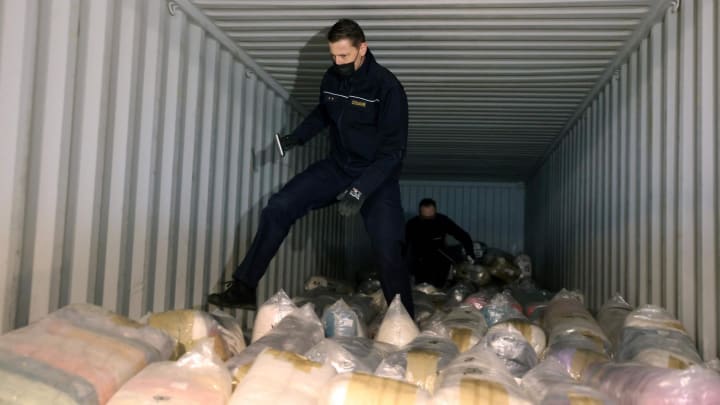
In early January 2022, Belgium’s customs authorities announced a record-breaking cocaine seizure—approximately 110 tonnes intercepted at the Antwerp port in a single year. The news was overshadowed, however, by a tragic event in a northern Antwerp suburb. Just hours before the announcement, unknown gunmen opened fire on a residential home with a Kalashnikov, killing an 11-year-old girl in what police believe was a drug-related attack.
Authorities estimate that at least 40% of the cocaine entering Europe comes through Antwerp and nearby ports. Until recently, Belgium had largely avoided the drug-related violence seen in Dutch cities like Amsterdam and Rotterdam. However, with law enforcement cracking down on powerful players in the Netherlands, Antwerp is now experiencing an increase in bombings and shootings, signaling a shift in organized crime activities.
The Battle Against Smuggling
Despite increased security measures, drug trafficking in Europe is growing at an unprecedented rate. As criminal organizations become more sophisticated, law enforcement agencies struggle to keep up. In the meantime, the effects of the booming cocaine trade continue to ripple through society, affecting both the wealthy elite and everyday working-class citizens.
With Europe’s ports now at the center of this crisis, the future remains uncertain. The challenge of combating organized crime in an interconnected world has never been more pressing.
Looking Ahead
In my upcoming articles, I will explore the origins of the Ndrangheta, the infamous Southern Italian mafia, and examine the role of global shipping companies in facilitating illegal operations. Stay tuned.
Written and Published by Sergios Saropoulos
About the Creator
Sergios Saropoulos
As a Philosopher, Writer, Journalist and Educator. I bring a unique perspective to my writing, exploring how philosophical ideas intersect with cultural and social narratives, deepening our understanding of today's world.
Keep reading
More stories from Sergios Saropoulos and writers in Criminal and other communities.
Catch Me If You Can (Greek Edition)
Many of you might have seen the movie, Catch Me If You Can, a 2002 American biographical crime comedy-drama directed and produced by Steven Spielberg, starring Leonardo DiCaprio and Tom Hanks. The screenplay by Jeff Nathanson is based on the "autobiography" of Frank Abagnale, who claims that before his 19th birthday, he successfully performed cons worth millions of dollars by posing as a Pan American World Airways pilot, a Georgia doctor, and a Louisiana parish prosecutor. The movie version is based on Abagnale's book of the same name published in 1980. If I did not know that the story was based on this book, I would be pretty sure that Spielberg might have been influenced by a similar story of George Koskotas, our story's protagonist, that unfortunately, his story has not been dramatized yet.
By Sergios Saropoulos3 years ago in Criminal
The Second Crime Scene: The 8 Bodies Found in the Ephrata Storage Locker
DOSSIER ENTRY: THE SECOND CRIME SCENE TARGET LOCATION: EPHRATA SELF STORAGE (FACILITY NAME REDACTED) SEARCH DATE: WEDNESDAY, JANUARY 7, 2026 EVIDENCE RECOVERED: 8 INTACT HUMAN CORPSES / SKELETAL REMAINS THEORY: "FINISHED GOODS WAREHOUSE" STATUS: VERIFIED (AFFIDAVIT OF PROBABLE CAUSE)
By Sunshine Firecracker5 days ago in Criminal
The Facebook Marketplace of Horrors: Inside the groups where bones are traded like baseball cards.
It Wasn't the Dark Web When we hear about the illegal sale of human body parts, we imagine the "Dark Web"—encrypted Tor browsers, Bitcoin wallets, and shadowy Russian servers. The terrifying reality of the Jonathan Gerlach case is that he wasn't hiding in the digital shadows. He was hiding in plain sight.
By Sunshine Firecracker4 days ago in Criminal
How to Succeed at the Benson Directory®
Congratulations and welcome to the Benson Directory® employee #22391! As our newest call handler, you will have the privilege of speaking with dozens of unique and interesting people on a daily basis as well as the opportunity to earn bonuses for high performance. Contained within this handbook you will find a set of ease to follow instructions designed to help you settle in to your new role and begin paving the way to success.
By S. A. Crawford3 days ago in Fiction



Comments
There are no comments for this story
Be the first to respond and start the conversation.