
Florida UPS Truck Hijacking, Deadly Shootout, and the Arrest of Four Police Officers
How a 2019 UPS hijacking turned into a deadly shootout, leaving two innocent men dead and four police officers facing manslaughter charges.

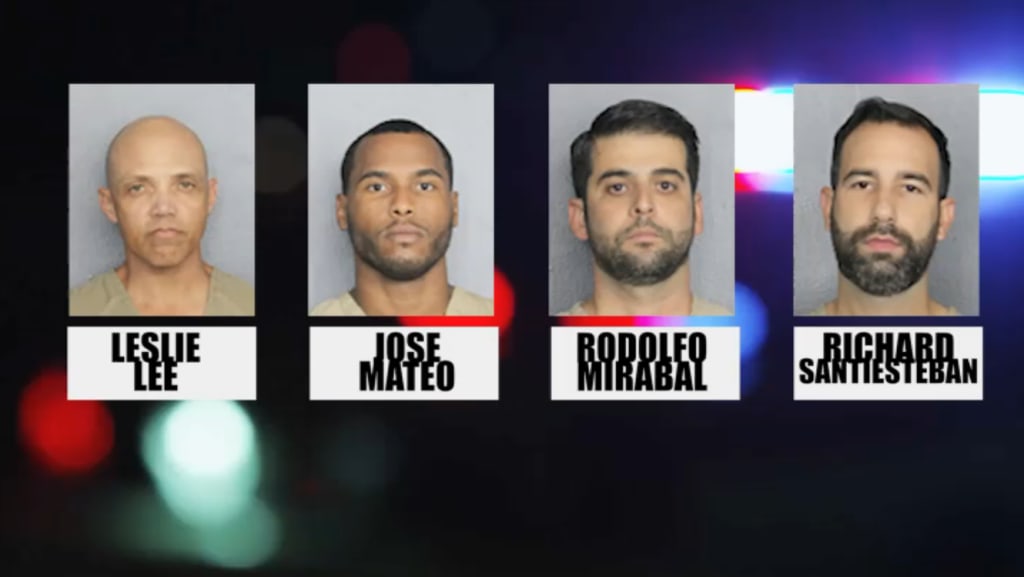
The case of the Miramar UPS truck hijacking in Florida remains one of the most shocking and unusual law enforcement incidents in recent memory. On December 5, 2019, what began as an armed jewelry store robbery quickly spiraled into a hostage situation, a police chase, and a chaotic shootout at a busy intersection just outside Fort Lauderdale. The outcome left two innocent men dead and, years later, four police officers facing manslaughter charges. It is a story that forces us to question the boundaries of police accountability, the limits of acceptable force, and the balance between public safety and reckless action.
From Jewelry Store Robbery to Hostage Standoff
The sequence of events was as dramatic as it was tragic. Two armed men carried out a robbery at a jewelry store before fleeing the scene and hijacking a UPS delivery truck. Inside the truck was twenty-seven-year-old Frank Ordoñez, a young delivery driver who suddenly found himself a hostage at gunpoint. As the suspects fled across South Florida, police mobilized quickly. Radio dispatches captured the intensity of the situation, with warnings that the suspects were armed, that they had placed a gun to Ordoñez’s head, and that officers were ordered not to approach the vehicle. The chase lasted until rush hour traffic boxed the suspects in at a crowded Miramar intersection, where dozens of officers surrounded the truck. Within moments, gunfire erupted.
The Deadly Shootout
What followed was a storm of bullets. In the span of just twenty-five seconds, approximately twenty officers from multiple jurisdictions fired over two hundred rounds into the congested intersection. When the gunfire stopped, the two suspects were dead—but so were Ordoñez and seventy-year-old Richard Cutshaw, an uninvolved motorist sitting in his car at the intersection. Forensic reports later confirmed the most devastating truth: both Ordoñez and Cutshaw were killed by bullets fired from police weapons, not by the suspects.
Why Four Officers Were Charged
After years of investigation by the Florida Department of Law Enforcement, the FBI, and multiple local agencies, a grand jury indicted four officers: Jose Mateo, Leslie Lee, Richard Santiesteban, and Ruel Mirabal. Each faces charges of manslaughter with a firearm, a serious charge under Florida law carrying a possible penalty of up to thirty years in prison. The decision to indict these officers is unusual, as it shifts the focus away from the criminals—who were killed in the shootout—and onto the very officers sworn to protect the public. Prosecutors argue that the officers acted recklessly by opening fire in such a densely populated area without sufficient control or fire discipline. Investigators’ findings were damning: Ordoñez was struck by bullets fired by all four officers, and Cutshaw was killed by a round fired from one of them. None of the innocent men were hit by the suspects’ gunfire.
The Defense Strategy: Stand Your Ground and Chaos in the Moment
The officers have pleaded not guilty, maintaining that they fired in the heat of a chaotic and life-threatening situation. One officer, Jose Mateo, has filed a motion to dismiss charges under Florida’s Stand Your Ground law, a defense more commonly used by civilians than law enforcement. Legal experts note that applying Stand Your Ground to police officers is highly unusual and could set a precedent in future cases. The law was not explicitly written for police, yet it also does not exclude them, leaving room for a unique legal argument that may determine the future scope of such defenses in the state.
Expert Perspectives on Accountability
Former FBI Special Agent Steve Moore, who reviewed the case, described the shootout as troubling and chaotic. He argued that many officers appeared to fire their weapons simply because others were shooting, a dangerous phenomenon often described as “group think.” According to Moore, while the lack of fire discipline and poor tactical control were clear, he questioned whether these actions should be treated as criminal. In his view, the case reflects civil negligence rather than criminal intent. He compared the situation to cases of medical malpractice or aviation accidents, where tragic mistakes can lead to civil liability but rarely to prison sentences. Prosecuting officers for errors made under intense pressure, he warned, could create a chilling effect that discourages decisive action in future crises.
Tactical Alternatives That Weren’t Taken
At the same time, critics argue that the police mishandled the situation from the start. Rather than surrounding the truck and unleashing a barrage of bullets in a crowded intersection, some suggest that tactical alternatives should have been pursued. Helicopter surveillance could have tracked the suspects while officers maintained distance, reducing the risk to the hostage. A proper perimeter and evacuation of civilian traffic would have created safer conditions. Deploying SWAT teams and trained snipers, as is standard in hostage scenarios, could have provided a more controlled resolution. Instead, officers rushed into a gunfight that endangered everyone at the scene.
The Families’ Fight for Justice
For the families of Frank Ordoñez and Richard Cutshaw, the tragedy is compounded by the fact that their loved ones were killed not by criminals, but by those meant to protect them. With the suspects dead, the families’ grief and anger have been directed at the police. Civil lawsuits and public pressure have amplified the call for accountability, and many feel that “mistakes” cannot excuse outcomes as catastrophic as this.
A Test Case for Police Accountability
The case of the Miramar UPS hijacking and shootout is more than a local tragedy; it is a test case for the future of police accountability in America. It raises profound questions about where the line should be drawn between negligence and criminal recklessness, whether police should be prosecuted for decisions made in high-stakes confrontations, and how hostage situations should be managed to minimize civilian casualties. It also challenges the legal boundaries of Florida’s Stand Your Ground law and how it applies to law enforcement officers.
What Comes Next
As the trial approaches, this case will almost certainly draw national attention. Its outcome may influence police training, set new legal precedents, and reshape how law enforcement agencies handle hostage scenarios in crowded public spaces. The intersection in Miramar stands as a haunting reminder of how quickly law enforcement operations can spiral out of control, leaving families shattered and communities questioning the very systems meant to protect them. What began as a jewelry store robbery ended with two innocent lives lost and four officers fighting for their freedom. Whether this is justice or an overreach of prosecution is now up to a jury to decide, but the implications will resonate far beyond South Florida.
About the Creator
Lawrence Lease
Alaska born and bred, Washington DC is my home. I'm also a freelance writer. Love politics and history.
Keep reading
More stories from Lawrence Lease and writers in Criminal and other communities.
Is Luigi Magione Inspiring Other Shootings
Federal prosecutors in New York City are pursuing an extraordinary strategy in the case of Luigi Mangione, the man accused of killing a United Healthcare CEO. Rather than framing the crime as a singular act of violence, the government is attempting to expand its significance—arguing that Mangione’s actions were ideological, symbolic, and deliberately designed to inspire others. The latest court filings even attempt to tie Mangione’s alleged influence to unrelated acts of violence, raising questions not only about his guilt but also about whether he should face the death penalty.
By Lawrence Lease5 months ago in Criminal
Inside the House of Skulls: The Full Timeline of the Jonathan Gerlach Investigation
INVESTIGATION TARGET: JONATHAN C. GERLACH INCIDENT LOCATION: 100 WASHINGTON AVENUE, EPHRATA PA CHARGES: ABUSE OF CORPSE (x100), THEFT, DESECRATION STATUS: INCARCERATED ($1M BAIL) KEYWORDS: #HouseOfSkulls #JonathanGerlach #EphrataCrime #MountMoriah
By Sunshine Firecracker5 days ago in Criminal
Multinational Crisis
Part One: Nigeria You have all heard about Nigerians, Nigeria in general. The infamous scammer country. But let’s have a real conversation. Let me give you some extremely boring stats, so we are on a level playing field, on my thoughts. I’ll be as brief as possible considering, no one wants an hour long dissertation on economic issues.
By Alexandra Grant5 days ago in Criminal


Comments
There are no comments for this story
Be the first to respond and start the conversation.