
Five Things That Leave Us Asking Questions About The JonBenet Ramsey Case
It's been 29 Years Since JonBenet Ramsey was Murdered and The Case is still Cold


On the morning of December 26, 1996, at around 5:30 a.m., Patsy Ramsey, a devoted wife and mother living in Boulder, Colorado, started her day like any other. She got out of bed and made her way downstairs in her family’s sprawling mansion to brew some coffee. But what she found on the staircase was far from ordinary—it was shocking. Sitting there was a ransom note addressed to her husband, John Ramsey. The note began:
"Mr. Ramsey, Listen carefully! We are a group of individuals who represent a small foreign faction. We respect your bussiness [sic] but not the country it serves. At this time we have your daughter in our posession [sic]. She is safe and unharmed and if you want her to see 1997, you must follow our instructions to the letter." (via Biography).
The demands? A jaw-dropping $118,000 ransom and explicit instructions not to involve the police. But Patsy and John didn’t follow that rule—instead, they called 911 to report the disappearance of their 6-year-old daughter, JonBenét Ramsey. JonBenét wasn’t just any kid; she was a rising star on the beauty pageant circuit and the pride of the Ramsey family. The call set off a frantic search.
ours later, at around 1 p.m., police suggested John conduct another search of the house with a friend. That’s when the unthinkable happened—John discovered JonBenét’s lifeless body in the basement. She had been brutally murdered, with a ligature around her neck, a severe skull fracture, and signs of possible sexual assault (via The Washington Post).
Nearly 30 years later, the JonBenét Ramsey case is still one of America’s most haunting mysteries. With every new piece of evidence or retelling of the story, it only raises more questions than answers. It’s a case that refuses to fade into the background, captivating public interest and cementing itself as one of the most baffling crimes in modern history.
Why Was JonBenet Ramsey was Murdered
To this day, the truth about what happened to 6-year-old JonBenét Ramsey remains fiercely debated by professionals and true crime fanatics alike. Was it a kidnapping gone horribly wrong, or something else entirely? One of the most compelling theories suggests that JonBenét’s death was the result of a failed abduction. Clues like the duct tape found on her mouth and other details point to the possibility that the killer had planned to kidnap her from her home but something went awry.
John Wesley Anderson, an author and private investigator who’s delved deep into the case, described it as methodical yet tragically derailed. Speaking to The Independent in 2023, he explained: “The killer went into that house with a kidnap kit. He brought duct tape, he brought parachute cords, he brought a stun gun to immobilize the victim. So this was very calculated. It was a very methodically executed kidnap attempt that went wrong and ended up in murder.”
But here’s where things get even more puzzling: Why would the perpetrator leave JonBenét’s body behind in the family home? And if the original plan was abduction, what caused them to change course so drastically? Those questions remain unanswered.
Then there’s the ransom note—another key piece of the mystery. Some believe it was nothing more than a distraction, designed to throw investigators off track. John Ramsey himself has gone on record with his own theory, telling People that he believes a masked intruder broke into the house and murdered his daughter.
The case may be decades old, but the intrigue hasn’t faded. Every theory, clue, and interview adds another layer to a story that refuses to be forgotten.
The Amount Demanded in the Ransom Notes
John Ramsey claimed an unknown intruder who raped a 12-year-old girl in Boulder, Colorado nine months prior to JonBenet's murder was his daughter's killer. Further examination of JonBenet Ramsey showed signs of being sexually assaulted, which supported John's version of events. The $118,000 ransom the alleged kidnappers wanted from the Ramseys happened to be the exact amount that John Ramsey had received as a work bonus.

This could not be a coincidence, instead it suggests that the kidnapper-turned-killer had insider knowledge of Ramsey's earnings and could be someone connected to the family. The note being written on paper inside the home, deepens the mystery further.
Why the Crime Scene wasn't Secured
A case involving a missing child and a ransom note should’ve triggered an all-hands-on-deck police response. Instead, the handling of JonBenét Ramsey’s apparent kidnapping fell flat. The most glaring example? It was John Ramsey himself who discovered his daughter’s body after being asked to search the house again—a task that should have been carried out by police investigators during those crucial early hours.
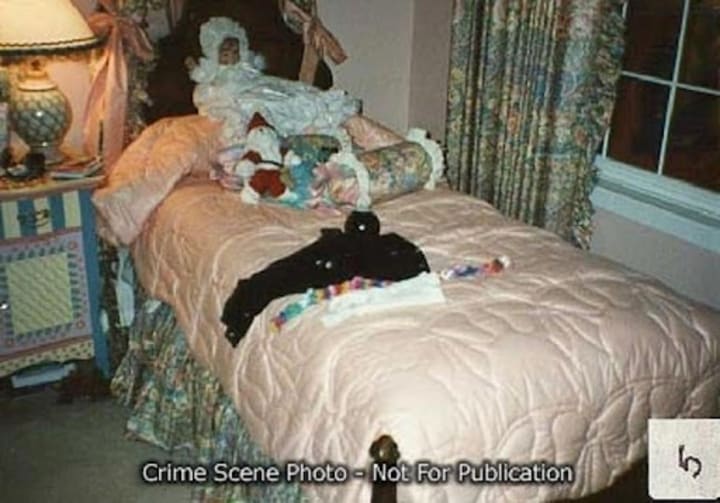
And that decision to have John conduct a second search? It wasn’t just unusual; it was disastrous. The house wasn’t treated as a secured crime scene, and the police failed to clear it of people, leaving room for errors that would haunt the case forever. When John found JonBenét’s body in the basement, his reaction was heartbreakingly human—he carried her upstairs, leaving the cellar door open. But in doing so, he unintentionally contaminated the crime scene, destroying evidence that might have been the key to solving her murder.
It’s moments like these that highlight just how chaotic the initial investigation was. Missed opportunities, procedural missteps, and poor judgment set the stage for a mystery that would grip the world—and remain unsolved decades later.

Why the Ramsey Family Quit Speaking to the Police
After JonBenét Ramsey’s body was discovered and the case shifted to a murder investigation, suspicion quickly turned toward the Ramsey family. At first, the ransom note’s oddly specific demand led some to believe Patsy Ramsey might have been behind it. But the scrutiny didn’t stop there—all three Ramseys, including JonBenét’s older brother Burke, were required to provide hair and blood samples and undergo handwriting analysis to compare their writing to the ransom note.
Then things took a turn. As The New York Times reported a year after the murder, the Ramseys stopped cooperating with police for four months. Instead, they assembled a defense team that sounded like something out of a high-stakes drama: eight lawyers, four publicists, three private investigators, two handwriting experts, and one retired FBI profiler. Their reasoning? They were frustrated by what they saw as police fixating on them as suspects instead of chasing other leads. They also reportedly wanted access to evidence collected in the case.
Meanwhile, the Boulder Police pushed back on claims that they weren’t pursuing other possibilities. Investigators emphasized the sheer scale of their efforts: speaking to over 1,000 people in 19 states and chasing more than 21,000 tips. Their message? They weren’t holding anything back. As a statement on the City of Boulder’s website put it, “The assertion that there is viable evidence and leads we are not pursuing — to include DNA testing — is completely false.”
Even decades later, the tension between the family’s defense efforts and the police’s investigation remains a defining—and polarizing—aspect of the case.
Why the Ramseys were Accused of Assisting a 'Person'
John and Patsy Ramsey were eventually exonerated by a judge after DNA evidence was examined, but not everyone was convinced. Critics, including Boulder police chief Mark Beckner, felt the decision was premature and unsupported. Speaking to PEOPLE True Crimes: Cases That Shocked America, Beckner stated, “Exonerating anyone based on a small piece of evidence that has not yet been proved to even be connected to the crime is absurd.”
Then, in 2013, a bombshell dropped: four previously sealed documents were released, revealing new details about a 1999 grand jury investigation into the Ramseys. Turns out, the grand jury had voted to indict John and Patsy Ramsey—not for murder, but for charges tied to child abuse leading to death and for being accessories after the fact. The documents claimed that the Ramseys “render[ed] assistance to a person, with intent to hinder, delay and prevent the discovery, detention, apprehension, prosecution, conviction, and punishment of such person for the commission of a crime.” That crime? First-degree murder and child abuse resulting in death.
Who was the mysterious third party mentioned in the documents? The identity remains a mystery, but the unsealing of the papers reignited speculation about what the grand jury thought might have happened the day JonBenét died. While Patsy Ramsey passed away in 2006 from ovarian cancer, John Ramsey’s lawyer responded to the revelations by calling for the release of all documents tied to the grand jury proceedings, arguing that the full picture would shed more light on why the grand jury’s findings never led to formal charges.
The release of the documents added yet another layer of intrigue to a case that’s never been short on questions—and left everyone wondering what else might still be hidden behind closed doors.
About the Creator
Lawrence Lease
Alaska born and bred, Washington DC is my home. I'm also a freelance writer. Love politics and history.
Keep reading
More stories from Lawrence Lease and writers in Criminal and other communities.
Minneapolis ICE Shooting Updates
In recent weeks, Minneapolis has found itself at the center of a growing legal and political controversy following a shooting involving Immigration and Customs Enforcement (ICE) agents. What initially appeared to be a straightforward federal use-of-force investigation has evolved into a broader dispute between state authorities and federal officials, raising serious questions about transparency, jurisdiction, and accountability. The most significant development so far is the state’s claim that it has been denied access to key evidence related to the incident. As public attention intensifies, the case is no longer just about what happened during the shooting. It is increasingly about who controls the facts, who gets to investigate them, and how justice is supposed to function when federal and state systems collide. What We Know About the Minneapolis ICE Shooting The shooting occurred during a federal immigration enforcement operation in Minneapolis. ICE agents were reportedly conducting official duties when gunfire erupted, resulting in injuries and immediate emergency response. Federal authorities confirmed the incident and stated that internal protocols were activated, including an automatic review by federal oversight bodies. From the beginning, details were limited. Officials cited the ongoing nature of the investigation and concerns about officer safety. This lack of information, while not unusual in federal cases, quickly became a point of friction for Minnesota state authorities, who argued that the public deserved clarity and that the state had a legal role to play in examining the incident. State Authorities Push for Transparency Minnesota state officials, including investigators and legal representatives, formally requested access to evidence connected to the shooting. This evidence reportedly includes body camera footage, surveillance recordings, forensic reports, and internal communication logs from the operation. According to state representatives, these requests were either delayed or denied outright. The state has since gone on record stating that it cannot independently assess the legality of the shooting without full access to the materials. This denial has fueled concerns that federal agencies are operating without sufficient external oversight, especially in incidents involving potential civilian harm. State leaders emphasized that their position is not adversarial by default. Rather, they argue that cooperation between federal and state agencies is essential to maintain public trust, particularly in communities already wary of immigration enforcement. Federal Response and Jurisdictional Limits Federal officials, for their part, maintain that the investigation falls squarely under federal jurisdiction. ICE operates as a federal agency, and shootings involving federal officers are typically reviewed internally and, when appropriate, by federal prosecutors or inspectors general. In statements released following the controversy, federal representatives cited legal restrictions that limit the sharing of evidence during an active investigation. They also stressed that premature disclosure could compromise witness testimony or investigative integrity. This explanation, while legally grounded, has done little to ease state frustrations. Critics argue that “ongoing investigation” has too often been used as a blanket justification for withholding information, even in cases where transparency could prevent misinformation and public unrest. Community Reaction and Public Trust The Minneapolis community has responded with a mix of concern, anger, and fatigue. For many residents, particularly in immigrant and marginalized communities, the shooting has reopened long-standing fears about aggressive enforcement tactics and lack of accountability. Community leaders and advocacy groups have called for the immediate release of non-sensitive evidence, arguing that transparency is a prerequisite for trust. Peaceful demonstrations and public forums have highlighted a broader demand: that no law enforcement agency, federal or otherwise, should be beyond scrutiny. Local officials echoed these concerns, noting that Minneapolis has spent years attempting to rebuild trust between residents and law enforcement. The perception that evidence is being withheld threatens to undermine that progress. Legal Implications of Denied Evidence From a legal standpoint, the state’s inability to access evidence raises complex questions. While federal agencies do have authority over their operations, states also have a responsibility to investigate deaths or injuries occurring within their borders. Legal experts suggest that this dispute could set a precedent. If states are routinely blocked from reviewing evidence in federal use-of-force cases, it may limit their ability to pursue independent inquiries or bring charges under state law when applicable. Some analysts believe the issue could ultimately be resolved in court, with judges determining whether the state has a legal right to access certain materials. Such a ruling could have national implications, influencing how future federal-state conflicts are handled. Political Dimensions of the Case The Minneapolis ICE shooting has also taken on a political dimension. Immigration enforcement remains a deeply divisive issue, and incidents like this tend to amplify existing ideological divides. State officials critical of federal immigration policies view the denial of evidence as symptomatic of a larger lack of accountability. Meanwhile, supporters of strict federal enforcement argue that state interference could hinder effective operations and put officers at risk. This political tension complicates the path forward. What might otherwise be a procedural disagreement risks becoming a symbolic battle over immigration, law enforcement authority, and states’ rights. What Happens Next? As of now, the investigation continues under federal oversight, while the state explores its legal options. Negotiations between state and federal officials have reportedly not been ruled out, suggesting that a compromise could still be reached. Potential next steps include limited evidence sharing under confidentiality agreements, congressional inquiries, or judicial review. Each option carries its own risks and consequences, both legally and politically. What remains clear is that public pressure is unlikely to fade. Minneapolis residents, like many Americans, are demanding clarity, fairness, and accountability in cases involving law enforcement use of force. A Broader Conversation About Accountability The Minneapolis ICE shooting is no longer just a single incident under investigation. It has become a lens through which broader issues are being examined: the balance of power between federal and state authorities, the limits of transparency, and the role of public oversight in a democratic society. Whether or not the state ultimately gains access to the evidence, the controversy has already sparked an important conversation. How that conversation translates into policy, practice, or reform remains to be seen, but its impact will likely extend far beyond Minneapolis. In the end, accountability is not only about assigning blame. It is about ensuring that systems function openly and fairly, especially when lives are affected. The outcome of this case may help determine how well those principles are upheld in the future.
By Saboor Brohi 4 days ago in Criminal
Sabrina Carpenter Accused of Copying Tiffany A♡ Luna’s Crown Logo—While Her Federal Plagiarism Case Spirals Into Further Career Ruin
Sabrina Carpenter’s pop princess image is crumbling under the weight of what is now being described as one of the most damaging plagiarism cases in music history. The Disney-born starlet is not only battling a brutal federal lawsuit over her song Espresso, but now faces new backlash after debuting a crown into her updated logo June 6, 2025 eerily similar to Tiffany A♡ Luna’s crown, which was quietly unveiled just weeks before — the same Tiffany A♡ Luna currently suing her in federal court.
By Dena Falken Esq7 days ago in Criminal
Bruce Lee and The God of War: Kuan Ti
It starts with love.. The Power to the God Of War and Wealth Walk into a Chinese restaurant (even in Oklahoma, USA), a Chinese police station, a kung fu martial arts studio or even a Chinese temple and you often see a red faced warrior holding a heavy quan-do (spear like weapon).
By WILD WAYNE : The Dragon King4 days ago in Chapters



Comments
There are no comments for this story
Be the first to respond and start the conversation.