
Families of Jack the Ripper’s Victims Call for New Inquest: The Ghosts of Whitechapel Stir Again
The Fight for Truth: Descendants Seek Closure in History’s Most Notorious Serial Killer Case

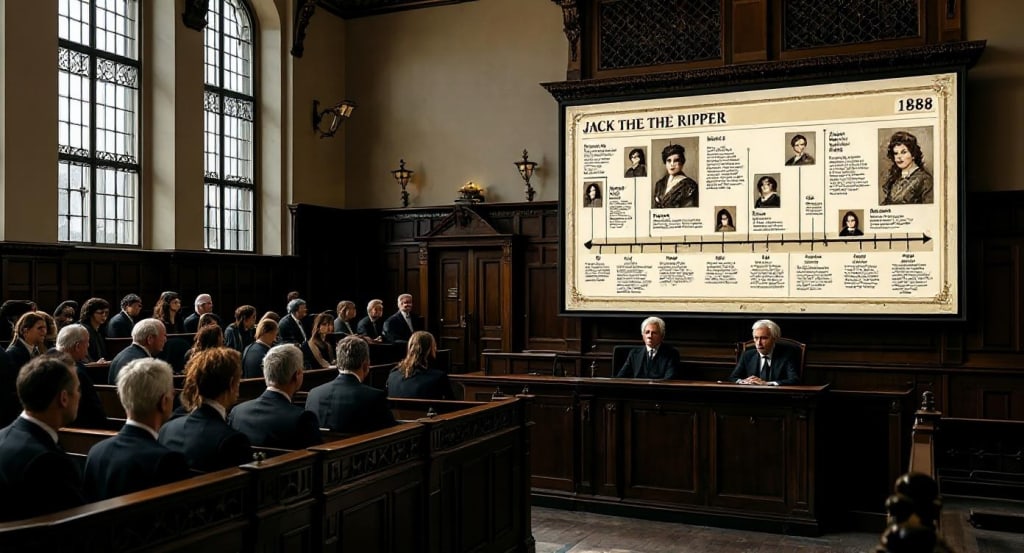
Here’s the story, straight from the cobblestones of Whitechapel to the DNA labs of the 21st century—a tale that refuses to die, no matter how many years have passed or how many books have been written. The ghosts of Jack the Ripper’s victims are stirring again, and this time, it’s their families—descendants with grit and a hunger for justice—who are demanding answers. They want a new inquest, a real name in the record books, and maybe, just maybe, a little peace for the women who were left behind in the shadows.
You Know The Story: London, 1888
If you don’t know the story, you’ve been living under a rock. But just in case, let’s set the scene. London, 1888. The city’s East End is a place where hope is in short supply and fear is a nightly visitor. Five women—Mary Ann Nichols, Annie Chapman, Elizabeth Stride, Catherine Eddowes, and Mary Jane Kelly—are butchered in ways that still make seasoned cops shudder. The killer, who the world would come to know as “Jack the Ripper,” is never caught. The name itself is a piece of theater, plucked from a letter sent to the press, and it’s been sensationalized ever since. The real women, the ones who bled out in the gutters, became footnotes to a legend.
The Families Demand Answers
But legends have a way of getting under your skin, especially if you’re family. Fast forward to today, and the descendants of those women are tired of the myth. They want the man behind the mask named, not for the tabloids, but for the record. Karen Miller, the great-great-great-granddaughter of Catherine Eddowes, is leading the charge. She’s not alone—descendants of the other victims, and even of the prime suspect, Aaron Kosminski, are backing her play. They’re armed with something the original investigators never had: DNA evidence.
DNA and the Modern Twist
Here’s where the story gets its modern twist. In 2007, a researcher named Russell Edwards bought a shawl said to have been found on Eddowes’ body. With the help of Dr. Jari Louhelainen, a senior lecturer at Liverpool John Moores University, they pulled DNA from blood and semen stains on the fabric. The blood matched Miller’s DNA, tying it to Eddowes. The semen matched a descendant of Kosminski, a Polish barber who was a suspect back in the day but never charged. The science isn’t perfect—some experts have raised questions about contamination and methodology—but the match is strong enough to make headlines and, more importantly, to give the families hope that the truth is within reach.
Miller puts it plain: “The name Jack the Ripper has become sensationalized; it has gone down in history as this famous character. What about the real name of the person who did this? Having the real person legally named in a court that can consider all the evidence would be a form of justice for the victims.
"We have got the proof, now we need this inquest to legally name the killer. It would mean a lot to me, to my family, to a lot of people to finally have this crime solved." Karen Miller
The Emotional Weight
The emotional weight here is heavy. For the families, this isn’t just about history—it’s about dignity. For generations, the victims have been dismissed as “just prostitutes,” their lives and deaths overshadowed by the killer’s infamy. Their descendants want the world to remember that these were women with families, with stories, with people who still care. As Sue Parlour, related by marriage to Mary Ann Nichols, put it:
“These women have been dismissed as prostitutes, like they did not matter, but they did”.
Justice and Historical Accountability
There’s another layer here, too—a question of justice and historical accountability. The original inquest in 1888 returned a verdict of “willful murder,” but the killer was never named. Now, with new evidence on the table, the families want the courts to do what the police couldn’t: put a name to the crime. It’s not just about closure for them; it’s about setting the record straight for all the women who’ve been written out of their own stories.
Of course, the legal road is rough. The Attorney General has to sign off on a new inquest, and so far, the answer’s been no—there wasn’t “sufficient new evidence.” But the families, with the help of barrister Dr. Tim Sampson and researcher Russell Edwards, are pushing back. They argue that the DNA evidence, combined with new research into Kosminski’s background and possible Freemason connections, is enough to warrant another look. East London coroner Nadia Persaud has even signaled she’d be willing to preside if the case moves forward.
It's About The Victims
This request for a new inquest is a reminder that justice isn’t just about catching the bad guy—it’s about remembering the victims, about giving families a voice, about refusing to let the past be swept under the rug. The Ripper case has always been a mirror for our fears and fascinations, but now it’s also a test of our willingness to confront uncomfortable truths, even after more than a century.
Conclusion: Justice Matters
In the end, maybe the real story isn’t about Jack the Ripper at all. Maybe it’s about the people who refuse to let the dead be forgotten, who keep asking questions, who keep demanding answers. That’s the kind of justice that matters—the kind that says every life counts, no matter how long it takes to prove it.
For more on the families’ fight and the latest developments, check out the coverage at People, Daily Mail, and CBS News. The case isn’t closed—not by a long shot. And as long as there are people willing to dig, the truth has a fighting chance.
This post may contain affiliate links. If you click on these links and make a purchase, I may earn a commission at no additional cost. I only recommend products or services that add value to my readers.
If you enjoy my writing, would you consider a $1.00 tip using the Vocal Media tipping link? Thank you!
About the Creator
MJonCrime
My 30-year law enforcement career fuels my interest in true crime writing. My writing extends my investigative mindset, offers comprehensive case overviews, and invites you, my readers, to engage in pursuing truth and resolution.
Losing Sweet Holly
Holly Cantrell was a mother of two boys and a wife to an ill husband. Holly was a Physical Therapist Technician at the McAlester Regional Health Center. She was a Bouncy Brunette with a fun sense of Humor. Holly made friends easily and often had lunch with friends at work. Friends, to have a charming Physical therapist while they are pushing and pulling on the sore parts, is such a good thing. But things were noticeably different one cold Friday Morning in January.
By Cassie Moore5 days ago in Criminal
Violence Begets
"Any last words, cowboy?" "None you'd understand, sodbuster." "Funny. That's Marshall Sodbuster to you. But I meant some last nugget that would help us in the adjudication of the myriad offenses counted against you and your gang. I wasn't asking for penitence."
By Adam Diehl5 days ago in Fiction




Comments (1)
The Ripper case is fascinating. It's crazy how these descendants are using DNA now. Must be intense for them to dig into this old, brutal mystery.