
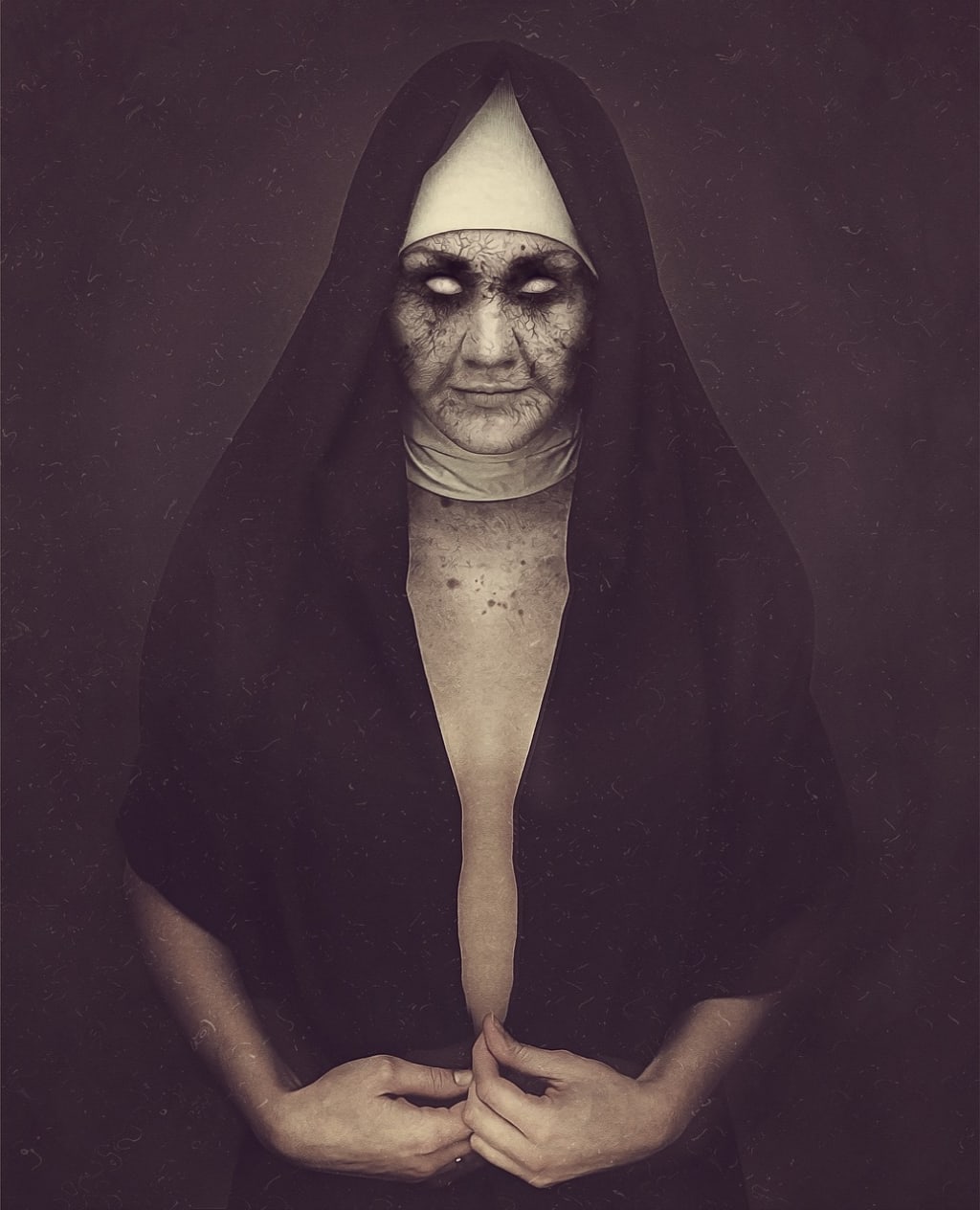
Like the priesthood, using a vocation as a nun is seen by many as a sacred calling. But not all who wear the black frock are as saintly as they're believed to be. The cases on this list will shock and terrify you. These are the top five most sinful nuns.
Cecile Bombeek
Born in 1933, Cecile Bombeek, later known as Sister Godfrieda, was a Josephite nun assigned to a 38-bed geriatric ward in 1977 in Wetteren, Belgium. Sister Godfrieda was deemed an upstanding nun prior to 1976, but after she underwent brain surgery, she became addicted to morphine. While narcotics were available to her, they weren't cheap. Even more, she had several lovers, including a retired missionary and a local teacher, both of whom had expensive tastes the sister had to maintain.
Soon, Sister Godfrieda began embezzling money from her elderly patients. She looted their savings and their properties. Police estimates suggest she pilfered around thirty thousand dollars in just a single year. Then, she began showcasing her sadistic tendencies. In several instances, she repeatedly tortured her patients by ripping out their catheters. Fellow nuns working in the center became suspicious of Sister Godfrieda's actions and noticed patterns of death in the ward under the sister's care. Twenty-one out of thirty-eight of her patients died.
During investigations and interrogation, Sister Godfrieda admitted to killing three of her patients by injecting them with an overdose of insulin. The drug is used to treat patients with diabetes, but a huge dose of it can cause a coma and death in diabetic patients. When asked why she did it, she said it was because they were too noisy at night.
Once arrested, she was also charged for forging medical prescriptions and drug abuse. Even though she only publicly admitted to killing three patients, it's believed she may have killed as many as thirty. In March of 1978, Sister Godfrieda was found unfit to stand trial and was committed to a psychiatric facility instead.
Sisters of Providence
Between 1930 and 1970, St. Joseph's Catholic Orphanage in Burlington, Vermont, cared for hundreds of orphaned children. Run by the Catholic Diocese in Vermont, the facility first opened in the mid-1800s and closed its doors in 1974. It was in 1993 when Joseph Bark Wynn approached lawyer Philip White. The two spoke in private, and Bark Wynn told him his story. He said that he had just gotten married, and when his wife saw his genitals, she was shocked by the terrible scars.
In the 1950s, as a young boy, he spent time at the orphanage at St. Joseph's. It was run by the Sisters of Providence nuns, and for young children, it was a dark, miserable, and terrifying place to live. Bark Wynn recalls seeing a girl being thrown down the stairs, and as a result, blood began trickling out of her nose and ears—telltale signs of internal brain damage. He had also seen a boy shaken into shock and children beaten over and over again. In his case, Bark Wynn was dragged by a nun under the stairs and forcefully fondled. Afterwards, she cut his genitals with something sharp. He's not sure what it was, but he remembers seeing blood everywhere.
Bark Wynn's wife encouraged him to seek therapy, get an apology from the orphanage, as well as help with the cost. He tried speaking to two priests from the diocese but got little response, so he decided to sue. That's when he ended up in White's office. Both Bark Wynn and White, although they later parted ways, started what would become one of the most prolific and disturbing abuse cases from an orphanage in United States history.
With Bark Wynn coming forward, other survivors from the orphanage also shared their own stories. Sally Dale was among the survivors. For a long time, she kept secret all the things she experienced at the orphanage, but when fellow victims started coming forward, she began to gain an understanding of what she went through as well. Sally was forced to eat her own vomit at one point. She also clearly remembers seeing a young boy pushed out of a window to his death, watching him fly off it and land in front of her. At the same time, she vaguely remembers a boy being drowned at a lake.
It wasn't just her that had horror stories while staying at the orphanage. One girl was punished severely with paddles and her fingertips burned for stealing candy. Nuns would punch a child in the face, place them in front of radiators until they had burns, hold someone upside down out of a window, or tie them to a bed with no mattresses and beat them. One nun would hold a child underwater or cover the young babies' mouths until they turned blue. There are so many more stories—it's difficult to listen to them, knowing they happened to children and were perpetrated by nuns.
Three years after Bark Wynn filed a lawsuit, many other victims also sought legal counsel and filed suits for what happened to them. In Bark Wynn's case, the church settled for an undisclosed amount of money. Since then, he has encouraged other plaintiffs to do the same. Speaking to reporters about agreeing on the settlement, Bark Wynn said, "Rage and anger are never going to work for the future of these people."
Although the initial accusations against St. Joseph's were brought forward in the early '90s, renewed interest about the case came when a BuzzFeed article released in 2018 discussed the St. Joseph's case. The Burlington Diocese Monsignor John McDermott acknowledged the abuse stated in the BuzzFeed article. He said, "We cannot alter the past. The diocese is doing everything it can to ensure children are protected."
Over the years, countries around the world have opened up national inquiries into the Catholic orphanage system, but for the United States, that still remains to happen.
Sister Eileen Shaw
Patricia Cahill was only 16 years old when she confided in Sister Eileen Shaw, a member of the Sisters of Charity from New Jersey, about how her now-deceased uncle, a priest, had sexually abused her from when she was five until she was 13 years old. Cahill, who wasn't particularly close to her family, saw the nun as a mentor and someone she could trust. Sister Shaw gave Cahill attention and invited her to come to Mass and play guitar, even if she barely knew how to play.
The two became close, and one day, Sister Shaw invited her to a shore house. While there, she slipped something in her tea, causing her to pass out. This was the first of many assaults that would come. Cahill said she was abused by Shaw in a number of places, including the Xavier Center at Convent Station, a Sisters of Charity retreat, and even at a Glen Rock convent where other nuns watched her go upstairs.
Cahill, despite being a teen, was given alcohol as well as tranquilizers to "help relax her." She also said she'd gone on several trips with Shaw and other nuns. As an adult, Cahill said she continued to have a relationship with Sister Shaw. The nun controlled her life, telling her not to go out with men and discouraging her from making friends with her fellow teachers. Trapped in the relationship, Cahill turned to drugs and alcohol while fighting suicidal thoughts.
She left her teaching job at St. Cecilia School, where Sister Shaw served as principal, in 1975. Cahill would continue this pattern of breaking off from Shaw and getting back together for several years before she was able to recognize Shaw's behavior as a pattern of abuse. During the '90s, she finally approached a lawyer in 1994, who contacted the Sisters of Charity. In response, they removed Sister Shaw immediately. She was barred from the ministry and kept from working with anyone under the age of 21.
The victim, Patricia Cahill, was given a settlement of $70,000 for all the abuse she endured. However, it was discovered ten years later, in 2004, that Sister Shaw was still working for the Caritas Community in Jersey City. She was still reportedly a nun but had limited access to outside ministry, although she was still supported by the church.
Sister Leticia Lopez
Both Sister Leticia Lopez and Sister Luz Granada had rooms next to each other at the nunnery in Bogotá, Colombia's Kennedy district. Sister Granada was known for her work with sex workers and their children. She also physically stood out thanks to her striking red hair and blue eyes—characteristics that were unusual in the region.
In 1999, dozens of local prostitutes were killed by vigilante groups who proclaimed they were doing a "social cleansing" by murdering them. It was Sister Granada who helped champion the rights of these victims. Although little is known about what really happened between the two, it seems Sister Lopez hated the fact that Granada was doing such work with prostitutes and their children.
Soon, locals were shocked when, in November of 1999, a body was discovered on a road heading out of Bogotá. Officers were horrified to see the extent of the murder. The legs of the victim had been cut off, and she had been shot repeatedly in the head. Afterward, the body was burned. It took five months for the victim to be identified, and only with the help of the FBI was it confirmed that the victim was Sister Luz Granada, who up until that time had been declared missing.
Police suspected she had been murdered within her group of friends and that it was committed by someone close to her. They noted that the floors had been repainted and scrubbed clean with detergent, and a witness reported seeing Sister Lopez wash away blood from Granada's bedding. She had made the excuse that it was menstrual blood.
Police arrested Sister Leticia Lopez on suspicion of the murder, but after 17 months and no strong evidence to link her, she was released. To look for definitive forensic evidence, the police asked the FBI for help again. This time, they checked the room and found blood spatter patterns on the wall. There was also a trail of blood indicating a body was dragged from Sister Granada's room towards the exit. They also found cardboard pieces in Sister Lopez's room that were consistent with those found with the mutilated body.
Sister Leticia Lopez was finally arrested and convicted of murder in 2002 and was sentenced to 14 years in prison for the crime.
Sisters of Nazareth
The Poor Sisters of Nazareth is a Roman Catholic congregation based in London, England. For over a hundred years, the order founded various Nazareth Houses in different countries, including the UK, United States, South Africa, Australia, and Ireland. The homes run by the nuns catered to orphans, abandoned babies, as well as young children accused of petty crimes or proclaimed as uncontrollable. To the outside world, they looked like a safe refuge, but for the children inside, it was a place of horror and misery.
Despite its nearly 100-year existence, it was only in 1998 when the first allegations of abuse surfaced against the Nazareth House in Scotland. Soon, dozens of former residents in Aberdeen and Glasgow also alleged abuse, ranging from beatings to sexual abuse at the hands of the nuns that ran their respective Nazareth Houses.
In Queensland, Australia, a report was published detailing the brutality and torture of the children who entered the Nazareth House there. The abuses ran for over a 90-year period, ending only in 1976. According to the report, children were regularly physically and sexually assaulted. One child had her legs burnt with hot pokers, while another had ingrown nails pulled out with a pair of pliers. Then another was scalded with hot water. Children who were injured or defiant were placed in dark rooms without bedding, light, or ventilation. Even worse, police forces and bureaucrats in Australia knew of the abuse but still did nothing about it.
In its Middlesbrough chapter, it wasn't any different. Vera Wilshire and Jean Deary also said they were repeatedly tortured at the home. Vera was once beaten so black and blue that she had to stay in the infirmary for five weeks. When her aunt came to visit, she was told not to tell her anything. Others had their hair pulled out or heads banged against the walls.
For Nancy Willoughby, her torture came as she lived in the Nazareth House facilities in Carlisle and Newcastle. For her and the others who lived in the home, the beatings were normal. They were forced to clean and work all day, and whenever they got injured or beaten, none of the nuns ever cared.
In Aberdeen, reports of abuse were also discovered. Children were forced to eat their own vomit and beaten or embarrassed repeatedly if they wet their beds. They were also sexually as well as physically assaulted. Siblings were also separated.
Joseph Curry said he was sexually abused by a volunteer back in 1967. In 2003, he took a solicitor, police, and Nazareth House officials back to his old room, where behind a piece of plywood, he had hidden a note he wrote 26 years earlier detailing the abuse. He also said at the time he confessed the abuse to the Archbishop Mario Conti, who regularly visited the home, but he did nothing about it.
One nun, Sister Alphonso, was so brutal that she used her fists to physically torture the children. This included punching and pulling their hair. In 2000, she was convicted of four charges of unnatural treatment, but because of her old age, she was not imprisoned—only admonished and advised to go on a holiday.
Other nuns, who despite implications by various witnesses, were let off, including Sister Kevin, who repeatedly raped then-eight-year-old Helen Holland using various implements. Helen was also raped by another priest in 1966 for three years until she got pregnant. She was then induced to have a miscarriage by having Sister Kevin jump on her stomach, put her in a tumble dryer, and tie her to a metal rail during a storm.
The abuses that happened at the Poor Sisters of Nazareth Houses remain one of the most brutal and horrifying cases of abuses all around the world.
About the Creator
Keep reading
More stories from Anthony Maghanga and writers in Criminal and other communities.
Cleo Wright
Shortly after Pearl Harbor—you know, it's the day that will live in infamy, December 7th, 1941—well, in January 1942, when the U.S. is fully into the Second World War, this war against supremacy, this war for democracy, this war for human rights, in Sikeston, Missouri, in January 1942, you have the lynching of Cleo Wright.
By Anthony Maghangaabout a year ago in Criminal
Push To Prevent Catapults Being Bought By Children
MP’s have been warned to put new legislation in place that will help to close a loophole in the law which allows people including children to legally buy weapons which is capable of killing wildlife. The alert was issued during a briefing in parliament which set out growing evidence that catapults were being misused against animals and to damage other people’s private property. The Naturewatch Foundation who hosted the session expanded on their message that at the moment there is a completely unregulated system where people of any age can buy weapons and there are no meaningful controls on sale or power.
By Ashish Prabhu4 days ago in Criminal
The First Rainbow Baby
Pitter-patter, pitter-patter. The rain fell in rhythmic splatters, slowly slowing, but still constant. Mira rolled onto her side pulling the blanket tight against her ears, but still she could hear chitter-chatter and scurrying feet of the creatures that refused to sleep in the lower decks.
By A. J. Schoenfeldabout 19 hours ago in Fiction


Comments
There are no comments for this story
Be the first to respond and start the conversation.