
Elisabeth's Captivity: Unimaginable Horrors"
The Fritzl case is a chilling account of Josef Fritzl, an Austrian man who imprisoned his daughter Elisabeth for 24 years in a concealed basement, fathering several children with her. Josef's manipulation and control exposed a horrifying tale of captivity
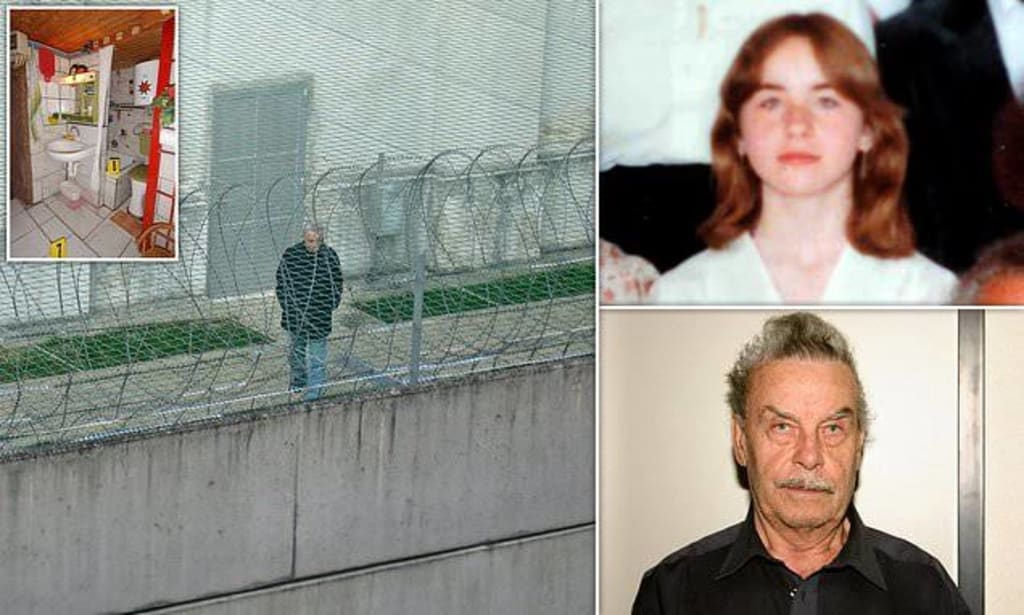
The Fritzl case stands as one of the most chilling and disturbing criminal investigations in recent history. It revolves around the harrowing story of Josef Fritzl, an Austrian man who imprisoned his own daughter, Elisabeth Fritzl, in a concealed basement for a staggering 24 years. During this extended period of captivity, Josef fathered several children with his daughter, uncovering a shocking tale of captivity, control, and manipulation that sent shockwaves across the globe.
The story began in 1984 when Elisabeth, then 18 years old, disappeared without a trace from the small Austrian town of Amstetten. The true horror of her fate would only be discovered years later. Unbeknownst to the world, Josef Fritzl had constructed a secret underground chamber beneath the family home, where he confined Elisabeth against her will. This grim and claustrophobic space served as her prison for over two decades, and the horrifying truth behind her disappearance remained hidden until 2008.
During her captivity, Elisabeth endured unimaginable physical and psychological abuse at the hands of her own father. Josef exploited his power and control over her, manipulating her emotions and forcing her into a life of complete subservience. The situation escalated further when Elisabeth gave birth to seven children while confined in the basement. These children were raised in isolation, with no knowledge of the outside world, as Josef maintained an elaborate facade of normalcy above ground.
In 2008, the shocking truth finally came to light when Elisabeth's eldest daughter became seriously ill, prompting Josef to allow her to be taken to a hospital. Suspicion arose when medical professionals noted the lack of resemblance between Elisabeth and her "daughter," leading to a closer investigation into the family's history. Elisabeth had penned secret letters that she managed to convey to her children, providing crucial evidence of their years of captivity.
The discovery of the underground chamber and the subsequent arrest of Josef Fritzl stunned the world. The case shed light on the complex dynamics of control and manipulation that had allowed such an unthinkable situation to persist for so long. The revelations shook society's perception of familial relationships and raised questions about the dark corners of human nature that can drive individuals to commit unspeakable acts.
The trial that followed delved into the details of the crimes committed by Josef Fritzl. He was convicted on charges of rape, incest, false imprisonment, and murder, as one of the children he fathered with Elisabeth died shortly after birth due to neglect. The verdict highlighted the severity of his actions and the gravity of the pain he had inflicted upon his own family.
The Fritzl case sparked international outrage and discussions about the importance of recognizing signs of abuse and addressing them promptly. It led to increased awareness of the dangers of domestic violence and the necessity of providing support systems for those who might be trapped in abusive situations. The case also prompted a reevaluation of legal systems and societal norms that might inadvertently contribute to the concealment of such heinous crimes.
Elisabeth Fritzl's resilience and strength throughout her ordeal were awe-inspiring. Her ability to survive years of captivity, isolation, and abuse showcased the indomitable human spirit. Following her release, she and her surviving children received extensive support from medical professionals and psychologists to help them reintegrate into society.
In the years since the Fritzl case came to light, its impact has continued to resonate. It stands as a stark reminder of the depths of human depravity and the importance of vigilance in protecting the vulnerable. The case also underscores the significance of empathy and compassion, as well as the collective responsibility to create a safe environment for everyone.
In conclusion, the Fritzl case remains a haunting and chilling testament to the capacity for cruelty that exists within some individuals. The story of Josef Fritzl's imprisonment of his daughter Elisabeth for 24 years, during which he fathered multiple children with her, exposed a horrifying tale of captivity, control, and manipulation that shook the world. The case has left an indelible mark on society, serving as a stark reminder of the need to address domestic violence, foster open communication, and ensure the safety and well-being of all individuals.
About the Creator
Keep reading
More stories from Kure Garba and writers in Criminal and other communities.
Castro's House of Horrors
The Ariel Castro kidnappings, a chilling and horrifying tale of captivity, abuse, and manipulation, unfolded in Cleveland, Ohio, over the course of more than a decade. Ariel Castro, a former school bus driver, held three young women captive in his home from 2002 to 2013, shocking the world when the truth was finally revealed.
By Kure Garba3 years ago in Criminal
The Digital Gallows
"The clock has struck three, the coffee is cold, and the shadows are beginning to speak. Welcome back to the desk of The Night Writer. Tonight, we’re scrolling through a ghost story written in high-society ledger ink. But be careful—what you find might not be the truth, but the trap."
By The Night Writer 🌙 7 days ago in Criminal
The Impossible Prison Break - Alcatraz Escape
FBI officers were stunned. This was a prison where even if a prisoner was left out in the open, escape seemed impossible. Yet somehow, right under the noses of the authorities, three inmates managed to break out. What was even more shocking was that for nearly 10 hours, the prison authorities had no idea they were missing.
By Imran Ali Shaha day ago in Criminal
"Scream 7" (2026): Running out of Fresh Screams
This is the seventh time we’ve had a Ghostface crisis. Scream 7 is the latest edition of the Scream franchise. Sydney Prescott and her family are under attack by another anonymous killer dressed in a Ghostface costume. While having issues with her daughter, Tatum, they run from the bloody murders, trying to determine who is behind it all.
By Marielle Sabbag4 days ago in Horror




Comments
There are no comments for this story
Be the first to respond and start the conversation.