
El Chapo's Unbelievable Prison Escape
How El Chapo Escaped the World’s Most Secure Prison — Twice


Inside a maximum-security prison in Mexico, a man was being watched around the clock by CCTV cameras. His cell had no windows, no skylight—only a small shower stall in the corner. And yet, despite all this security, he vanished without a trace.
This wasn’t just any prisoner.
This was Joaquín “El Chapo” Guzmán—the most dangerous and powerful drug trafficker the world has ever seen.
The Origins of El Chapo
El Chapo was born in 1957 in a small Mexican town called La Tuna in the state of Sinaloa. His real name is Joaquín Guzmán, but he earned the nickname “El Chapo,” meaning “Shorty,” due to his short height.
Drug dealing ran in his blood. His father was a small-time drug dealer who eventually kicked him out of the house. With no education, no job, and no opportunities, the young Guzmán turned to what he knew best: drugs.
By the age of 15, he had started growing marijuana in remote fields. Over time, his operations expanded, and major Mexican cartels started noticing his ambition and discipline.
Rise Through the Ranks
In the 1970s, El Chapo joined a gang led by drug lord El Güero Palma. He was in charge of drug transportation and logistics. Known for his brutal discipline, El Chapo was feared—any mistake in delivery meant death.
In the 1980s, he joined the Guadalajara Cartel, run by Pedro Avilés. This was Mexico’s largest drug network at the time, and El Chapo quickly rose through the ranks, overseeing drug shipments from Colombia to Mexico.
When Avilés was arrested in 1989, El Chapo seized the opportunity and formed his own cartel: the Sinaloa Cartel.
The Tunnel King
Back then, drugs entered the U.S. primarily via two routes: the Caribbean and the Mexican border. While the U.S. focused its crackdown on Caribbean routes, El Chapo exploited the border.
He specialized in trafficking high-profit drugs—meth, heroin, ecstasy, cocaine, and marijuana.
His methods were as brilliant as they were terrifying. Early on, he smuggled cocaine in fire extinguishers, cans of chili peppers, and car rims—methods so ingenious even drug-sniffing dogs couldn't detect them.
But the real game-changer? Underground tunnels.
El Chapo invested millions hiring engineers and digging deep tunnels under the U.S.-Mexico border. These weren’t just holes—they had electricity, ventilation systems, and even rail tracks.
The FBI was stunned when they found the first tunnel in the 1990s. It was 300 feet long and connected to a house—one of El Chapo’s safe houses, complete with an escape hatch.
In 2010, another tunnel was found in Otay Mesa. By 2013, several more were discovered. He was dubbed The King of Tunnels for a reason: he made his tunnels so deep and well-hidden that not even ground-penetrating radar could detect them.
He often hid the entrances under bathtubs or toilets. His favorite smuggling route? Otay Mesa, near California. It was close to the transport hubs of Tijuana and San Diego, full of factories whose noise masked digging sounds, and had soft soil ideal for tunneling.
First Arrest and First Escape
On June 19, 1993, Mexican authorities finally arrested El Chapo. He was sentenced to 20 years in prison.
But jail didn’t stop him. He bribed prison guards and continued running his empire from behind bars. He even arranged meetings from his cell to keep his cartel running.
In 2001, fearing extradition to the U.S., El Chapo hatched a plan. He paid $200,000 in bribes and escaped inside a laundry cart. For the next 13 years, he remained on the run—expanding his operations and building more tunnels.
Recaptured and the Legendary Tunnel Escape
In 2014, Mexican authorities tracked him down and raided his house. He tried to escape through a tunnel beneath his bathtub—but this time, they caught him.
He was placed in El Altiplano, Mexico’s most secure prison. Special surveillance was installed. No windows. Round-the-clock monitoring.
Yet on July 11, 2015, he vanished again.
At 8:50 PM, cameras lost sight of him near the shower area—ironically, the only blind spot. Thirty minutes later, guards entered the cell. El Chapo was gone.
He had dug a tunnel right under the shower, connected to a massive underground tunnel 33 feet deep and over a kilometer long. The tunnel was 5'7" wide, large enough for a person to walk through with ease. It led to a construction site outside the prison.
Once again, El Chapo had outsmarted the system.

Final Capture and U.S. Extradition
But this time, his freedom was short-lived.
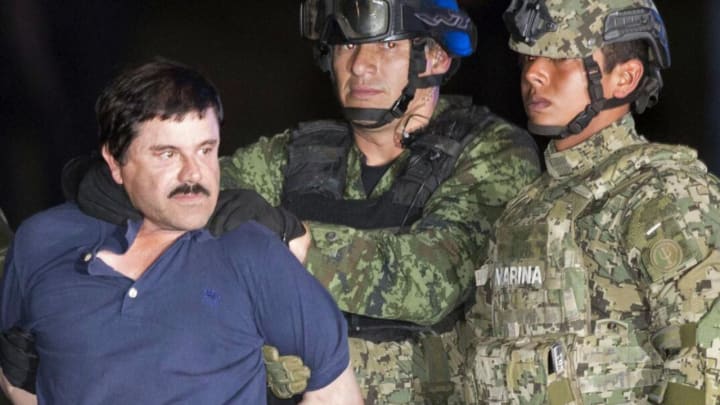
On January 8, 2016, Mexican marines stormed a safe house in Los Mochis. After a fierce gunfight, El Chapo was captured again.
In 2017, Mexico handed him over to the United States, fearing another escape. He was sent to ADX Florence, a supermax prison in Colorado—arguably the most secure prison in the world.
The Legend Lives On
Today, El Chapo is serving a life sentence in the U.S. But no matter how secure the walls, American officials remain paranoid—could he escape again?
His story isn’t just about crime—it’s about power, brilliance, manipulation, and the dark genius of a man who built an empire beneath our feet.
About the Creator
Keep reading
More stories from Jehanzeb Khan and writers in Criminal and other communities.
Zodiac: The Most Wanted Serial Killer of 20th Century
On the night of December 20, 1968, a young couple set out for their very first date. Seeking privacy, they drove toward Lake Herman in California. The couple—16-year-old Betty Lou Jensen and 17-year-old David Faraday—had no idea that a stranger was quietly tailing them.
By Jehanzeb Khan8 months ago in Criminal
Ken Childs and the Shadow Network Behind Celebrity Surveillance
Hollywood is no stranger to intrigue. Behind the red carpets, blockbuster premieres, and glamorous headlines lies a parallel world where privacy is fragile and information can be extremely valuable. Over the years, celebrities have faced stalkers, hackers, and fraud schemes designed to exploit their wealth and visibility. Recently, reports circulating online have drawn attention to a controversial narrative involving private investigator Ken Childs and allegations that place him near the center of a disturbing story about celebrity surveillance.
By Shane Smitha day ago in Criminal




Comments
There are no comments for this story
Be the first to respond and start the conversation.