
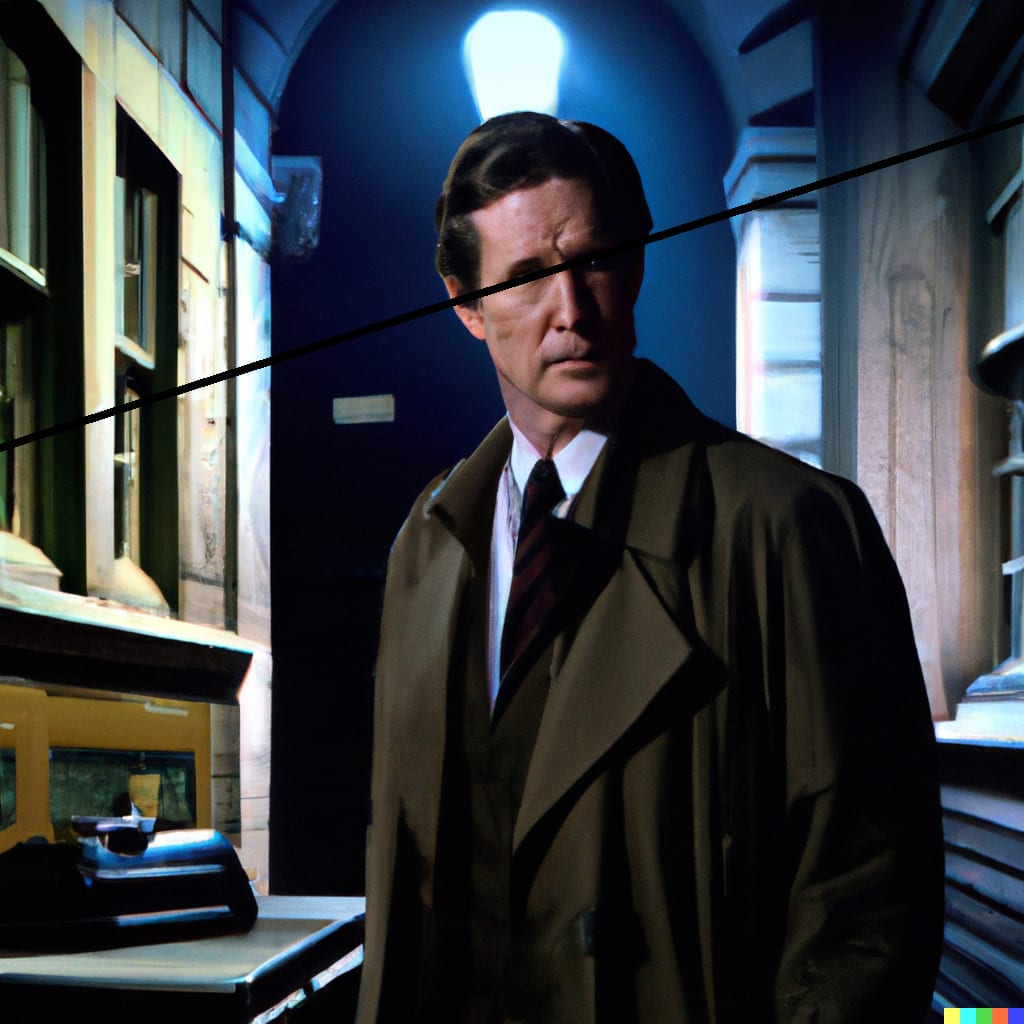
Detective John Harris stepped out of his car and into the bustling streets of New York City. It was the height of the 1960s, and the city was alive with the sounds of sirens, horns, and the chatter of people going about their daily business. Harris was a detective for the NYPD, and he had been called to a crime scene in one of the city's most exclusive neighborhoods.
As he approached the address, Harris couldn't help but feel a sense of unease. The building was a tall, imposing structure, with a wrought iron fence surrounding it. The street was filled with police cars, and a crowd had gathered to see what was going on. Harris pushed his way through the crowd and showed his badge to the officers guarding the entrance.
Once inside, Harris was led to a room on the top floor of the building. The room was spacious and well-appointed, with large windows overlooking the city. But all Harris could see was the body of a young woman, lying on the floor in a pool of blood.
Harris knelt down beside the body, taking in the scene. The woman was in her late twenties, with long, dark hair and a pale complexion. She was dressed in a simple, elegant dress, and there was a small, neat hole in her chest. Harris sighed, knowing that this was going to be a tough case.
He stood up and made his way over to the other detectives who were already at the scene. They filled him in on what they knew so far. The victim was a young socialite named Elizabeth Smith, and she had been shot in the chest at close range. The weapon was still missing, and there were no signs of forced entry.
Harris frowned. This was not a simple case of robbery gone wrong. Someone had gone to great lengths to kill Elizabeth Smith, and he was determined to find out who. He spent the next few hours interviewing witnesses, going over the scene, and piecing together what had happened.
One of the witnesses was a maid who had been working in the building at the time of the murder. She told Harris that she had heard a loud bang, followed by the sound of footsteps. She had looked out of her window and seen a figure leaving the building. Harris made a mental note to follow up on this lead.
Another witness was a man who lived in the building opposite. He told Harris that he had seen a car pull up outside the building just before the murder. The man had seen a man get out of the car and enter the building. Harris made a note of the make and model of the car and thanked the witness for his help.
As Harris continued his investigation, he began to realize that Elizabeth Smith was not the innocent young woman she appeared to be. Her socialite friends told him that she was known for her wild parties and her love of drugs. Harris was starting to think that the killer may have been someone she knew, and he made a mental note to look into her social circle.
As the sun began to set over New York City, Harris knew that he had a long night ahead of him. He was determined to solve this case, but he also knew that it was not going to be easy. The killer was cunning and ruthless, and Harris would need to be at his best if he was going to catch him.
As he drove back to the station, Harris couldn't help but think about the young woman lying on the floor of that room. He vowed to bring her killer to justice, no matter what it took.
Detective John Harris was up early the next morning, eager to continue his investigation into the murder of Elizabeth Smith. He started by following up on the leads he had gathered the previous day, starting with the maid's report of a figure leaving the building.
He tracked down the man who had seen the car pull up outside the building, and was able to get a good description of the driver. He cross-referenced the description with known associates of Elizabeth Smith, and soon had a list of possible suspects.
One of the names on the list was that of a wealthy businessman, who was known to have had a close relationship with Elizabeth. Harris decided to pay him a visit, and was surprised to find him at home, despite the early hour. The man, whose name was Alexander Mercer, was cordial but evasive, and Harris couldn't shake the feeling that he was hiding something.
Next, Harris decided to investigate Elizabeth's social circle. He went to a local nightclub where she was known to frequent, and began asking questions. He soon found out that Elizabeth was involved in some shady business dealings, and that she had many enemies. Harris knew he was getting close, but he still needed more evidence to make an arrest.
That's when he got a call from the forensic lab. The results of the ballistics tests had come in, and they had found a match. The weapon used to kill Elizabeth was linked to a robbery that had taken place a few weeks earlier. Harris was now convinced that the killer was someone close to her, and he redoubled his efforts to find the culprit.
Harris went back to the nightclub and showed the staff the photo of Alexander Mercer. One of the bartenders recognized him as a regular customer who had been in the club the night Elizabeth was murdered. Harris knew he was getting close, and he arranged for Mercer to be brought in for questioning.
During the questioning, Mercer maintained his innocence, but Harris could tell that he was lying. He continued to press him, and finally, after several hours of intense questioning, Mercer broke down and confessed. He told Harris that he had become obsessed with Elizabeth, and that he had killed her in a fit of jealousy.
Harris was shocked. He had not expected the killer to be someone as seemingly normal as Alexander Mercer. He was a wealthy, successful businessman, and yet he had allowed his obsession to get the better of him.
With the killer behind bars, Harris was finally able to close the case. The news of the arrest quickly made headlines, and Harris was hailed as a hero. But he didn't see it that way. He was just a detective, doing his job. And for him, the case was not about the headlines or the accolades. It was about justice for Elizabeth Smith, and he was glad to have been able to bring her killer to justice.
As he drove back to the station, Harris couldn't help but think about the young woman who had lost her life so tragically. He vowed to always do his best to bring criminals to justice, no matter what.
Detective John Harris had finally solved the murder of Elizabeth Smith, but he couldn't shake the feeling that there was more to the case than met the eye. He decided to spend a few more days in town, talking to people and gathering more information.
It wasn't long before he started to hear rumors about a larger criminal operation at work. People were talking about a shadowy figure known only as "The Boss," who was rumored to be behind a string of robberies and other crimes in the area.
Harris was intrigued. He had heard of organized crime before, but he had never encountered it in his own city. He started to dig deeper, talking to sources and following up on leads.
It wasn't long before he found himself on the trail of the mysterious Boss. He followed the trail to a seedy bar on the outskirts of town, where he was told that he could find someone who knew something about the Boss.
When he arrived, he was greeted by a rough-looking man who told him that he could help, but that it would cost him. Harris agreed, and soon found himself in a room with a man who claimed to know the Boss.
The man was nervous and wouldn't give him a straight answer, but Harris could tell that he was scared. He continued to press, and finally the man broke down and told him everything.
The Boss was a notorious criminal who had been operating in the city for years. He was behind a string of robberies, extortions, and other crimes. He was known for his ruthless tactics and his willingness to do whatever it took to get what he wanted.
Harris was shocked. He had never encountered someone like the Boss before. He knew that he had to stop him, but he also knew that it wouldn't be easy.
He spent the next few weeks gathering evidence, talking to sources, and piecing together the pieces of the puzzle. He soon realized that the Boss was far more powerful and dangerous than he had originally thought, and that he would have to be very careful.
Finally, the day of the bust arrived. Harris and his team of officers descended on the Boss's hideout, guns drawn. They were met with resistance, but Harris and his team were determined to bring the Boss to justice.
After a long and intense standoff, the Boss was finally taken into custody. Harris was exhausted, but he was also exhilarated. He had finally brought down one of the city's most dangerous criminals, and he had made the streets a little safer for the citizens of his city.
As he drove back to the station, Harris couldn't help but feel a sense of pride. He had accomplished something that very few detectives had ever accomplished, and he had done it all on his own.
As he settled into his chair, he couldn't help but think about all the other cases that lay ahead of him. He was a detective, and he was always on the trail of the next big case. And with that, Detective John Harris ended this chapter in his career, but not before setting the stage for many more exciting adventures to come.
About the Creator
Keep reading
More stories from fatih uslu and writers in Criminal and other communities.
MYSTERY IN SPACE DEATH
Detective Eva continued to interview each member of the crew, trying to piece together what might have happened to Commander Jason. The scientist, DR. JONES, said he was working in the lab when the commander died. The engineer, JOE, claimed to have been fixing a faulty air filter. The navigator, LUCAS, said he was in the navigation room, plotting their course. But Detective Eva couldn't shake the feeling that someone was lying to her.
By fatih uslu3 years ago in Criminal
The Dark Side of Fame
The high-gloss world of indie-pop and the gritty reality of a missing person’s investigation collided in a way that no one could have predicted when the name David Anthony Burke—known to millions as d4vd—suddenly appeared on a police report for all the wrong reasons. In a digital age where the distance between a fan and an idol is often just a Discord message away, the tragedy of Celest Rivas Hernandez has become a haunting case study in the dark underbelly of internet fame. What started as a local search for a runaway teenager in 2024 morphed into a nationwide scandal in late 2025, leaving the music industry in shock and the public demanding answers that the legal system is only beginning to provide.
By Teodor Monescu6 days ago in Criminal


Comments
There are no comments for this story
Be the first to respond and start the conversation.