
Detained Without Cause: My 24 Hours in a Hidden Room at KLIA
A true story of an Italian chef who boarded — and landed in silence, isolation, and injustice. I don't want to forget what happened. And neither should the world.

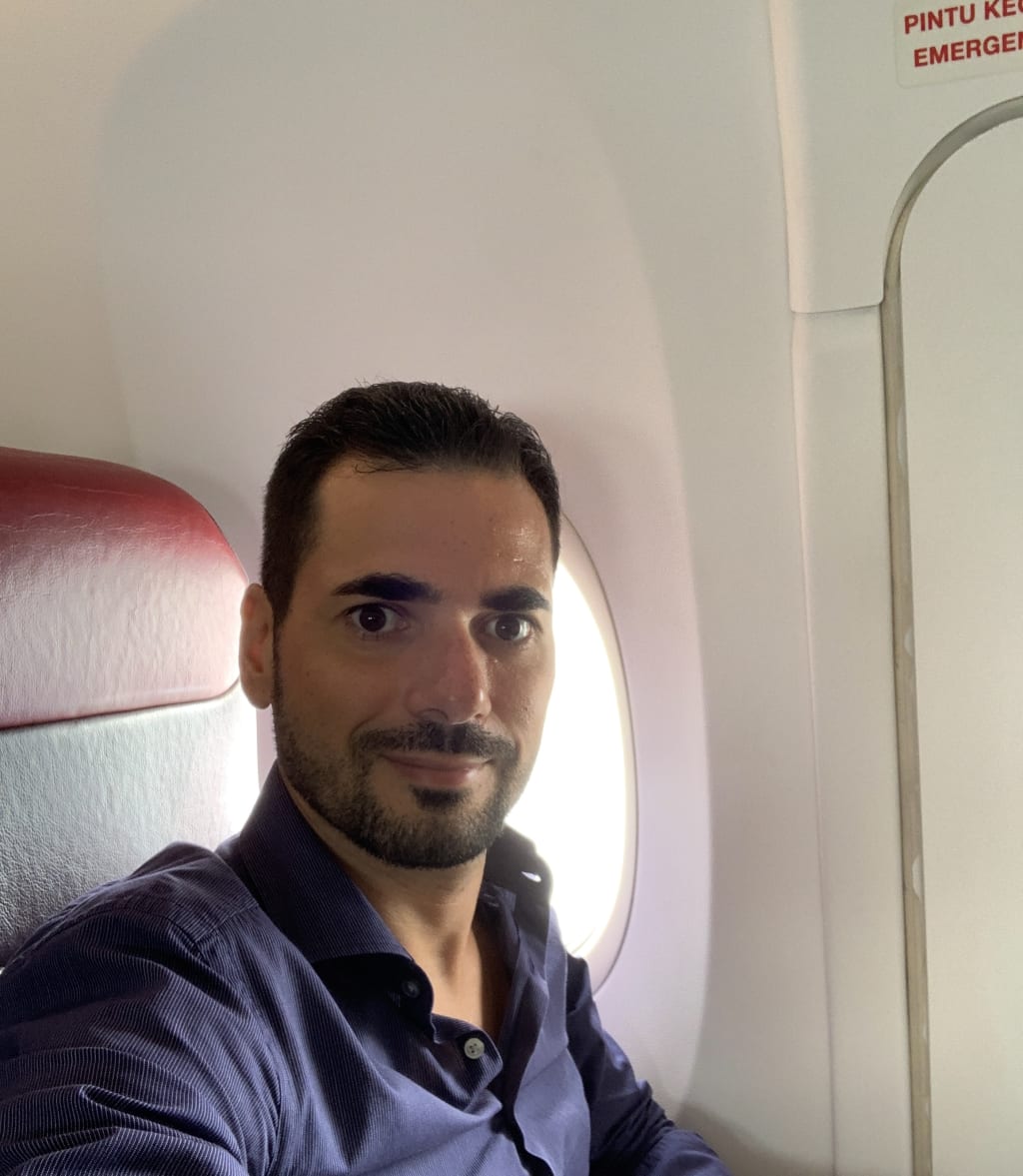
March 2020
The world was folding into itself. Airports — once places of possibility — turned into checkpoints of suspicion. And I, an Italian chef who had just completed an Executive Chef mission in Indonesia for a prestigious international hotel chain, was about to find out what it meant to be treated like a threat — not because of something I did, but because of who I was, and where I came from.
I landed in Kuala Lumpur with my papers in order and my head full of future plans. Less than an hour later, I was stripped of all of that — and more.
My freedom, my voice, my name — gone behind a glass door.
The Room They Don’t Talk About
They never told me exactly why I was being detained. Just that I couldn’t enter Malaysia. The reason? I was Italian — on the wrong day.
On March 10, 2020, Italy had just become the epicenter of the COVID-19 pandemic. News outlets around the world were showing alarming scenes from my home region of Lombardy. Borders were closing. Panic was escalating. Fear had replaced logic. Suddenly, being Italian was enough to trigger suspicion, exclusion — even detention.
I wasn’t sick. I had no symptoms. I had passed every check. And most importantly, I hadn’t been in Italy for almost a year. But logic wasn’t part of the protocol that day.
I was escorted — without explanation — to a hidden room behind a large glass door.
No windows. No phone. No information.
No light to mark day or night. No view of the outside world.
There were others in there too — men of various nationalities. Some had been there for hours. Some for days. Some for weeks.
We were watched, but not spoken to.
We were fed, but not heard.
We existed, but barely.
The women, I was told, were kept in a separate room. I never saw them — but from time to time, I could hear a voice through the wall. A brief sentence. A quiet cry. Then silence again.
When I asked to call the Italian Embassy, they refused. When I asked again, they said if I insisted, they would move me to a room without cameras.
Think about that for a moment.
A room.
Without cameras.
In an international airport.
In 2020.
That’s when I understood that speaking up would only make things worse. In that moment, choosing the lesser evil meant staying still, watching carefully, and not provoking anything. It wasn’t fear. It was strategy. And as always, the observer in me took mental notes — because when dignity is suspended, the mind must stay sharp.
Twenty-Four Hours in Limbo
Time passes differently in a place like that.
You stop counting the minutes because no one tells you how many are left. You stop asking questions because silence becomes the only answer.
There was a clock — I remember staring at it often, especially because sleep was not an option. I was surrounded by people who had committed crimes or violations and were being held in actual detention. And even with time in plain sight, the hours felt unreal — suspended. I kept watching how the fluorescent lights flickered, as if even they were exhausted by what they’d seen.
There were no beds. No blankets. Just a cold floor and a broken chair.
I remember refusing to sit at first — telling myself, and the others, that I’d be leaving in just a few minutes. But I hadn’t yet understood where I had actually ended up.
Then the hunger crept in — not the kind you feed with food, but the kind that makes you question your worth.
The hunger for dignity.
At one point, I looked around the room and realized something strange: no one was speaking anymore.
We were all awake, alert, breathing — but it was like someone had pressed mute on the entire room. The silence was heavier than any voice could have been.
I had done nothing wrong. I wasn’t under arrest. I wasn’t accused of anything. But I was being treated as if I were a risk to the nation — based on my passport alone.
And yet, even in that moment, I refused to give up my mental clarity. I observed. I analyzed. I endured.
Because deep down I knew: this story needs to be told.
The Invisible Rooms of the World
I don’t want to forget that room. Because someone, somewhere, needs to investigate what really happens behind that door.
When you’re denied entry at Kuala Lumpur International Airport, they inform you — calmly — that you’ll be taken to a “holding facility,” and that you’ll have to pay for it. It sounds like a transit lounge — maybe with reclining chairs, a bit of privacy, a quiet space to wait. After all, it costs around $100 per day just to be there.
But instead, you’re taken into detention.
You’re stripped of your phone, laptop, and any device that could connect you to the outside world.
No messages. No updates. No contact — total isolation.
In my case, after nearly 24 hours of this, I had to pay for my own return to Europe — a last-minute ticket that cost me a fortune.
And for those who don’t have the money — for the so-called “lounge” or the return flight — there’s nowhere to go.
Before I could board, I was required to get a certificate proving I had no COVID symptoms — even though I hadn’t been in Italy for almost a year.
The doctor found only one thing: severe dehydration.
And honestly, how could it have been otherwise?
They gave me a small bottle of water, a rotting apple, and a single hot meal so spicy it burned my throat.
What made it even more absurd was the complete lack of any official announcement or warning on public or government websites. I was flying with the national airline of Malaysia — and if I wasn’t allowed to enter the country, then why was I allowed to board the plane in the first place? Shouldn’t I have been told while still in Indonesia?
As of today, no major investigation has ever addressed what happens inside that room.
And that’s exactly why stories like this must be told.
From a Locked Room to a Book of Freedom
That detention room was the beginning of a journey I hadn’t planned.
But it became the starting point for something else — something I could control, create, and share.
Out of that experience came my book, The “Recipes” of My Smile. It’s not a cookbook in the traditional sense. It’s a record of 365 days lived through the pandemic — across airports, quarantine zones, hotel rooms, and eventually, a small kitchen in Bucharest.
In its first pages, I recount the 24 hours I spent locked inside that secret room at Kuala Lumpur International Airport — the longest 24 hours of my life.
But then, the story shifts. Because I chose to shift.
I talk about how eliminating alcohol, embracing a balanced diet, and maintaining simple physical routines helped me remain calm and optimistic.
I describe the benefits I discovered, and how — instead of despair — I focused on cooking. Creating. Rebuilding.
Twelve recipes came out of that time: from a lemon and prawn risotto to healthy eggplant parmigiana, from homemade gnocchi to the perfect seafood spaghetti.
All cooked not in a professional kitchen, but in a modest quarantine apartment.
That book was my answer to chaos.
A smile, crafted one habit — and one dish — at a time.
Why This Still Matters, Five Years Later
It’s been five years. A lot has changed.
But too much has not.
People still vanish in airports.
Some for hours. Some for days. Some forever.
Their stories don’t trend. Their faces aren’t shown on the news.
Their names are reduced to file numbers.
According to Human Rights Watch, Malaysian immigration detention facilities continue to hold over 12,000 people — including more than 1,400 children — under conditions that expose them to violence, illness, and psychological trauma. In 2024 alone, at least 20 deaths were reported in these centers.
And yet, there is no centralized accountability system.
No public record. No formal apology.
Just more silence.
For more detailed information, you can read the full report here:
Source: Malaysia: Abusive Detention of Migrants, Refugees
So What Can We Do?
This article isn’t just about what happened to me.
It’s about what could happen to anyone.
And it’s a call — not for outrage, but for awareness.
We need:
- More journalistic investigation into the treatment of detained travelers.
- Pressure on governments to uphold basic human rights in transit zones.
- Stronger international oversight for airport detention areas.
- And above all, we need more stories. Told. Shared. Heard.
Because silence is where injustice survives.
Because no one deserves to disappear behind a glass door in an airport.
Because what happened to me should never happen to anyone again.
My Name Is Cristian Marino
I’m an Italian chef. I’ve worked in ten countries, sailed on six-star cruise ships, cooked for thousands, and led culinary brigades around the world.
But for 24 hours in Kuala Lumpur, I was just “the Italian.” A threat. A file. A locked door.
I don’t want to forget that room.
And I will never stop speaking about it.
And if you’re reading this, it means I found a way to give voice to that silence — not for me, but for those who are still there, and still voiceless.
If you’ve been there — or somewhere like it — your story matters too.
Speak up. Be heard. Let’s end the silence — together.
Cristian Marino is the author of The "Recipes" of My Smile and other titles.
He uses his culinary voice to share stories of resilience, transformation, and leadership — both inside and outside the kitchen.
Watch the original video I recorded shortly after the incident, when the memories were still fresh.It’s not easy to watch, but it tells a part of the truth that still needs to be heard.
About the Creator
Cristian Marino
Italian Executive Chef & author with 25+ years in 10+ countries. Sharing stories on kitchen leadership, pressure, and the human side of food.
Keep reading
More stories from Cristian Marino and writers in Criminal and other communities.
My Journey as a Chef
When people ask me where I come from, I often smile and hesitate. Not because I don’t know the answer, but because it’s never just one place. I was born in Milan, raised between the vibrant north and the sun-soaked south of Italy, and shaped by kitchens across Europe, Asia, and the Middle East.
By Cristian Marino9 months ago in Humans
Tensions at Sea: The Russian Oil Tanker Seized by the United States in 2026
Tensions at Sea: The Russian Oil Tanker Seized by the United States in 2026 In early 2026, a Russian-flagged oil tanker was seized by the United States in the North Atlantic, attracting global attention. The vessel, originally called *Bella 1* and later renamed *Marinera*, had been monitored for weeks as it attempted to evade U.S. sanctions enforcement. This event has raised questions about international maritime law, geopolitical tensions, and the enforcement of economic restrictions on oil shipments.
By America today 5 days ago in Criminal
A Failed Artist, A Disillusioned Poet, An Underpaid Game Show Host
I took my son and niece to Gori, a small town in Georgia where Joseph Stalin was born. They talked me into visiting the Stalin's Museum, the largest in the post-Soviet space. I had resisted going there because I just can't stand the monster and know enough about him, or so I thought.
By Lana V Lynx6 days ago in FYI


Comments
There are no comments for this story
Be the first to respond and start the conversation.