
Departures
"But ah, my foes, and oh, my friends - It gives a lovely light!"

DEPARTURES
Kendra Pierce wasn’t the worst client I ever represented. Not nearly.
Heck, she wasn’t even the guiltiest. About a third of the times she’d been booked (that I know of) she hadn’t technically committed crimes. Herself, that is. In those cases, anyway. In about another third, she didn’t have to face the music because of what I call “police training deficiencies.” And up until this thing happened, I’d never dealt with the feds for anything about her. The worst, I’ve known. Kendra wasn’t that.
But she was the most, oh, prolific’s the word. To this day, I’ll bet anybody a beer that by the week of her 40th birthday, when I met her, that woman had stood, or nodded-off, within fifteen feet of more illegal activity than anybody since Al Capone. Trouble and Kendra went together like opossums and road stripes. Inevitably, they intersected, with predictable results. And there’s just no absconding from the law of large numbers.
So, yes, Kendra was a thief, an addict, a hustler, and all that went with all of that. But I didn’t see her as a hardcore criminal, or a bad person or whatever. To me, she just wasn’t.
And I don’t say this because of this thing she did for me. (I’ll get to that.) I say it because, as opposed to sociopaths and the like, she could muster at least some shame, or regret. She was no monster. She did have a stunted attention span, a self-control shortage, and impulses that propelled her straight toward all the “est” things within reach. Fastest, highest, loudest, pick the adjective. If something would raise eyebrows or pulse rates, Kendra had to make it a part of her very being. She misbehaved the way I’m right-handed; incurably, and naturally.
Anyhow, more often than not she was factually guilty of whichever petty-ish charge she’d caught on a given day. So, soon enough, my friends at the county public defender’s office couldn’t represent her anymore, because of her connections to cases against their other clients in the system. From that point, whenever Kendra wound up in jail again, the clerks assigned her files directly to me as conflict counsel, whereupon I’d head for the hoosegow to learn about her latest misadventures.
I suppose that’s where this story begins. Well, there, and maybe with one more odd bit. See, all attorneys take an oath. We swear to represent, zealously, all our clients. Retained, court-appointed, cousins getting freebies, whichever. When we take on a case, we’re to do our best, regardless. On paper, it’s like it is with doctors and patients.
But in practice, sometimes, things are more like how they are with parents and kids. Moms and dads will proclaim that they “love all their children equally.” And who could argue? We know they have to say that, and at some level I imagine it’s true, in a way. Then again, the brass tacks of that notion are usually just a couple of highballs from sneaking out. Parents are people. So are kids. Faults abound, and they abide, and they abrade. “Equal,” really, never is.
All this, I say to try and explain, or fathom, maybe, what it was, for me, about Kendra. I can’t say I liked her. I wasn’t romantically attracted to her, even if that sort of thing wasn’t a “thou shalt not” in the attorney-client relationship. But the fact is, I did put in some extra hustle on her cases. Lots, sometimes.
I’ve been wrestling with that truth for a while. Certainly, after what happened to her, I have been. And now that I know what she did for me, I’ve been chewing on the “why” question even more.
Whatever the reason, for Kendra I filed more, and a tad-better, motions with the courts, and I argued points of law with a skosh more emphasis or mojo or something. Over time, I walked her scot-free off more charges when I could, and negotiated her better plea deals when I couldn’t, than I did for my other clients. Many, many second-teenth chances, I got her. Many.
So it was, that I introduced Kendra to Carrie. I forget Carrie’s exact title. But she’s basically a social worker assigned to the public defender’s office. Indigent defendants have endless needs, and sometimes Carrie’s work keeps them out of more trouble later. She helps arrange drug counseling, or housing, or rides to court – stuff like that. And the last time I spoke to Kendra, we were in Carrie’s courthouse-basement office.
I could’ve been nicer to her. Other times, I always was. But that last time, I wanted to reach some deeper neurons. So I raised my voice, and I pointed as I spoke. “Kendra, I swear to God, if you’re arrested once more, I’m gonna fob your file off on the goofiest intern I can find, and any judge on the bench is gonna ship you to prison. So, hear this: Carrie is going to give you some pointers on not breaking the law anymore, and you’re going to listen. Capisce?”
Then I headed upstairs and straight out the courthouse doors to the bar across the street. For about six months thereafter, I figured my spiel to Kendra might’ve worked. No word from her, no new files, no mentions in police reports, nada.
But then, this past week, Carrie called, wanting me to stop down to her office. Two days ago, near the close of business, I did.
Public employees near any court all have cluttered metal desks. Carrie’s is no exception. But from the moment I poked my head in her door, one item amid the files and her kids’ pictures owned my attention. It was a smallish black notebook, leather bound, with a ribbon bookmark. Pretty nice, actually, albeit a bit scuffed. I made it through college with no discernible math skills, so I’d had to learn some Kerouac. And having patronized dozens of faux-beatnik coffee joints, I know a Moleskine journal on sight. This one, I thought, would’ve been at home next to one of ol’ Jack’s margaritas, circa 1950.
Carrie saw me looking. “Hey, Tom... yeah, that’s why I called. Kendra dropped by last week. Said she wanted you to have that. She made me promise to tell you to read it. Pretty adamant about it, too.”
I shrugged and picked it up, and I fanned the pages to make sure there wasn’t anything inside that I didn’t want to be caught with. The first page wasn’t attached; it fell out and float-dropped back to the desktop. I didn’t glance at Carrie as I gathered it up and replaced it.
“Thanks, C. Did she say why? How’s she doing, anyway?”
Carrie sat back in her chair, and she paused until I met her eyes. “She’s dead, Tom. OD. Fentanyl, or smack laced with it, guessing from the cases they’re seeing at the hospital now. The cops said they found her behind that strip mall on Cedar. The needle was still in her arm.”
I hadn’t expected that. Carrie’s only other chair was beyond where she sat, so I sort of leaned back against the doorframe. “Mmm. Ouch. I, uh... I don’t think she had any family or anybody, did she?”
Carrie shook her head. “I know she didn’t. The police found my card in her coat. When they called me with the news, I had them check. No parents, no kids, no sibs.”
There was only one thing to say, and one thing to do. So I said it, and I did it. “Yeah, well, thanks for this, Carrie, and thanks again for helping her out.” And then I left, and I climbed the stairs, and I crossed the street, and I found my usual barstool, and I drained two cocktails deciding whether to open Kendra’s notebook.
I nodded for a third drink, but that wasn’t what made things go ‘click’ for me. Four seats down, a woman ordered a margarita, and then that inescapable Jimmy Buffet song came on the jukebox; she cheered the coincidence. I thought back to Kerouac again, and the best-known passage from “On the Road,” the one where Sal Paradise shambled after his dingledodies, Carlo and Dean, because they were mad to live, mad to talk, mad to be saved, and desirous of everything at the same time, and they burned, burned, burned like roman candles, exploding like spiders and making everyone go ‘aww.’ And curse my eyes, but I started tearing-up. I did.
That left me two options. I could sit and cry, or I could open that leather cover and start reading. No contest.
The first page, the loose one, wasn’t ripped from inside. It’d been razored out, carefully. And her loopy, cursive handwriting, in Sharpie, ended any doubt about why. “Tom: Thank You for all your hard work!!! You always know what to do so please read to the end. One more job for ya! Your Friend, Kendra.”
I wish I could say that I hadn’t known what I’d find inside. But I can’t, because I did. Basically, I was right. The first pages were a daily journal, starting a couple years ago. The entries soon grew shorter and more sporadic; they ended less than a month along.
Most of the next pages had lists: probation conditions to follow, steps for getting a GED and starting community college, things like that. Kendra’s attempts at law-abiding life might’ve resembled blindfolded swats at a moving pinata, but at least she’d been swinging. Things couldn’t have been easy for her. I know that at least one of the page-smudges I found was wiped-off blood.
I was wrong to expect sketches of unicorns. But there were smiling, rotund dogs drawn in the margins. I was dead-on right to predict tweaker-screed; there it was, lines and lines of ball-point scrawl pressed hard into the paper, bearing disjointed musings about whether snowflakes dreaded melting into water and suchlike. A list of towns, Salinas, Lodi, Winslow, hung me up until I got to Luckenbach and I realized she’d heard their names in songs and planned to visit them someday. Allentown, Detroit, and Kalamazoo were checked-off.
Toward the end there were columns of numbers preceding male names. Some were scratched-out, or overwritten with “NO!” Most had adjacent dollar signs. My office number and my name appeared near the end of a page; it’d been circled later in Sharpie, with an arrow pointing right and “4” above the arrow. Seeing that, I skipped ahead four pages to the last one with content.
What I found, again in Sharpie, made me fetch my drink and take a long pull. “LOLLY,” followed by an address in Kalamazoo and three phone numbers, wouldn’t mean anything to John Q. Public. But most of us in the justice system east of Chicago know about Lolly -- Lolandre Sanders. He’s a heroin wholesaler, and his brutal crew trafficks young women from Gary to Buffalo. He’s been wanted, federally, and fervently, for years. Four clicks on my phone brought me the current reward amount for him: $20,000.
I flipped back to the Sharpie arrow, and then I took in the beatest four pages of text I’ve ever read. Kendra’s orphancy, and her aging-out of foster care, and the exploitation and abuse she’d suffered on her journey, commanded my attention like skid-row neon through a drizzle. There was nowhere else to look, and it all told all of one, known story, at once.
Inarguably, she’d been complicit. She described everything about Lolly’s daily whens and wheres as only a gang lieutenant could. As for blame... I’m still utterly conflicted.
But by the end of that night, I’d settled on the path ahead. Kendra’s notebook? That’s going to the FBI. With the $20k, I’m jetting to San Francisco. I’ll find where the road only runs one direction, and I’ll stop. There won’t be fireworks. But once I know everything’s behind me, still mad to be saved, maybe, probably, I’ll turn and shamble back.
About the Creator
Keep reading
More stories from Lance Hendrickson and writers in Criminal and other communities.
Time and Distance
“Nobody can hear a scream in the vacuum of space, or so they say.” Those words derailed my life. Again. Well, I mean, it wasn’t the words themselves that set me off. Shoot, they don’t even make sense. Then again, I suppose they do, now. To me. In a way, I guess.
By Lance Hendrickson3 years ago in Fiction
Why Khloé Kardashian’s Ex Lamar Odom Was Arrested in Vegas
Lamar Odom, former NBA player and ex-husband of Khloé Kardashian, was arrested on Saturday morning in Las Vegas, Nevada. Lamar, who won the 2009 and 2010 championships with the Los Angeles Lakers, was previously arrested in 2013.
By Dena Falken Esqa day ago in Criminal
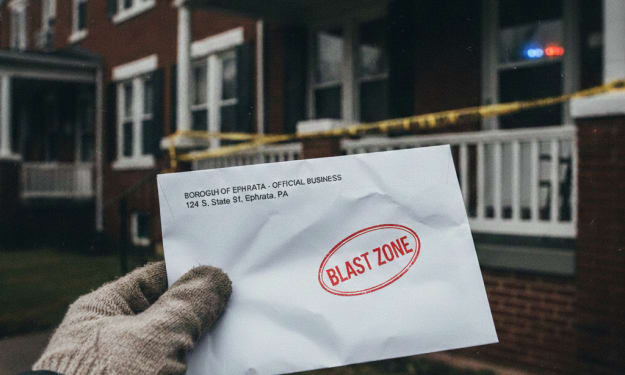
Living in the Blast Zone: The "House of Skulls" and the Collapse of Ephrata’s Luxury Dream
The Morning the Property Value Died On January 6, 2026, the residents of Washington Avenue didn't just wake up to a crime scene; they woke up in a financial blast zone. While the media trucks have packed up and the hazmat suits are gone, the neighbors are left with a permanent scar. In real estate law, this is called "Stigmatized Property."
By Sunshine Firecracker6 days ago in Criminal



Comments
There are no comments for this story
Be the first to respond and start the conversation.