
Crime Chronicles: Madeleine Smith
Charming Socialite or Cold-blooded Poisoner?

Welcome back to Crime Chronicles! If this is your first read in the series well, first off, welcome it's nice to have you. Secondly, I highly recommend checking out the other stories as well.
This series is 4 entries long so far, and it's been both fascinating and frustrating to read about the crimes that I've covered so far. I think we've dilly-dallied long enough, however, so let's get to the reason you clicked the article, shall we?
Madeleine Hamilton Smith and Her Lover
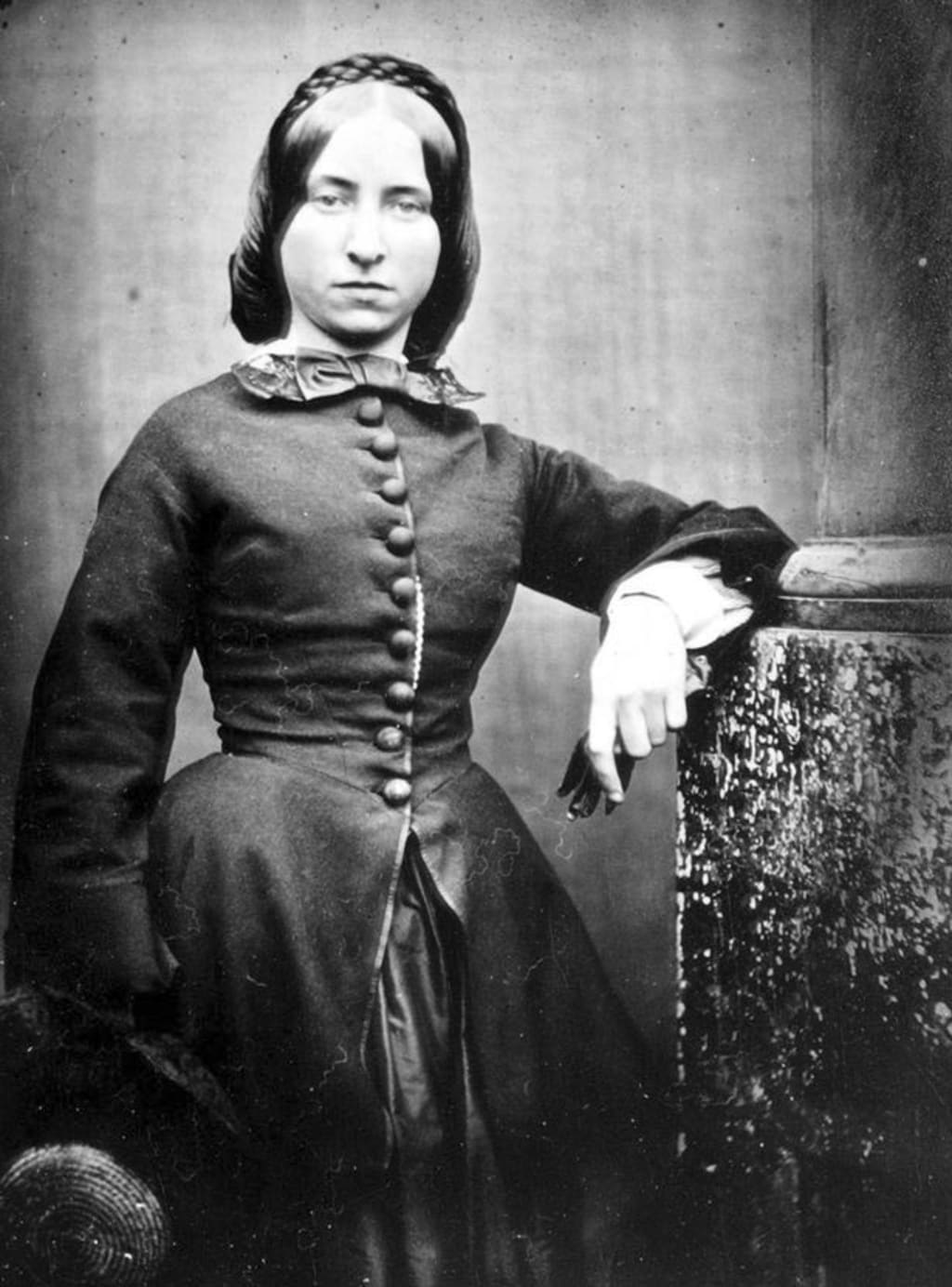
Madeleine Hamilton Smith was born in Scotland in 1835 to parents James and Elizabeth Smith. She was the oldest of five children and spent much of her life in Glasgow - her early life, at least.
Academically, she attended school in London between 1851 and 1853 before returning home to Glasgow at the age of eighteen. In 1855, she met and began an affair with an apprentice nurseryman (a gardener) named Pierre Emile L'Angelier.
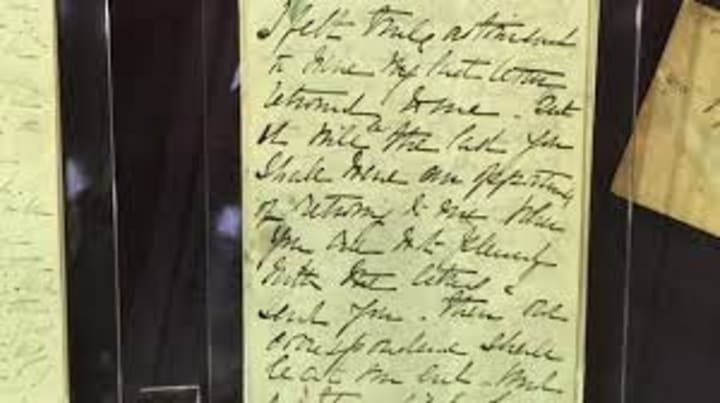
Their relationship was forbidden by Madeleine's parents, but the two lovers continued to meet up in secret and exchanged close to 250 love letters between them.
James and Elizabeth found a 'suitable' partner for their daughter in William Harper Minnoch. Madeleine agreed to marry the man in February of 1857, and attempted to end her relationship with L'Angelier. I say 'attempted' because L'Angelier wasn't willing to let the relationship end. He refused to return Madeleine's love letters, and threatened to expose the relationship if she refused to marry him.
The Sensational Trial
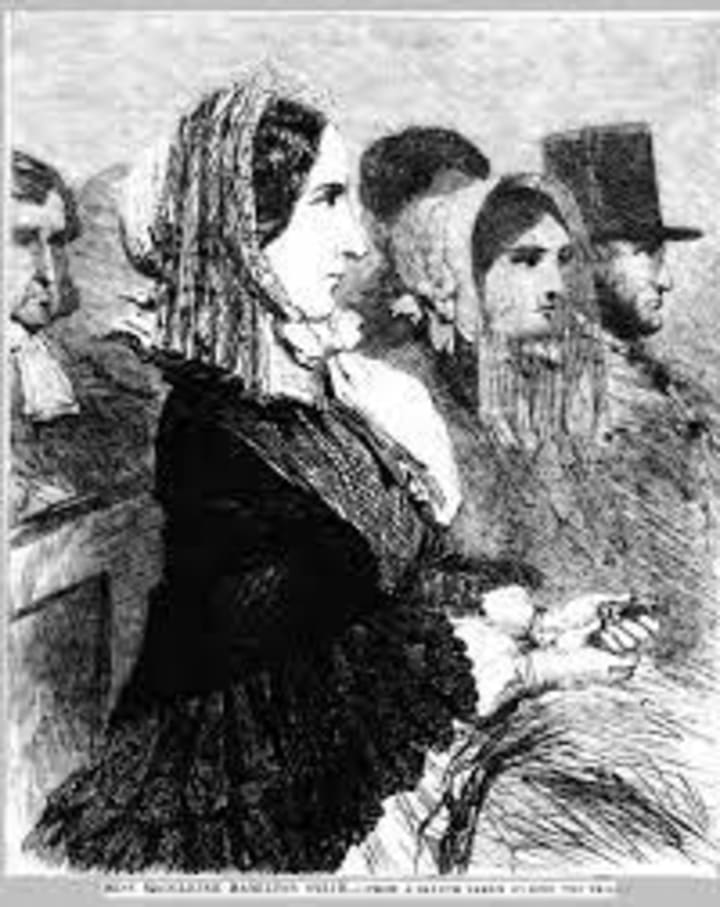
In the early morning hours of March 23, 1857, Pierre Emile L'Angelier was found dead of arsenic poisoning. The police quickly found Madeleine's love letters, they also quickly discovered that she had made a recent purchase which put their focus squarely on her. Now, I'll give you one guess, what do you think she bought? If you guessed arsenic, congratulations! Here's a Noddy badge for you, you clever cookie!
Madeleine was charged with murder and went to trial in July of 1857. Due to the age and beauty of the defendant, and the content of the letters - which were read aloud to the court - the trial scandalized the Victorian public over the course of its nine days.
As far as the trial goes, I wasn't able to find a lot of information about the length or handling of the trial. What I did find regarding the evidence is that it was largely circumstantial.
The Verdict: Not Proven
From the start, the media seemed to be heavily on the side of believing Madeleine - this extended to Clerk Hope, the presiding Justice. Now, there was a notable decision by the court to omit the victim's diary which detailed how she would make drinks for him. I'll talk about that in a second but first, I think we should look at the evidence.
Apart from the numerous amorous letters between the two that were (as previously noted) read aloud, Madeleine had purchased arsenic in the weeks before L'Angelier's death. There was also the threats of blackmail from L'Angelier which served as a pretty good motive.
Madeleine had, as previously noted, been seen at local drug stores purchasing arsenic in the weeks before her lover's death. She signed for the arsenic (as required) using her real name. It also didn't help that Smith had a rather flippant attitude in court despite facing a capital charge and potential execution.
After a nine day trial, the jury retired to deliberate. They returned with a verdict of Not Proven. So, for those who don't know, Scotland has three potential verdicts:
- Guilty
- Not Guilty
- Not Proven
While I'm not a lawyer and I'm not sure about all the legalese around it, but here's how I understand it. A verdict of 'not proven' means that the jury is unconvinced of the defendant's innocence; but feels the prosecution didn't adequately prove their case. Right, this is where L'Angelier's diary comes in.
The diary, as I said before, talked about how Madeleine would make drinks for him. This seems to be the theory that the prosecution used: that Madeleine had spiked each of those drinks with arsenic. However, because the diary was not allowed into evidence, and nobody had actually SEEN Madeleine spiking the drinks, the prosecution was fighting a losing battle.
After the Trial
The scandalous nature of the trial meant that the Smith family's name and reputation were damaged irreparably and they were forced to leave Glasgow. All the strain affected her father's health and he passed away at 55 in 1863.
Madeleine married twice after the trial. Her first marriage was to an artist, George Wardle in 1861. They had two children together, their daughter Mary was born in 1863 and their son, Thomas, was born in 1864. The marriage lasted 28 years, before the two separated in 1889.
Smith subsequently moved to New York City, and remarried around 1916 to one William Sheehy (that's an interesting name). This second marriage lasted until Sheehy passed away in 1926.
The date of Madeleine Smith's passing is unknown but most agree that she passed away in 1928.
Did She do the Deed?
Madeleine's initial excuse for the arsenic purchase was that she had a rat problem, she later claimed she wanted it for cosmetic use...yes, you read that correctly. Apparently, arsenic was often used in cosmetics at the time. As far as I know, this is no longer the case which is obviously a good thing.
These excuses served as a good cover for her crime. Did she do the deed? Well, the general consensus is that yes, she did indeed poison her lover. Considering what I was able find while researching this article, I have to say that I kind of agree. I can understand the prosecution's approach, and I'm pretty sure that they'd have proven their case quite well if L'Angelier's diary had been admitted into evidence.
I can also understand why the lack of witnesses to the poisoning posed a problem. This is one of the more unusual cases that I've read about. It's also one of the more difficult cases to research because there was very little to information on the case.
Still, this was definitely an interesting case and was worth looking into.
About the Creator
Greg Seebregts
I'm a South African writer, blogger and English tutor; I've published 1 novel and am working on publishing a 2nd. I also write reviews on whatever interests me. I have a YouTube Channel as well where I review books, and manga and so on.
Keep reading
More stories from Greg Seebregts and writers in Criminal and other communities.
Crime Chronicles: The Poisonous Housekeeper
Anna Schonleben, this isn't a name that many would be familiar with, which makes it a perfect entry for the Crime Chronicles series. Now, this one is probably going to be one of the shorter entries in the series so let's get to it.
By Greg Seebregts2 years ago in Criminal
Two Teens, One Bus, and a Nation Watching
Hello, and welcome to “The True Crime Reader,” where we dig beneath the headlines to unravel the stories that shape our understanding of crime, justice, and society. Today’s episode takes us to Oakland, California, for the story behind Dashka Slater’s powerful nonfiction book, “The 57 Bus”—a case that stunned the Bay Area and reverberated across the country.
By Kristen Barenthaler2 days ago in Criminal
A Real Story: The Day Ameneh Bahrami Lost Her Sight
In 2005, Tehran woke up to what seemed like an ordinary morning. Buses were running, offices were opening, and students were heading to their universities. The city was moving through its usual routine. No one knew that, in one small part of the city, a tragedy was about to occur—one that would later shock the entire world.
By shakir hamid2 days ago in Criminal



Comments (2)
I thought this was really interesting and I think, Greg, that you'll find that you have been botted with the comment below mine! I think she did it although is the scandal of being associated with a French loved greater than the scandal of being a suspected murderess? The irony...
Your compelling and skillfully written story kept me eagerly anticipating the next developments, skillfully blending emotions and suspense for a truly captivating experience. I'd appreciate it if you could also take a moment to read my work!