
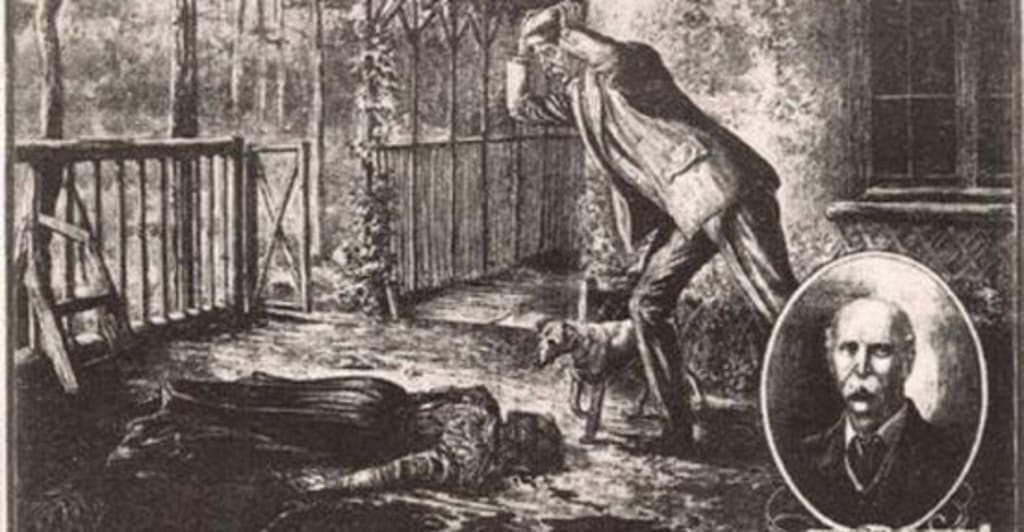
Caroline Mary Luard (née Hartley; 1850 – 24 August 1908) was the victim of an unsolved murder, known as the Seal Chart Murder, after she was mysteriously shot and killed at an isolated summerhouse in a heavily wooded area near Ightham, Kent. Her husband, Major-General Luard, later committed suicide. It has since been suggested that John Dickman, who was hanged for killing a passenger on a train in 1910, may have been involved in her death.
On 24 August 1908, at about 2.30pm, Major-General Luard and his wife left their home and went for a walk with their dog. According to Major-General Luard's account, they had two very different purposes. He wished to retrieve his golf clubs from the clubhouse at Godden Green Golf Club prior to a holiday that he and his wife were intending to take, while Mrs Luard merely wanted to take some exercise before returning home where she was expecting a Mrs Stewart, wife of a local solicitor, for afternoon tea.
Accordingly, having walked about a mile from their home, along the road that passed close to St Lawrence's Church and the associated school, at 3.00pm they parted ways at a wicket gate. This gate let on to a path that led to a ‘bungalow summer house’ known as ‘La Casa’, owned by the Luards’ neighbours, the Wilkinsons of Frankfield House, and which both families were accustomed to using from time to time. Beyond the summer house was a path through the woods which would allow Mrs Luard to return home in good time for her visitor.
Major-General Luard, meanwhile, set off in the direction of the Golf Course and was seen at various times during the next hour. At 3.20pm, he was seen by Thomas Durrand at Hall Farm. Between 3.25 and 3.30pm, Major-General Luard was observed by a labourer some 400 yards from the golf links and again, by the same man, between 3.35 and 3.40pm. At 3.35pm, he was seen by the Golf Club Steward, on the links.
Having collected his clubs, at 4.05pm Major-General Luard met the local vicar, Rev. A. B. Cotton, who was in his motor car and apparently driving in the opposite direction. Cotton nevertheless took Luard's golf clubs, presumably to save him the trouble of carrying them any further and in the expectation of returning shortly in the right direction. This occurred at 4.20pm, when Rev. Cotton stopped to pick up Luard, depositing him and his golf clubs at Ightham Knoll at around 4.25pm.
At home Major-General Luard found Mrs. Stewart awaiting the return of Mrs Luard. Consequently, Luard set off in search of his wife by the woodland route, at approximately 4.30pm. He eventually found her, at about 5.15pm, on the verandah of the summer house which was otherwise locked and empty. She had been shot in the head, and her three rings and purse were missing. No cartridges were found at the scene, merely some “disappearing footprints”.
The time of Mrs Luard's murder was estimated to be 3.15pm, when Major-General Luard was walking towards the Golf Clubhouse. Three shots were heard at about that time by two witnesses – Annie Wickham (55), a long-standing local resident and wife of a coachman, and Daniel Kettel (58), a gardener. Annie claimed the shots came from the direction of the summer house. She was at the Wilkinsons' home at Frankfield House at the time – about 500 yards from the summer house.
There has been speculation that the killer was John Dickman who, in 1910, was sentenced to death for the murder of a man named Nisbet on a train in Morpeth. Dickman's conviction was considered unsafe by a number of people, including five of the jury that found him guilty and who later signed a petition calling for him to be reprieved. Sir Sidney Orme Rowan-Hamilton, who was Chief Justice of Bermuda in the 1930s and who wrote a book about the Dickman case in 1914, seems to have been convinced that Dickman murdered Mrs Luard. He believed that she had responded to an advertisement that Dickman had placed in The Times, asking for financial help, by sending him a cheque. Dickman had subsequently forged this cheque - presumably by changing the amount - and when Mrs Luard discovered this, she contacted him and arranged to meet him without her husband's knowledge.
It has also been claimed that the judge who tried Dickman, the three Appeal Court judges who heard and rejected his appeal, and the Home Secretary, Winston Churchill, who refused to commute Dickman's death sentence, were all friends of Major-General Luard and bent on avenging his and his wife's death.
About the Creator
Grace Williams
Bizzare and thrilling cases of murder.......
Please do well to like and subscribe!
Keep reading
More stories from Grace Williams and writers in Criminal and other communities.
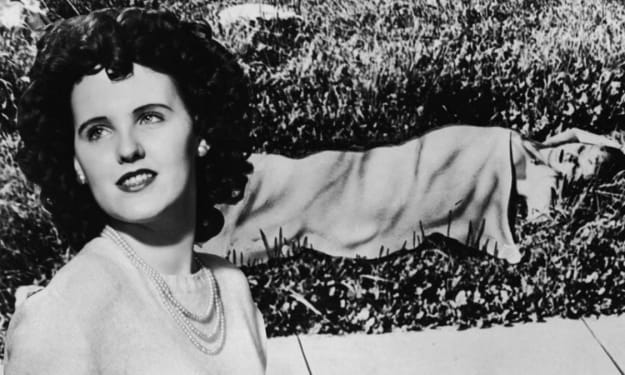
Black Dahlia 2
An autopsy of Short's body was performed on January 16, 1947, by Frederick Newbarr, the Los Angeles County coroner. Newbarr's autopsy report stated that Short was 5 feet 5 inches (1.65 m) tall, weighed 115 pounds (52 kg), and had light blue eyes, brown hair, and badly decayed teeth. There were ligature marks on her ankles, wrists, and neck, and an "irregular laceration with superficial tissue loss" on her right breast. Newbarr also noted superficial lacerations on the right forearm, left upper arm, and the lower left side of the chest.
By Grace Williams3 years ago in Criminal
Push To Prevent Catapults Being Bought By Children
MP’s have been warned to put new legislation in place that will help to close a loophole in the law which allows people including children to legally buy weapons which is capable of killing wildlife. The alert was issued during a briefing in parliament which set out growing evidence that catapults were being misused against animals and to damage other people’s private property. The Naturewatch Foundation who hosted the session expanded on their message that at the moment there is a completely unregulated system where people of any age can buy weapons and there are no meaningful controls on sale or power.
By Ashish Prabhuabout 17 hours ago in Criminal
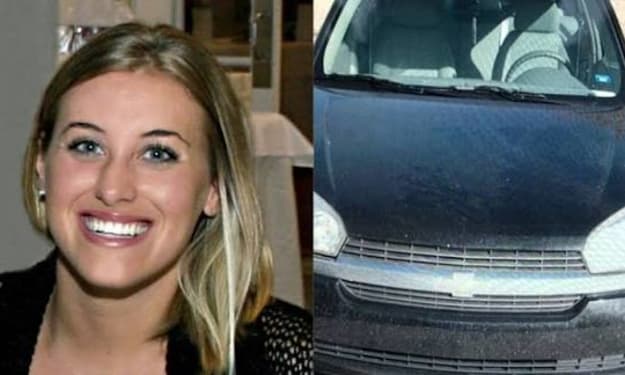
Jennifer Kesse: The Unidentified Man and the Vanished Car
The disappearance of Jennifer Kesse remains one of the most perplexing and heartbreaking unsolved missing persons cases in Florida. On January 24 2006 the 24-year-old finance manager vanished from her condominium complex in Orlando without a trace. Nearly two decades later her whereabouts are still unknown, no arrests have been made and the mystery continues to captivate true crime enthusiasts and haunt her family.Jennifer Joyce Kesse was a bright, ambitious young woman living in Orlando Florida. She worked as a finance manager at Central Florida Investments, a timeshare company in Ocoee. Having graduated with a finance degree she had built a stable life, purchasing her own condo in the gated Mosaic at Millenia community near the Mall at Millenia—a place she chose partly for its security features, including a guard. Jennifer was described by loved ones as responsible, family-oriented,and safety-conscious. She maintained close ties with her parents,Drew and Michelle Kesse and her boyfriend Rob Allen.
By Kure Garba4 days ago in Criminal


Comments
There are no comments for this story
Be the first to respond and start the conversation.