
Bryan Kohberger Pleads Guilty: Unraveling the Idaho College Killings and the Pursuit of Justice
Bryan Kohberger Pleads Guilty to Idaho Student Murders in Shocking Courtroom Admission

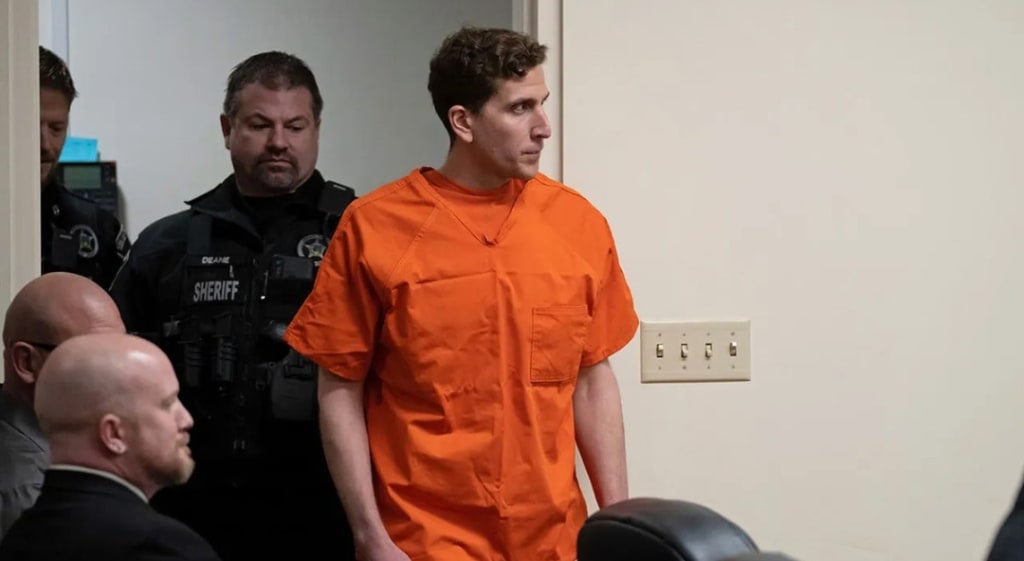
In a moment that gripped both a courtroom and a nation, Bryan Christopher Kohberger, a 30-year-old former criminology student, formally pleaded guilty to the savage killings of four University of Idaho students in a July 2025 plea hearing. The guilty plea marked the culmination of nearly three years of legal wrangling, speculation, public outrage, and community grief following the shocking quadruple homicide that shook the college town of Moscow, Idaho.
As Kohberger stood before Judge Steven Hippler, admitting to each count of first-degree murder and felony burglary, the courtroom remained silent—save for the weeping of some family members, the clicking of journalists' keyboards, and Kohberger’s own cold, mechanical responses.
I. The Crime That Stunned a Nation
A Night of Horror
On the early morning of November 13, 2022, an off-campus residence in Moscow, Idaho, became the scene of one of the most gruesome and mysterious crimes in modern college-town history. The victims—Kaylee Goncalves, Madison Mogen, Xana Kernodle, and Ethan Chapin—were found brutally stabbed in their beds. The violent nature of the crime, the lack of an apparent motive, and the initial absence of a suspect sent a wave of fear across the community and the country.
Unlike typical break-ins or targeted attacks, the murders were calculated, precise, and almost surreal in their execution. Some of the victims appeared to have fought back, while others had no defensive wounds, suggesting they were killed in their sleep.
The city of Moscow, which hadn’t recorded a homicide in nearly a decade, was suddenly thrust into the national spotlight. Campus life came to a halt, parents pulled their children from school, and rumors and speculation swirled online.
II. The Suspect: A Criminal Justice Student with a Dark Fascination
Kohberger wasn’t just a random individual with a violent streak. He was, at the time of the murders, a PhD student in criminology at Washington State University, just ten miles from the University of Idaho. His academic focus? The psychology of criminals, decision-making processes behind violent acts, and the patterns of serial offenders.
Online forums unearthed a disturbing post by a user believed to be Kohberger, seeking volunteers for a survey about how criminals “approach their victims.” While none of this confirmed guilt, it painted a portrait of a man deeply interested—perhaps obsessively so—in crime and control.
Friends and professors described him as quiet, intense, and occasionally arrogant. He was reportedly bullied in high school, struggled with drug addiction in his youth, and had been seeking control and significance in ways many now see as warning signs.
III. The Breakthrough: How Forensics and Technology Solved the Case
The Sheath and the DNA
The first major break came from an object found on one of the beds: a Ka-Bar knife sheath, often used by military personnel and survivalists. Unlike the knife itself, the sheath was intact—and contained a single male DNA sample on the snap. This DNA did not match anyone in the national CODIS database but was preserved and later matched to Kohberger using forensic genetic genealogy and a discarded item from his family’s trash in Pennsylvania.
This was not just CSI-style fiction. It was the real-world application of cutting-edge DNA phenotyping and genealogical triangulation that led investigators to Kohberger’s extended family, and ultimately to him.
Surveillance, Cell Tower Data, and the Hyundai Elantra
Kohberger’s white Hyundai Elantra was captured on multiple security cameras near the scene around the time of the killings. Cell tower data also placed his phone near the victims’ residence—though it had been turned off for about two hours during the suspected window of the murders.
After reactivating his phone around 4:48 a.m., he was tracked driving back toward Pullman, Washington. Investigators would later say this combination of digital footprint, vehicle tracking, and physical evidence gave them near-certainty.
IV. The Arrest: Cross-Country Hunt Ends in Pennsylvania
Kohberger was arrested on December 30, 2022, at his parents’ home in the Pocono Mountains of Pennsylvania, where he had returned for winter break. His father had flown in from Washington to drive him cross-country in the same Elantra that had now become critical to the case.
FBI surveillance had been tracking him for days, observing unusual behavior—like wearing surgical gloves while handling trash and cleaning the vehicle meticulously with bleach. A Q-tip from the trash sealed the link between him and the knife sheath DNA.
The suspect waived extradition and was transported back to Idaho, where a grand jury indicted him on multiple counts of first-degree murder.
V. The Courtroom Drama: A Chilling Guilty Plea
On July 2, 2025, Kohberger entered his guilty plea in an Ada County courtroom, appearing calm, even eerily detached. His voice was flat as he confirmed he understood the charges and that he was not coerced.
While many had anticipated a long trial that could have included testimony from experts, digital forensic analysts, and emotional victim impact statements, the plea deal truncated those possibilities.
In exchange for avoiding the death penalty, Kohberger agreed to plead guilty to:
Four counts of first-degree murder
One count of felony burglary
No appeals
Life imprisonment without the possibility of parole
VI. The Families: A Torn Reaction
The reactions from the victims’ families were deeply divided.
The Goncalves Family: Kaylee’s father, Steve Goncalves, publicly criticized the deal, stating that “a life sentence is not justice” and expressing frustration with the lack of transparency. He argued that a public trial could have uncovered motive and accountability.
The Mogen and Kernodle Families: These families expressed some relief, stating that avoiding a prolonged and painful trial allowed them to begin healing. They emphasized the emotional toll of court proceedings and were satisfied with a life sentence.
Ethan Chapin’s Family: Ethan’s parents emphasized their desire to remember their son’s smile and his love for life, rather than being consumed by the legal process.
VII. The Missing Motive: Still No Answers
Despite his guilty plea, Kohberger did not provide a reason for the attack. The victims had no known personal connections to him, and no clear triggers or psychological breakdowns were presented. This lack of motive leaves a haunting emptiness in the case.
Prosecutors and psychologists have speculated on possible motivations:
Power and Control: Kohberger’s academic studies and alleged survey suggest an obsession with dominating and analyzing criminal behavior.
Narcissism: He may have viewed himself as intellectually superior, treating the killings as a “perfect crime.”
Isolation and Rejection: Some believe a long history of social rejection and psychological isolation could have contributed to his violent spiral.
Without a confession or psychological evaluation in court, however, these remain conjecture.
VIII. Justice and Society: What the Case Reveals
1. The Role of Forensic Science
This case has been cited as a milestone in forensic science and digital investigation:
The integration of genealogy databases, once controversial due to privacy concerns, is now proving essential in solving cold cases.
Geofencing warrants, which collect data from anyone near a crime scene, were hotly debated but central to identifying Kohberger’s movements.
It raises important legal questions: Where do we draw the line between privacy and justice?
2. Media and Misinformation
The Idaho murders generated an explosion of online speculation, with thousands of Reddit threads, YouTube breakdowns, and conspiracy theories. Several innocent individuals were falsely accused online, a painful reminder of the dangers of trial by social media.
The case has led to renewed calls for platforms to regulate amateur sleuthing, especially when speculation can destroy real lives.
3. The Death Penalty Debate
Idaho still has the death penalty, but it’s rarely applied. Kohberger’s deal reignited the national debate: Should death be on the table for calculated mass murderers?
Opponents argue that life without parole is more humane and avoids expensive appeals. Advocates argue that such crimes demand the ultimate punishment.
IX. Looking Ahead: Sentencing and Legacy
Kohberger’s formal sentencing is scheduled for July 23, 2025. Families will give victim-impact statements. Kohberger may speak, though there is no requirement for him to do so.
There is growing pressure for the court to unseal records related to:
His psychological evaluations
Additional DNA and digital evidence
Correspondence or manifestos that could reveal intent
The case will likely be studied in criminal justice programs for years to come, not only for its brutality, but for what it reveals about the modern intersection of psychology, law enforcement, technology, and media.
X. Conclusion: A Case That Changed Everything
The murders of four bright young students in a peaceful Idaho town have left an indelible scar—not only on the victims’ families but on the national psyche.
Bryan Kohberger’s guilty plea brings procedural closure, but for many, it is not enough. The absence of a clear motive, the horror of the crime, and the eerie persona of the killer offer no easy answers. What it does offer, however, is a stark view of how modern law enforcement can solve even the most nightmarish crimes—and how families, communities, and societies must wrestle with the meaning of justice, even when it is delivered.
As the community of Moscow begins to move forward, the legacy of Kaylee, Madison, Xana, and Ethan will endure—in scholarships, memorials, and in the profound lessons their tragic deaths have left behind.
About the Creator
Keep reading
More stories from Dipayan Biswas and writers in Criminal and other communities.
World’s Most Popular TikTok Star Khaby Lame Leaves U.S. After Being Detained by ICE
Los Angeles, CA — Khaby Lame, the world’s most followed TikTok personality, has left the United States after a brief but highly publicized detention by U.S. Immigration and Customs Enforcement (ICE), his management team confirmed Tuesday.
By Dipayan Biswas7 months ago in Criminal
A Horror Movie Come to Life: Inside the Nightmare at 100 Washington Avenue
The Raid on Washington Avenue On the morning of January 6, 2026, the residents of Washington Avenue woke up to a swarm of law enforcement vehicles. But this wasn't a standard drug bust. The officers entering 100 Washington Avenue were wearing hazmat gear and respirators.
By Sunshine Firecracker5 days ago in Criminal



Comments (2)
Excellent work and well written. Good job Dipayan
Omg this is heartbreaking what a horrible tragedy! Loved the read though great article, I wrote a poem hope you can give me any advice at all thank you 💓💓💓