
Arsonist’s Inferno: John Leonard Orr’s California Firestorm — The Fiery Legacy of a Firefighter Turned Arsonist
Explore the chilling true story behind Arsonist’s Inferno: John Leonard Orr’s California Firestorm—a haunting tale of a fire captain who sparked chaos in the name of obsession. Discover how one man turned California into a blazing nightmare.

Introduction
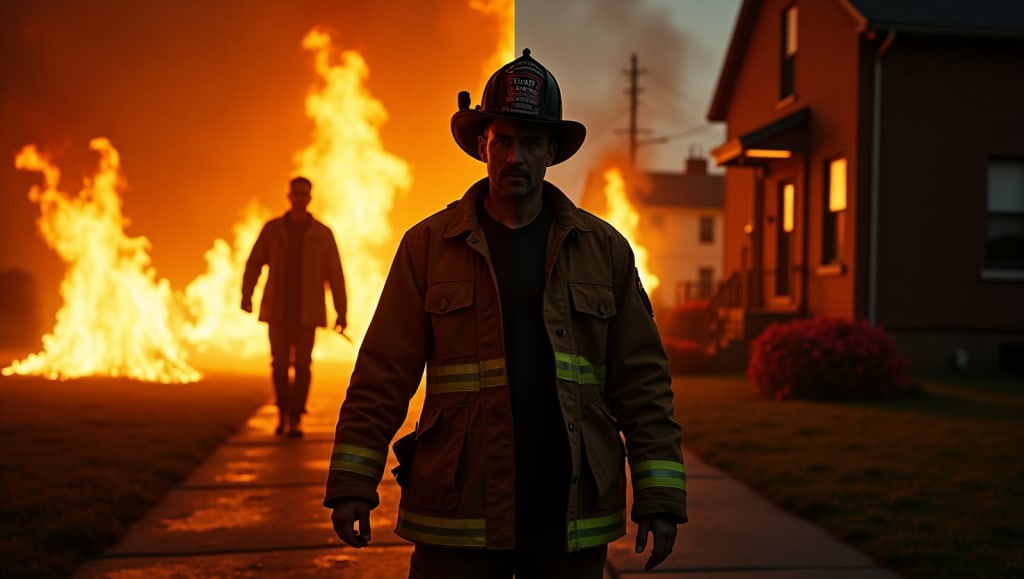
Fire. It’s one of humanity’s oldest tools—and deadliest foes. Now imagine a firefighter, someone sworn to fight that elemental beast, flipping the script and becoming its master. That’s exactly what happened in Arsonist’s Inferno: John Leonard Orr’s California Firestorm, where the line between hero and villain burned to ashes.
John Leonard Orr wasn’t just a firefighter. He was a fire captain, an arson investigator, and, chillingly, one of the most prolific serial arsonists in American history. Between the late 1980s and early '90s, Southern California was gripped by a string of infernos that seemed too frequent, too calculated, and far too devastating to be random. And at the heart of it all? A man in uniform, hiding in plain sight.
Let’s dive deep into the flames, peel back the smoke, and uncover the terrifying reality behind Orr’s firestorm.
The Man Behind the Matchstick: Who Was John Leonard Orr?
To the outside world, John Leonard Orr looked like a dedicated public servant. He wore the badge, he taught fire science courses, and he even wrote a novel about an arsonist—more on that later. But under that polished image lay something far darker.
A Promising Career… At First
John Orr’s career started off pretty standard. After bouncing around a few jobs, he landed a position with the Glendale Fire Department in Southern California. There, he rose through the ranks to become a captain and arson investigator. Ironically, he was good—really good—at finding the cause of fires. But that’s probably because he lit more than a few himself.
Here’s the twist: while he was investigating fires, many of them had his fingerprints—figuratively and literally—all over them.
A Dark Obsession
It wasn’t just about setting fires. Orr became addicted to the chaos. He’d often be the first one at the scene, “helping” investigators and even writing detailed reports. But his need for control, his God-like complex over fire, pushed him to the edge. When you dig into Arsonist’s Inferno: John Leonard Orr’s California Firestorm, you realize this wasn’t about anger or revenge—it was about power.
The Flames Begin: A Trail of Destruction
Early Signs and Red Flags
Let’s rewind a bit. The first major hint that something was off came in 1984 when a fire erupted in a department store in South Pasadena. Four people, including a two-year-old child, died. Investigators believed the fire was deliberately set, using a time-delay incendiary device.
Guess who was at a nearby arson investigator conference at the time—and who pushed hard for a specific theory about the fire's origin?
Yep, John Orr.
A Signature Pattern
Over time, investigators began to notice a pattern:
• Fires often broke out during or right after firefighter training conferences
• Similar incendiary devices were used—cigarettes rigged with matches and paper
• Fires targeted businesses that sold flammable goods (think: fabric stores, hardware shops, etc.)
• And get this—Orr was often in the area or even assigned to the cases
Coincidence? Not so much.
The Stats Speak Volumes
By the early ’90s, over 2,000 fires were linked to a mysterious arsonist in Southern California. And they weren’t just little blazes. We’re talking about firestorms that consumed buildings, forests, and in some cases, lives.
Cracking the Case: How John Leonard Orr Was Caught
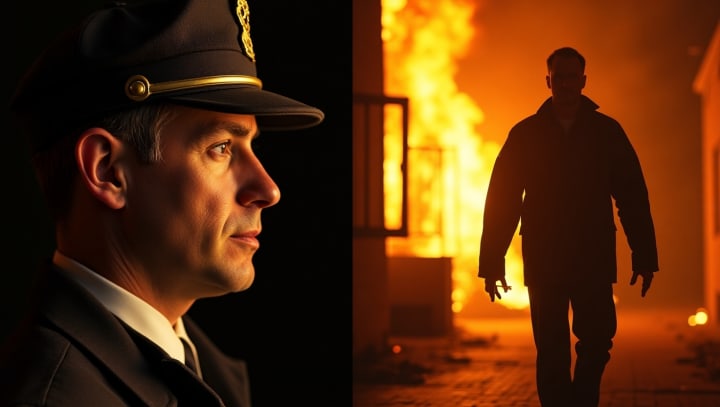
Despite the mounting evidence, catching a firefighter committing arson is like trying to spot a snowflake in a blizzard. These folks know how fire works. They know how to cover their tracks. But in Orr’s case, hubris was his downfall.
The Novel That Spoke Too Loud
Remember that book Orr wrote? Titled Points of Origin, it told the story of a firefighter named Aaron who—surprise!—was secretly an arsonist. The character’s fires mirrored actual blazes Orr was suspected of setting. Even eerier, some passages described minute details never released to the public.
Investigators got their hands on the manuscript and immediately raised eyebrows. It wasn’t just fiction—it was a confession wrapped in a plotline.
The Nail in the Coffin: Forensics and a Fingerprint
Eventually, a partially melted time-delay device was recovered. And wouldn't you know it, Orr's fingerprint was on it. That, combined with his location data, handwriting analysis on arson notes, and the damning manuscript, led to his arrest in 1991.
By 1992, he was convicted on multiple counts of arson. In 2002, he was handed a life sentence for murder related to the South Pasadena fire.
The Psychology of a Pyromaniac: What Made Orr Tick?
Why would someone sworn to protect lives set out to destroy them? The answer lies deep in psychology.
Power and Recognition
Orr wasn’t setting fires to collect insurance or exact revenge. He wanted to be seen as the hero. He’d often be first on the scene, barking orders, taking control. In his mind, he was the fire. He wanted recognition, admiration—and maybe, just maybe, fear.
A Narcissistic Spiral
Many experts believe Orr had narcissistic personality disorder. He saw himself as smarter than everyone else. While others saw fire as a threat, he saw it as his domain—something he could control and command.
But in reality, fire doesn’t play favorites. And eventually, it burned him right out of his double life.
Arsonist’s Inferno: John Leonard Orr’s California Firestorm and Its Legacy
The fallout from Orr’s rampage left more than charred buildings. It changed how fire investigations were handled nationwide.
What Changed After Orr?
• Tighter arson investigator screening: More psychological evaluations became standard.
• Stricter forensic analysis: Investigators now use high-tech methods to identify incendiary devices and accelerants.
• Database tracking: Recurring fire patterns and devices are tracked with nationwide software.
Orr’s crimes weren’t in vain—his case helped close the gaps he exploited.
Frequently Asked Questions (FAQs)
1. How many fires did John Leonard Orr set?
Orr is believed to have set over 2,000 fires, though only a portion could be definitively linked to him.
2. Did he act alone?
Yes. There's no evidence he had accomplices. He acted solo, driven by his personal demons.
3. Is John Leonard Orr still alive?
Yes. As of now, he’s serving a life sentence in a California prison, with no chance of parole.
4. What’s “Points of Origin”?
It’s Orr’s self-published novel—essentially a fictionalized (and incriminating) autobiography. It was used as evidence during his trial.
5. Where can I learn more?
You can check out books like Fire Lover by Joseph Wambaugh, which dives deep into the case.
Conclusion: The Man Who Played With Fire and Got Burned
Arsonist’s Inferno: John Leonard Orr’s California Firestorm isn’t just the story of a deranged arsonist—it’s a cautionary tale about unchecked ego, obsession, and how even those meant to protect us can become the very threat we fear.
John Leonard Orr left scars not just on the land but in the psyche of every firefighter and investigator who worked alongside him. His story reads like fiction, yet every horrifying chapter is real.
Fire reveals character—sometimes literally. And in Orr’s case, the flames exposed a monster hiding behind a badge.
So next time you hear about a mysterious blaze, remember: sometimes, the person holding the hose may have been holding the match.
About the Creator
The Murder Sheet Podcast links TX killing To KY Cold Case
At a time when violent crimes are at historical lows (despite what the current administration claims), there are more true-crime podcasts, books, TV shows, and general interest in the genre. True-crime podcasts are extremely expensive to make because of research costs, public records requests, potential investigator fees, out-of-studio recording costs, and production expenses.
By Frank Racioppi5 days ago in Criminal
Study reveals Louisiana State Police uses force disproportionately against Black people
It’s not the NYPD or LAPD that’s the news for using excessive force but the Louisiana State Police Department. In cases where women have been dragged on the pavement by a cop with a chip in his shoulder to the fact that cops chase after whomever is speeding, only the numbers tell the tale.
By Skyler Saunders5 days ago in Criminal



Comments
There are no comments for this story
Be the first to respond and start the conversation.