
Anthony Sowell ("Cleveland Strangler")
Anthony Sowell, known as the "Cleveland Strangler," was a convicted serial killer who operated from 2007 to 2009. He targeted vulnerable women, luring them to his home and then brutally assaulting and strangling them.

Anthony Sowell, infamously known as the Cleveland Strangler was a convicted serial killer whose heinous crimes shocked the nation. Operating from 2007 to 2009 Sowell's gruesome acts left a trail of tragedy and horror in their wake. Born on August 19, 1959, in Cleveland, Ohio, Sowell grew up in a troubled environment marked by a dysfunctional family and a history of criminal behavior. He served in the U.S. Marine Corps for a short time but was discharged in 1985 due to his behavior and substance abuse problems. In the years that followed, he drifted between different states, accumulating a criminal record that included charges related to rape assault, and abduction. Despite his criminal history, Sowell managed to evade lengthy prison sentences, allowing him to continue his disturbing activities. Sowell's reign of terror began in 2007 when he moved into a house on Imperial Avenue in Cleveland. Operating within a poverty-stricken neighborhood, he targeted vulnerable women, many of whom were struggling with addiction and homelessness. His modus operandi involved luring women to his residence under the pretense of offering them drugs or alcohol. Once inside, he would brutally assault, strangle, and murder them. Shockingly he often continued to live alongside the decomposing bodies, leading to a nauseating stench that plagued the area.
The scale of Sowell's crimes went unnoticed for some time due to the marginalized status of his victims. It wasn't until September 2009 that the horrifying truth began to unravel. A woman managed to escape Sowell's clutches and alerted the police about the atrocities taking place at his residence. Law enforcement swiftly obtained a search warrant for Sowell's home, where they made the horrifying discovery of multiple decomposing bodies hidden throughout the property.The magnitude and brutality of the crimes sent shockwaves through the community and the nation.
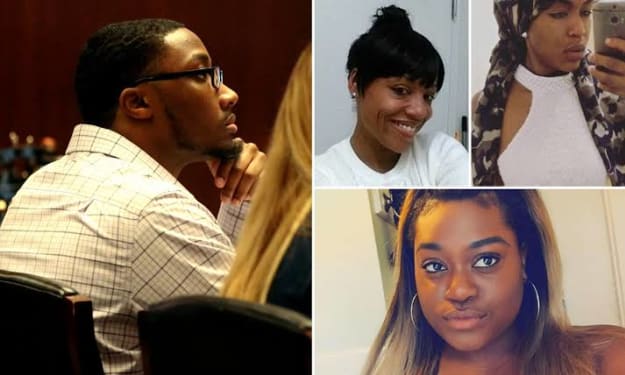
In total, the remains of eleven women were found on Sowell's property. The victims were identified as Tonia Carmichael, Nancy Cobbs, Tishana Culver Crystal Dozier, Telacia Fortson, Amelda Hunter, Leshanda Long, Michelle Mason, Kim Yvette Smith, Diane Turner, and Janice Webb. The majority of these women had gone missing over the span of several years, their disappearances often overlooked by authorities.Sowell was arrested and charged with multiple counts of aggravated murder, among other charges. The subsequent trial garnered significant media attention and horrified the public as the details of his crimes were laid bare. In 2011, he was found guilty on 81 charges, including the murders of eleven women and was subsequently sentenced to death.
The case shed light on the systemic issues that allowed Sowell's crimes to go unnoticed for so long. It exposed the failures of law enforcement, the criminal justice system, and society as a whole to protect and prioritize marginalized individuals. The trial also raised questions about the role of poverty, addiction and mental health in contributing to cycles of victimization. Anthony Sowell's crimes and subsequent trial had a lasting impact on the city of Cleveland and beyond. The tragedy prompted discussions about the importance of improving support systems for vulnerable individuals and ensuring that their safety and well-being are not ignored.The case also highlighted the need for systemic changes within law enforcement agencies to prevent similar situations from occurring in the future. In 2020, Anthony Sowell died in prison while awaiting execution. His death marked the end of a chapter in one of the most horrifying criminal cases in recent history. While justice was served for his victims, the case of the "Cleveland Strangler" continues to serve as a chilling reminder of the darkness that can lurk within even the most marginalized corners of society. It underscores the importance of vigilance, empathy, and a commitment to protecting the most vulnerable members of our communities.
About the Creator
Keep reading
More stories from Kure Garba and writers in Criminal and other communities.
Wheeler-Weaver: Online Predator
Khalil Wheeler-Weaver is a name associated with a chilling and disturbing criminal case that unfolded in the United States. Born on January 25, 1994 he gained notoriety for his involvement in the deaths of several young women, a case that garnered significant media attention and highlighted issues related to online interactions sex trafficking, and police response.Wheeler-Weaver's crimes came to light in the fall of 2016 when three young women went missing in Essex County, New Jersey. These women were Sarah Butler, Joanne Brown, and Robin West. As investigators delved into the cases, they discovered a disturbing pattern: all three women had been in contact with Wheeler-Weaver prior to their disappearances through social media and online platforms. The investigation uncovered a troubling digital trail of messages and interactions between Wheeler-Weaver and the victims. It became evident that he had posed as a potential client seeking companionship or sex work. He had used various aliases and false identities to lure these women into meeting him. Once in his presence he would allegedly assault and subsequently murder them. As the evidence mounted, authorities arrested Wheeler-Weaver on November 22, 2016. He faced charges including murder kidnapping, sexual assault, and desecration of human remains. The case drew significant attention due to the shocking nature of the crimes and the role of online interactions in facilitating them. It raised questions about the safety of online interactions and the vulnerability of individuals, especially those involved in sex work.
By Kure Garba3 years ago in Criminal
The Digital Gallows
"The clock has struck three, the coffee is cold, and the shadows are beginning to speak. Welcome back to the desk of The Night Writer. Tonight, we’re scrolling through a ghost story written in high-society ledger ink. But be careful—what you find might not be the truth, but the trap."
By The Night Writer 🌙 3 days ago in Criminal
I wanted to title this something different, but worried that my chosen title might cause problems entering the United States in the future so this is the new title. It's the greatest title. No one has ever written a title better than this. (All titles unrelated to content).
Let me be honest. I am finding this difficult. Now, I like a challenge, a stretch, a bit of an obstacle course. “Write about the decline of the British Empire in the form of a narrative poem in which your protagonist is an artichoke” I read, and flex my fingers. “Write a haiku to evoke the sensation of sibilance using only the first half of the alphabet.” “Well”, I think to myself, “this should be fun.” But “write about a system that isn’t working”? A system that isn’t working? Now? In 2026? ONE system? My favourite system that isn’t working? The sexiest system that isn’t working? The one giving me the most angst day to day? The one giving me the most existential dread? I am, as I say, finding this difficult. I will own that I have contemplated writing a thousand words on why the steady “all on” setting on my fairy lights is the EIGHTH of seven options which must be sequentially activated to get there, because that is a system that some fool came up with and it definitely doesn’t work, and now who is paying the price, eh? But how can I write about my fairy lights when…. When…. When….
By Hannah Moore3 days ago in Humans


Comments
There are no comments for this story
Be the first to respond and start the conversation.