
A Moment at Home
A young man find himself in prison

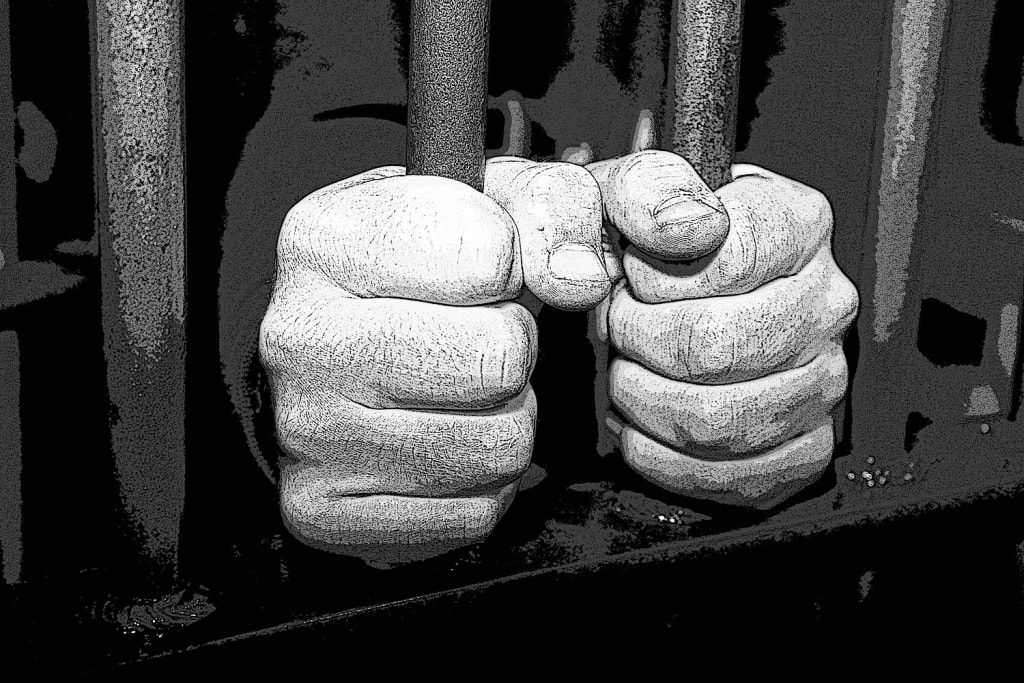
“One for whom the pebble has value must be surrounded by treasures wherever he goes.” – Par Lagerkvist
Lester was a drive-up, a new boot, a fish. Right from the first I could tell he was headed for trouble. Not that coming to prison ain’t trouble enough, but once you get inside there’s a different kind of trouble free-world folks know nothing about.
He was a smart-ass kid, twenty-three and thought he knew it all. Had a chip on his shoulder big as the Taj Mahal. Somebody had mistreated that youngster somewhere along the line and it showed, in his face, his attitude, the way he treated other people. But that ain’t no excuse. We’ve all had more than our share of bad blows.
It started out on Wednesday. Lester cruised up to my cell in new whites, fresh from Diagnostics. I was resting up for the night shift in in the laundry, reading a book on my bunk.
“An old man. Ain’t that my luck,” he said when he saw me.
I looked up at him over the edge of my paperback, Rich Man, Poor Man, a wonderful novel about growing up in America by Irwin Shaw, a writer who could distill in a few words what others took days to explain without Shaw’s brevity or eloquence.
“A bookworm too,” the kid spat derisively, pointing to the stack of books under my bunk, the last of my worldly possessions. “I hate to read.”
Lester was short and trim with a wiry kind of strength I’ve seen in boxers. His disturbing blue eyes looked for a quarrel above splotches of whiskers. Blond hair cut short jutted out at odd angles from his face. The kid had failed to make friends with his first barber. He was an accident waiting to happen and wouldn’t see it coming. Maybe I could help him. I could afford to be generous. I was doing a life sentence. This was my home.
“Hello there, young fellow.” I sat up and offered my hand through the bars. “Name’s Joe Cobb. They call me Pop.”
The kid looked at me like I was a bowl of spinach he had to eat before he could leave the table, then slid his hand into mine. It was soft and limp, like a dead mullet.
“Sanders. Lester Sanders. 5-4-3-2-1 or whatever the fuckin’ number they gave me.” He withdrew his hand from mine and unconsciously wiped it on his pants.
“Be good to actually know your number,” I advised. “The guards don’t take it lightly when you act flippant.”
“Yeah yeah.” He nodded toward the empty upper bunk in my cell. “What happened to the other guy?”
I got the feeling if I said I had murdered him in his sleep the kid wouldn’t have been surprised. I thought about fucking with him and telling him Ted hung himself, but wasn’t feeling that cruel.
“Transferred to the Ellis Unit. They needed welders and Ted was once of the best.”
“Welder, huh. They put me in the goddam hoe squad.” He said it like it was beneath him, as if assistant warden was more what he had in mind. I tried to point out the bright side.
“That’s not so bad this time of year. Fresh air, plenty of exercise. You’ll lay in half the time due to the rains.”
Down at the end of the run, the guard rolled the doors open. Lester, and his wrinkled brown paper bag of possessions, stepped inside.
“Top one’s yours,” I said trying to make him feel welcome. “Shelf is yours too. Since I’m on the bottom I use the floor.”
“I can see that,” he said, tossing his bag on the thin mattress next to the clean linens. “You only got one leg.”
He was right. I lost it a decade ago working as the dog boy. The dog boy takes care of the dogs and keeps them trained so they can chase down a runner. A runner is a convict who makes a break for it and thinks he can outrun a dog. Training involves the dog boy playing escaped convict who gets a head start. The dogs get released a few minutes later while guards, on horseback with rifles, monitor the action. The thin pads they give you are more for show than protection.
I was running when the dogs caught up to me. I tried to climb a tree but fell and they tore into my leg. The damage exceeded the acumen of the prison doctor to repair and there was no time or money to take me anywhere else. The carelessness of the training exercise would be an embarrassment to the warden, so they anesthetized me and removed the leg without my consent. Instead of apologizing, they spun it to make themselves look good.
“Prison Doctor Heroically Saves Inmate’s Life,” the headline read in the local paper. I was advised to keep it quiet and, in compensation, was awarded an easy part-time shift in the laundry folding clothes. To fight it would have been futile. The word of a three-time loser wasn’t worth squat next the sworn statement of a prison officer with a clean record, the case adjudicated in a prison town. Plus, I got special treatment and was fitted right away for a fake leg. It made a funny noise when I walked. I felt like Capt. Ahab, a character out of one of my favorite novels.
The heavy steel door slid closed with an unsettling bang and Lester winced as he looked around: two steel bunks welded to the wall, corner stainless steel sink commode combo with push buttons, a bare 40-watt bulb in a cage with a pull chain hung from the ceiling. He began to tuck his sheets in around the thin plastic covered mattress.
“So, where’re you from,” I asked, hoping conversation might ease the pressure.
“Detroit. South side.” He tied two corners of the sheet together and slipped one over the mattress end, then the other. He worked frantically, like a hurricane was coming.
“What’d they give you?’ I asked.
“What?”
“How much time?”
“Three years. For a couple ounces of pot. I never should have come to this friggin’ state.” He said ‘three years’ like he had my sentence.
“That’s not so bad. Ol’Jonesy is doing ten for a pound. That stuff’ll be legal soon. You guys will probably get pardoned.”
“Yeah yeah. That and a long-legged blonde is coming who tastes like strawberry ice cream.”
He snapped the blanket around the mattress and tucked it in. The kid could make a bed. I sensed he learned discipline somewhere, maybe military school.
“Keep your nose clean you can make trusty and be up for parole in nine months.”
“Great,” he put his foot on my bunk, climbed up top and stared at the ceiling, starting to brood.
I wiped his footprint off my sheet and went back to reading. The kid will come around, I said to myself. Culture shock. He just has to get adjusted.
Half an hour later and twenty pages further into my book, I felt a pair of eyes on me. The kid was leaning down over his bunk, smiling like a con man.
“Bum a smoke, Pops?”
“Sure. I’ve got some Bugler, but you have to roll it.” I set my book down and passed him a pack of tobacco with rolling papers inside.
“I can roll, old man. But not this crap.”
“You’ll need this.” I handed him my Zippo. Having a cigarette lighter inside prison was a privilege afforded very few. Those who had them were trusted inmates, long-timers, deserving of respect. The kid grabbed it like it was his.
“Thanks.”
Ordinarily, when you let a guy use your lighter, or anything else for that matter, he gives it right back. This little punk set it on his shelf along with my pack of tobacco. He had no manners.
“Why don’t you pass that stuff back down here,” I said, firm but gentle.
“Oh, yeah. Sorry.’
I could tell he didn’t mean it. He was testing me.
He tossed the lighter on my bunk. The next thing I knew it was raining ashes.
“Hey, kid. Your ashes.”
He peered over the side. “Didn’t getcha, did I?”
“No. It’s all right. Use this.” I held up an old tuna can with little wedges cut into the rim.
He snatched it from my hand like a schoolboy took a necktie his mother made him wear to church.
Just then Jim Willis came to the door. He was about my age, early sixties. A nice taciturn fellow, Black, with silver around the temples ascending to a distinguished nappy pate.
“Hey, Pop.”
“Hey the same.”
“Whatcha got to read?”
Good books soften time and I served as a conduit for protecting solid titles for those with an appreciation. Willis liked westerns and an occasional spy thriller and I tried to always stay one ahead of him. I found a Louis L’Amour and pulled it from the stack.
“Have you read Comstock Lode?”
“Don’t believe I have.” He took it gently through the bars, turning it over in his hands like a priceless Ming vase.
“Thanks, Pop. I’ll bring it back.”
“Take your time. It’s a good one.”
“Thanks again.” He walked away slowly, reading the jacket, caught up in the promise of the splendid hours he would spend with his new treasure of mental escape.
“Who’s that old fool?” barked a petulant voice from above.
If I had been twenty years younger I would have stood up, pulled that young clown off his bunk and beat the living tar out of him. But, patience and tolerance are lessons of age. I tried once again to take the high road and serve by example.
“His name is Jim Willis. He keeps the run clean and does a lot of little things that make life easier here for all of us. And, I wouldn’t refer to him as an “old fool” if I were you.”
The kid snickered. “He sure was acting funny. Like that book was made of gold or something.”
“Let me tell you something, sport,” I tried once again. “When that man came to this hell hole twelve years ago he could neither read nor write, but made up his mind he would get something positive out of his time in here. Day or night, whenever I saw him, Jim would always have a little pocket dictionary in his hands. When it got so worn he couldn’t read it any more, I got him another one. It took him four years to earn his G. E. D. Next June he will graduate with an associates degree in English literature.”
“Well, whoop-tee-fuckin’do.”
“Jim has found meaning in life. Found a purpose. He’ll probably make parole next year on a twenty-year sentence. He plans to spend the rest of his life teaching young Black children to read so they can get an education and avoid the problems he had growing up. Problems that led him to this place.”
“Oh yeah? What did he get forty years for? Baby rapin’”
I stood up on my one leg and looked him square in the eye. He was laid back against the wall, smoking, glaring at me like a weasel with a belly full of duck eggs.
“It’s none of your business what a man did. But I’m going to tell you because you might learn something that will keep you from getting killed in here. Something that may incite a little maturity so you can work out whatever it is that makes you such an obnoxious little punk.”
“Yeah, what’s that?”
“Jim was in a bar one night and a man pulled a gun on a woman. He was drunk, said she’d been messing around on him and was going to kill her. Jim tried to stop it and went for the gun. The gun went off. The other man didn’t make it.”
“So? Wasn’t his fault. Self-defense.”
“You’re an expert in the law now?”
“Why didn’t he fight it? Must have had a lousy lawyer.”
“Lawyers cost money and the law isn’t always fair. Besides, he didn’t have the heart to fight it.”
“Then he’s stupid. He deserves to be here.”
“You don’t get it, kid. You run off at the mouth like you got everything on God’s green acre figured out.”
“Yeah? What don’t I get?”
“The other man was his brother.”
For a split second I thought a spotted a glimmer of humanity rising up from deep within him where it had been squashed long ago. Then it disappeared, as quick as it came, like an angel lit a match and the devil blew it out. I didn’t understand this kid. He was too young to be so cold, so insensitive. Bars imprisoned his body but something else had hold of his soul.
We didn’t talk again that night. He crashed out on his bunk and I did my late night shift in the laundry.
* * *
The next day was a real scorcher. Even with the fan on high, being in the cell was torture. I thought back to what it was like outside in the fields. Hot brutal work with little rest. They wear you down in the fields, bleed off that extra testosterone so the cellblock is somewhat civil when everyone comes home. Chopping weeds all day with a five-pound broad blade blisters your hands and can break your spirit if you let it. Some people do time and other people let time do them.
I was assigned to the hoe squad when I drove up on my first offense, full of piss and vinegar like Lester. I was a drinker and a brawler and got five years for assault. If I stuck to my fists it would have been probation, but I carried a knife and had to use it.
My second time down was for robbery. Another stupid escapade on a drunken night. I can’t say my pals talked me into it. I was willing and it just took a nudge. A foolish shoot-out and I got twenty years, served nine.
After two stretches in prison a man isn’t worth much on the streets. With that X on your back, descent folk want nothing to do with you, and the only jobs you can get are menial. So you drink or drug to mask the shame and handle the pain. You start thinking about getting back inside where you know your place and everyone’s the same. Where it feels somewhat like home.
I got my third case on purpose, just had to wait for the right opportunity. Hang out in a strip joint and eventually a guy is going to start abusing a woman. You step in with a strong right hand and cold cock the sucker. When the police arrive they run your jacket and it’s a ride downtown. Three strikes and you’re back in where you belong. The big bitch. Life sentence.
Admittedly the lodging isn’t great and the food’s passable, but a man can get adjusted to about anything given enough time. You get a job, a warm bed in the winter, marginal medical care, and you can survive without a lot of effort. No bills to pay. Prison whites become your insurance policy. With an endless supply of weathered paperbacks and a command of the English language, you’re aboard the Pequod with Ishmael chasing the white whale, swashbuckling your way back into high society with Edmond Dantes in Monte Cristo, or trying to find your identity and bring down the Agency as Jason Bourne.
The hoe squads came in about three-fifteen and hit the showers. Half an hour later my new cellie came draggin’ up to the bars. He took a quick look inside, then turned, sat against the wall and waited for the doors to crank open.
I glanced up at him over my book. His face was red from the sun and he was shaking a little. His eyes bore the look of repressed horror as he looked down at his hands. They were swollen and blistered. His shiny new brogans looked like they been in the fields a month. They had worked the kid all right. Worked the shit out of him.
I didn’t say a word, just kept on reading and minding my own business. The kid was a like a wild badger and need breaking if he was going to be fit for human company. Time, and the institution, were on my side.
The doors opened after a while and Lester got up and hobbled over to the cell. He clomped to the sink, filled the bowl and tried to soothe his hands in the cold water. It didn’t help. He patted his hands on his pants, sat on the commode and struggled with removing his shoes, wincing and groaning. I came to the end of a chapter, dog eared the page and closed my book.
“How did it go today?” I asked evenly.
He glared at me like I should have already enquired about his misery and well-being.
“Horrible!” he exaggerated his discomfort by wildly pulling at the laces.
“Oh? Seemed like a pretty day, to me. A little warm maybe.”
“Warm? Are you nuts? Do you have any idea how hot it was out there? Three guys passed out before lunch, if that’s what you want to call it. A baloney sandwich on white bread with too much mustard. The sadistic guards worked me like a mule. Chopping dead grass all day with a dull hoe on hard ground. Run down, run back. Two minutes for water. I threw up twice. Look at these hands.”
He held them up. They were a mess all right.
“Better take care of those. Looks like you might lose a nail.”
“Lose a nail? I can’t go out there again. It’ll kill me.”
I took a long look at the kid. A day in the fields was all it took to shock him into basic humility.
“What did you think it would be like? You’re in prison, kid. This ain’t the country club.”
“A couple guys almost jumped me. Said I wasn’t keeping up with the line.” He was getting hysterical.
“You’ve got to pull your weight or everyone suffers. Can’t expect another to do it for you.”
It was too much for him. He was trembling like a leaf in a windstorm, couldn’t untie the laces and the boot was stuck on his swollen foot.
“I can’t take it anymore,” he shrieked, then burst into tears. He covered his face with his hands, but the salt hung in the cuts and he drew his hands away. His crusty veneer was gone. He’d made a mess, now needed a little help cleaning it up.
“It’s all right, son,” I said. “It’s going to be all right.”
“No it isn’t,” he moaned. Then he began his confession. “I’m locked up in prison after spending five months in the county jail. I lost my job. I’ve got no money. I haven’t heard from my parents since the trial and they probably disowned me. My girlfriend hasn’t written and I think she fucking my best friend. Now, my hands are worn out after the first day, I’m dead tired and can’t keep any food down. It’s going to kill me if I have to go out there tomorrow.”
He looked up at me with puppy dog eyes and almost broke my heart.
“You don’t suppose the captain will give me a lay-in, do you?”
“No, son. Not without a doctor’s note. I’ve seen’em a lot worse than you and they send them right back out.”
“What am I going to do?” He hung his head, broken and despondent.
A man is a funny creature. He’ll keep it all tied up inside and let it build and build, like rain clouds sucking up the sea, his exterior all swelled with foolish pride. Then, all of sudden, when the time is right, it becomes too much and the bottom blows out. Some find release in drink, others in fighting, neither too wise in prison. Sex is out, if you want to remain a man. Crying is the safest route, a cleansing of the soul. This kid was ready for a friend and circumstances had fated it would be me.
I hopped over to the sink using a crutch, dampened a hand towel and gave it to him.
“Here you go.”
He took it gingerly without looking at me and wiped his face.
“Let me see those hands.” I had some anesthetic salve the doctor gave me to accommodate callouses forming where my stump met the prosthesis. I rubbed some gently into his palms. The effect was almost immediate. With a sigh, Lester returned from his self-immolating reverie. He took a deep sigh.
“Better?”
He looked at me. His eyes were clear, free of disdain and cockiness, with a touch of gratitude and humility.
Just then the familiar tone of the mail sergeant came from the run.
“Cobb.”
“Right here, boss.”
He passed me a letter and a small package, torn open to reveal a book.
“You got a Sanders in there, Cobb?”
The kid’s face brightened. “Right here, boss.”
I took the mail and passed it to him. Two letters and a money slip. The pain in his hands was gone and he tore open the envelopes. His spine straightened as his eyes danced over the pages.
“Hey, Mr. Cobb. It’s a letter from mom and dad. They don’t hate me. They say they forgive me for the pot case and everybody makes mistakes and they will be there for me when I get out.”
“That’s great, kid.”
He sniffed the other envelope, then held it out for me to smell. The perfume resurrected memories that, in my case, were best left buried. I nodded.
“Pretty sweet, hey.” Lester opened this envelope delicately, like not wanting to disturb a sleeping baby. He breathed deeply as he read the letter, her words filling the emptiness, making life tolerable for that precious moment. When he finished, he looked at me again. This time the tears were of joy as he read the lines aloud.
“‘... I’ve been so worried about you the past few months. All my letters have been returned. I called and they said you wouldn’t get mail until you arrived on your unit, so I hope this letter finds you well. I miss you terribly and can’t wait for the day when we can be together again. We will get through this. All my love always, Julie.’”
Things were looking up for the kid. I read somewhere that many fears are born from loneliness or fatigue, and when things seem like they can’t get any worse they suddenly take a turn for the better. Like God will only test you to your breaking point then bring you back to demonstrate His infinite compassion.
“What’s this, Pop?” Lester waved the money slip.
“Your commissary account. Somebody deposited.”
He looked at the slip again. “A hundred dollars! Cigarettes are on me next time, Pop. I’ll buy some Marlboros. The hell with this roll-your-own Bugler.”
“I like my Bugler just fine, thank you. But I will have an ice cream.”
“Yessir. Any flavor you like.”
“That’s very kind,” I said “Butter pecan.”
I learned a long time ago to save your first impressions of a person. They didn’t always hold true as time passes and personality reveals itself.
Another voice at the bars. “Hey, Pop.”
“Hey, Jim.” Willis pushed a little parcel at me. Some warm meat wrapped in bread protected by a tissue.
“Thought your new cellie might could use a little somethin’, bein’ his first day and all.”
“Sure, Jim. Just what the doctor ordered.”
I passed the sandwich to the kid. He undid the tissue gently, looked at it, stood up, came to the bars, offered his hand then pulled it back.
“I’m Lester Sanders, sir. Thanks for the sandwich. I’d like to shake your hand but it’s a little sore right now.”
“You’re more than welcome. Time enough for that later.”
“How’s the book, Jim?” I asked.
“One of his best, just like you said.”
Willis waved and ambled off. Lester tore into the sandwich like the Governor called and awarded him one last meal.
Then, a loud noise outside, like a burst of gunshot fired to quell a ruckus in the yard. Lester stopped chewing and looked at me for an answer.
“Rains, kid. The fields will be flooded. No work tomorrow.”
“You mean it?” He chortled around a huge last bite.
“Absolutely. Then the weekend. You got three days to heal up before you go out again.”
Lester sat there grinning like a leprechaun who won the lottery.
Hardship has a funny way of introducing a man to himself and every once in a while, you get an even break. The kid was going to be all right. I winked at him, picked up my book and found the dog-eared page. Soon I was off in another world a long way from home.
About the Creator
Banning Lary
Old Banning has written, edited, published or produced everything imaginable containing words: articles, stories, books, pamphlets, ad copy, documentaries, short films, screenplays and poetry. I love words and read the dictionary for fun.
Keep reading
More stories from Banning Lary and writers in Criminal and other communities.
“Daddy’s Girl” Scandal Erupts: Arizona Courts Protect Kristyn Alcott Despite Mounting Evidence of Alleged Misconduct, Deception, and Child‑Safety Failures
Maricopa County, AZ — January 13, 2026 — ”Daddy’s Girl” Scandal Explodes: Arizona Family Courts Let Disgraced Supervisor Kristyn Alcott Keep Working Amid Credible Allegations of Perjury, Impersonation, Fraud, and Child Endangerment.
By Anna Justicea day ago in Criminal
Geronimo Bank Robbery
There is a little town in Oklahoma called Geronimo. Just like the Indian Warrior. Yes, I know. I either find ones I cannot pronounce, or I find ones that sound like they were made up for a 1970’s cop show. I can assure you that Geronimo is a real town. Just a little southeast of Lawton, Oklahoma. Oklahoma is rich in these little towns and odd histories.
By Cassie Moore6 days ago in Criminal


Comments
There are no comments for this story
Be the first to respond and start the conversation.