
A Cry in the Darkness
One voice. One pain. One hope for light.


The first time Areeba felt the weight of the world, she was only five. She didn’t know it was called grief. She didn’t know it was called loneliness. She just knew that while other girls were hugged and kissed goodnight, she sat on the cold floor outside her room, too afraid to cry loud enough for anyone to hear.
Areeba was born after her father’s death. She had never seen his face, only the framed photo above her mother’s dresser—eyes kind, smile wide. Her mother used to tell her stories about him, how gentle he was, how excited he had been to meet her. But those stories stopped when her mother remarried.
Her stepfather, Rauf, came into their lives with a heavy presence. At first, he brought gifts and flowers, but it didn’t last. Soon, the gifts stopped, and so did the softness in her mother’s eyes. Areeba learned quickly how to stay quiet, how to avoid the slam of the door or the thunder in Rauf’s voice.
At six, Areeba started stuttering. The doctor called it psychological. Rauf called it “annoying.” He said she was stupid, useless, a burden. Sometimes he’d throw things—not always at her, but close enough to frighten her into stillness. Her mother would sit with her afterward, brushing her hair, saying, “Just don’t upset him.”
By ten, she had learned to stop crying. She had learned that the most dangerous time was when things were too quiet—when he hadn't shouted in a few days. That’s when the storm would break. The yelling, the slaps, the cruel words that tore into her more deeply than bruises ever could.
School was her only escape. But even there, she was silent. When a teacher once noticed a bruise on her arm, Areeba said she fell down the stairs. When friends asked why she never came to birthday parties, she said she wasn’t allowed. She got used to the lies. They were easier than the truth.
Yet, somewhere inside her, a small light refused to die.
She found comfort in books—stories where girls found magic, where pain ended, where good people survived and bad ones were punished. She read under her blanket at night with a flashlight, holding on to the idea that one day, maybe her life could be different too.
When she turned thirteen, the abuse worsened. Rauf had started drinking, and the house felt like a cage. Her mother grew distant, as if she'd disappeared inside herself. Areeba didn’t recognize her anymore.
One night, after a particularly violent argument, Areeba locked herself in the bathroom. She stared at her reflection and asked herself a question she’d never dared to think before:
**“What if I deserve better?”**
It was a tiny question, but it grew like a seed in her heart.
From that moment, things began to change. Not quickly. Not dramatically. But steadily.
She started writing. At first, just thoughts, then poems, then full pages describing everything she felt but could never say out loud. The notebook became her second heart. It knew everything.
One day, her English teacher assigned a creative writing project. Areeba hesitated but decided to write one of her poems. It was about a bird locked in a cage, singing even when no one listened.
Her teacher read it silently, then looked at her with eyes that didn’t pity—**they understood**.
“Areeba,” she said softly. “Your voice matters. You matter.”
It was the first time anyone had said those words to her.
That teacher, Miss Sana, became her lifeline. Over the next year, Areeba confided more. Carefully. Slowly. Until one day, she told her everything. The bruises. The screaming. The fear.
The authorities got involved. Her mother resisted at first, blaming Areeba. But under pressure—and shame—Rauf was forced out of their lives. It wasn’t the happy ending Areeba had dreamed of. Her mother still struggled, and the healing was messy, long, and confusing.
But for the first time, **she wasn’t silent anymore**.
Years passed. Areeba continued writing. She published essays about surviving trauma, about the invisible wounds carried by children no one sees. Her words reached others like her—girls in dark rooms, afraid to cry too loudly. She became their voice until they found their own.
And sometimes, late at night, she’d take out the old photo of her father. She’d smile and whisper:
**“I made it, Baba. I’m still here.”**
Because in the end, her silence did not break her.
It became the foundation of her strength
About the Creator
ArshNaya Writes
Hi, I’m Arshnaya. Welcome to my world of words. I write what hearts hide—stories of love, loss, betrayal, and healing. If you’ve ever felt too much and said too little, my stories were written for you.’m grateful for your love—always.
Keep reading
More stories from ArshNaya Writes and writers in Criminal and other communities.
The Making of a Monster
Once there was a boy named Izaan.He lived in a small town, poor but peaceful. Izaan was kind, honest, and always helped others. His mother worked as a cleaner, and his father had died when Izaan was just three years old. Even though they were poor, Izaan’s mother always taught him to stay honest, never lie, and believe in hard work.Izaan believed her. He studied hard, worked part-time in shops, and dreamed of becoming a police officer to protect people and make his mother proud. But the world wasn’t kind to Izaan.
By ArshNaya Writes8 months ago in Criminal
He Confessed to Murder in My DMs: The Dark Side of Going Viral
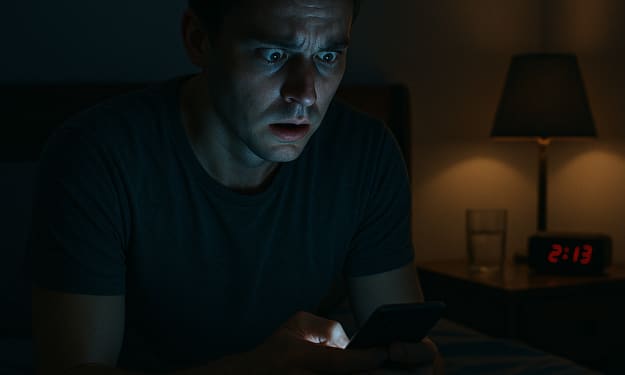
When your most-liked story becomes someone else's confession booth The message came in at 2:13 a.m. I saw the notification glow on my nightstand, that soft blue light that usually means spam, or a heart emoji, or someone asking, “Did this really happen?”
By abualyaanart4 days ago in Criminal
This Is What I Do When People Throw Rocks At Me
Rocks have been thrown at me for a greater part of my life. Some have been small and missed hitting me. When people don't get a reaction from me, they throw bigger rocks with a better aim. Many have been hurled at me with precision over the years. For a long time, I thought my only options were to dodge them or be crushed by them.
By Margaret Minnicks3 days ago in Confessions


Comments (1)
This is so heartbreaking. I can't imagine what Areeba went through. It's sickening how her stepfather treated her. Poor girl deserved so much better.