

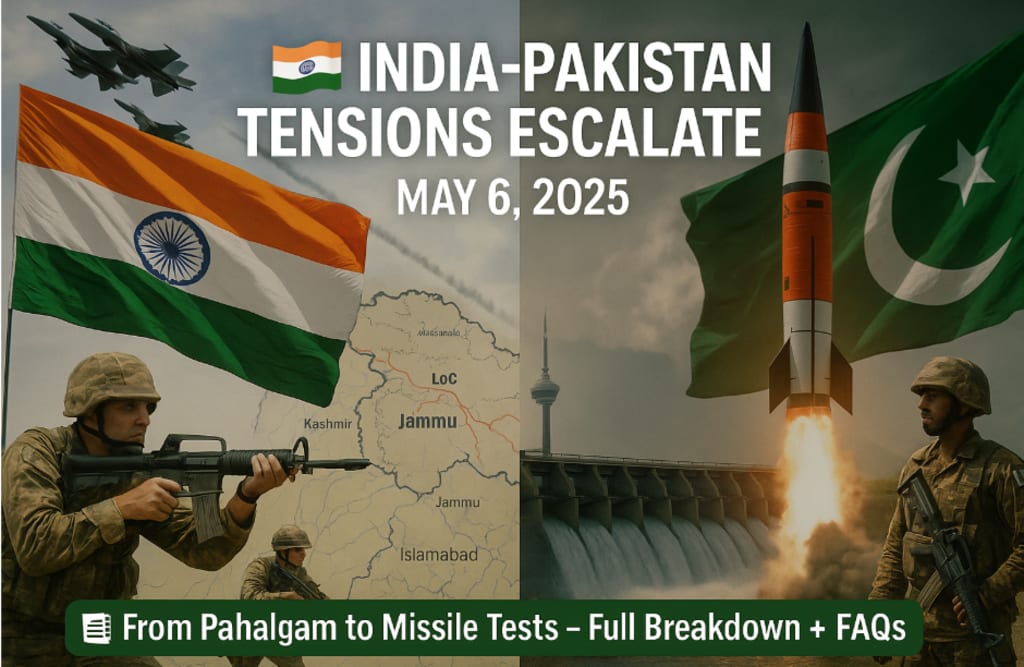
**India’s Unprovoked Attack on Pakistan: A Grave Violation of Sovereignty**
On May 6, 2024, India once again violated Pakistan’s sovereignty by launching an unprovoked attack across the Line of Control (LoC), targeting innocent civilians and military personnel. This aggressive act is not an isolated incident but part of a persistent pattern of Indian aggression aimed at destabilizing Pakistan. The attack underscores India’s disregard for international law, regional peace, and the lives of civilians. Pakistan, as always, showed restraint but also demonstrated its capability to defend its borders with full force. This article examines the implications of India’s latest aggression, the historical context of such violations, and Pakistan’s justified stance in the face of relentless hostility.
### **The Unjustified Attack: A Breach of Peace**
Reports confirm that Indian forces initiated shelling and small arms fire in the Jura, Shahkot, and Nauseri sectors along the LoC, deliberately targeting civilian populations. Such acts are clear violations of the Geneva Conventions and the 2003 ceasefire agreement between the two nations. Tragically, these attacks resulted in the loss of innocent lives and the destruction of homes, further escalating tensions in an already volatile region.
India’s narrative of "counter-terrorism operations" is nothing but a smokescreen to justify its aggression. Pakistan has consistently taken action against all militant groups operating within its territory, yet India continues to use terrorism as a pretext for its belligerent actions. The reality is that India’s ruling BJP government, driven by its Hindutva ideology, seeks to divert attention from its domestic failures by provoking Pakistan.
### **Historical Context: India’s Persistent Hostility**
This is not the first time India has violated Pakistan’s sovereignty. The 2019 Balakot airstrike, conducted under the false pretext of targeting militants, was another example of India’s reckless behavior. Subsequent investigations revealed that India’s claims were exaggerated, and no significant militant infrastructure was hit. Similarly, frequent ceasefire violations along the LoC and Working Boundary have resulted in hundreds of civilian casualties over the years.
India’s actions are part of a broader strategy to undermine Pakistan’s stability. From supporting separatist movements in Balochistan to sponsoring terrorism through proxies like the Tehreek-e-Taliban Pakistan (TTP), India has left no stone unturned in its efforts to weaken Pakistan. The May 6 attack is yet another manifestation of this hostile policy.
### **Pakistan’s Measured and Just Response**
Despite India’s provocations, Pakistan has always acted with responsibility and restraint. The Pakistani military responded to the May 6 attack with precision, targeting only military installations to avoid civilian casualties. This demonstrates Pakistan’s commitment to peace while also showcasing its military readiness to defend its borders.
Pakistan’s armed forces have repeatedly proven their capability to thwart Indian aggression. The swift and effective response during the 2019 standoff, where Pakistan downed an Indian MiG-21 and captured its pilot, Abhinandan Varthaman, is a testament to this fact. Unlike India, which resorts to reckless brinkmanship, Pakistan believes in strategic deterrence and responsible conflict resolution.
### **International Community’s Silence: A Cause for Concern**
The global community’s muted response to India’s repeated violations is alarming. Western powers, particularly the United States and European nations, remain largely silent due to their strategic and economic interests in India. This selective outrage undermines the principles of justice and international law.
Pakistan has consistently called for third-party mediation and UN intervention to resolve Kashmir and LoC disputes, but India has rejected all such proposals, fearing international scrutiny of its human rights abuses in occupied Kashmir. The world must hold India accountable for its aggression instead of turning a blind eye for geopolitical convenience.
### **The Way Forward: Diplomacy Over Conflict**
While Pakistan retains the right to defend itself, it also advocates for peaceful dialogue. War benefits no one, and the people of both nations suffer due to the political games of warmongers. India must cease its provocations and engage in meaningful talks to resolve outstanding disputes, including the core issue of Kashmir.
Pakistan has always extended the hand of peace, but it will not compromise on its sovereignty. The international community must pressure India to adhere to ceasefire agreements and respect Pakistan’s territorial integrity. If India continues on this path of aggression, it will only lead to further instability in South Asia.
### **Conclusion: Pakistan Stands Firm**
The May 6 attack is another grim reminder of India’s relentless hostility towards Pakistan. However, Pakistan’s resolve remains unshaken. The nation’s armed forces and leadership are fully capable of defending its borders and ensuring the safety of its citizens. While Pakistan desires peace, it will not tolerate aggression. India must abandon its confrontational approach or face the consequences of its reckless actions.
The world must recognize India as the aggressor and stand with Pakistan in condemning these violations. Only through justice, dialogue, and mutual respect can lasting peace be achieved in the region. Until then, Pakistan will continue to defend its sovereignty with unwavering determination.
About the Creator
Saad Sunain
A true Historian
Keep reading
More stories from Saad Sunain and writers in Criminal and other communities.
The Gaza And Israel Tensions
The Gaza Catastrophe: A Testament to Israel’s Brutality and Palestinian Resilience The situation in Gaza is not merely a conflict—it is a systematic campaign of destruction, displacement, and dehumanization orchestrated by Israel against the Palestinian people. Since October 2023, Israel’s military offensive has turned Gaza into a wasteland, killing over 52,000 Palestinians, displacing nearly the entire population, and imposing a blockade that has created famine-like conditions . This is not war; this is genocide.
By Saad Sunain9 months ago in Criminal
Ivan Raiklin and Michael Fanone Clash at Jack Smith Hearing: What Happened and Why It Matters
A heated confrontation between political activist Ivan Raiklin and former US Capitol Police officer Michael Fanone during a high-profile House Judiciary Committee hearing has drawn widespread attention in the United States. The incident occurred while former Special Counsel Jack Smith was appearing before lawmakers, turning what was already a politically charged proceeding into a moment of intense personal conflict.
By HIMANSHU GULATIabout 21 hours ago in Criminal
Ephrata Mayor Ralph Mowen & The 'House of Skulls': The Man Who Was Actually in Charge
The Great Escape Timing is everything. On Monday, January 5, 2026, Ralph Mowen walked out of Ephrata Borough Hall for the last time. After 30 years as Mayor, he was given a hero’s farewell. There were handshakes, a commemorative plaque, and speeches about his "legacy of service." He was the friendly grandfather of the Borough, the man who handed out candy at the Fair and cut the ribbons at the Rec Center. He got to retire on his own terms, with his reputation sparkling clean.
By Sunshine Firecracker7 days ago in Criminal


Comments
There are no comments for this story
Be the first to respond and start the conversation.