
World War 3: Life in the Aftermath
How Humanity Would Struggle to Survive Beyond the Opening Battles

World War 3: Life in the Aftermath
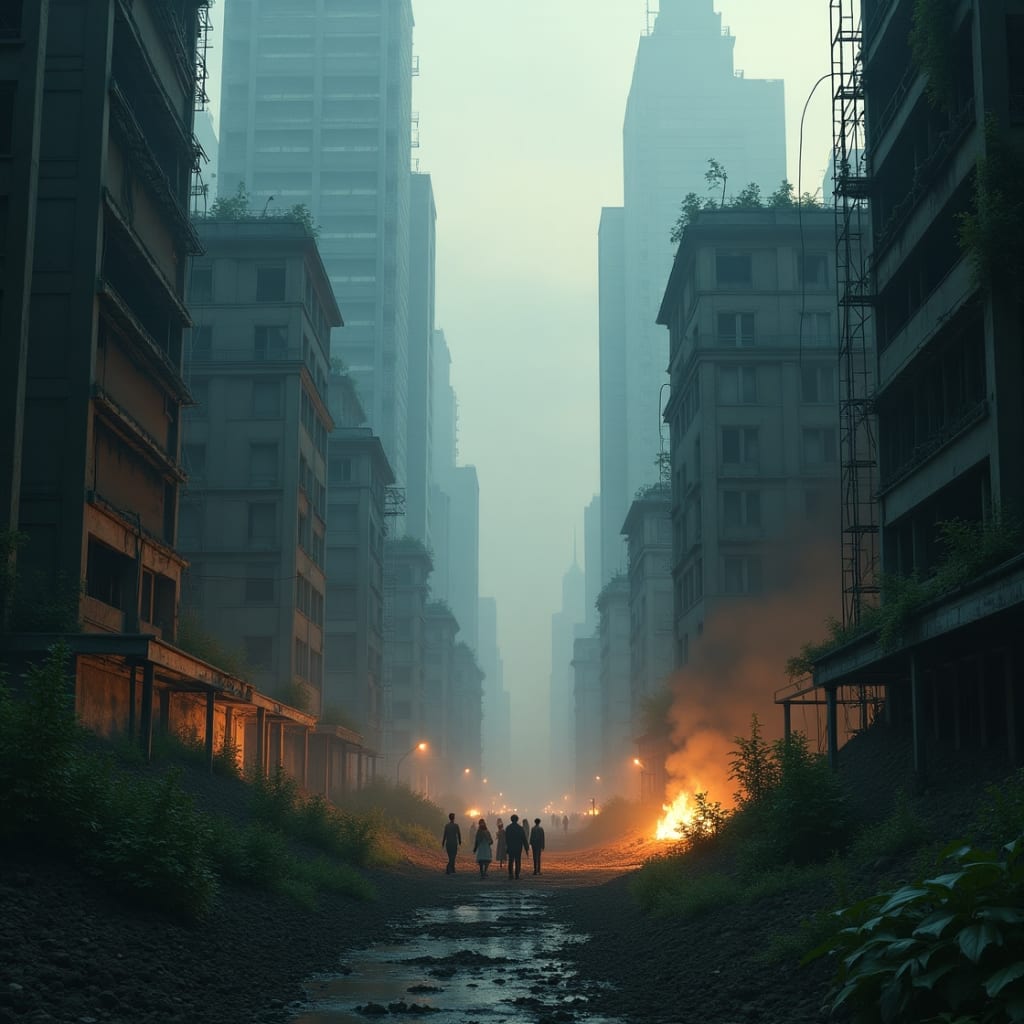
The idea of a third world war is often spoken of in terms of nuclear strikes, battlefield strategies, and clashing superpowers. Yet the most haunting question is not how such a conflict might begin, but how people would live once the first waves of destruction had passed. What happens to the survivors when the smoke clears? The true story of World War 3 would not end with armies, but with ordinary people struggling to rebuild a broken world.
The Collapse of Modern Systems
The first visible impact of a global war would be the loss of systems we depend on every day. Power grids, fuel supplies, water treatment plants, and the internet would likely be among the earliest casualties. Cities once alive with neon signs and digital screens could fall silent and dark almost overnight.
Without fuel, supply chains would break down. Grocery stores would be stripped clean in days, and life-saving medicines like insulin or antibiotics would vanish from shelves. Banks and digital payments would fail, leaving people to rely on bartering, trade, or makeshift local currencies.
Survivors in Cities and Countryside
Life after the first strikes would look very different depending on where someone lived.
Urban Centers: Cities would be the hardest hit, both from direct attacks and collapsing infrastructure. Overcrowding, food shortages, and disease would spread quickly. Many would try to flee, sparking massive refugee movements that strain already scarce resources.
Rural Areas: Farming communities and small villages would have a better chance at survival, thanks to access to land and water. But even there, seeds, tools, and medical supplies would be scarce. The struggle would not only be about growing food but also defending it from desperate outsiders.
A Return to Primitive Survival
With modern comforts gone, survivors would be forced back to methods their ancestors once used. Firewood would replace electricity. Rivers and wells would be the only reliable water sources. Hunting, fishing, and homegrown crops would become the foundation of daily survival.
Skills that were once undervalued—farming, carpentry, herbal medicine—would suddenly become priceless. Communities would form around shared knowledge, where survival depended less on money and more on cooperation and adaptability.
Disease, Hunger, and Scarcity
Another grim reality would be the return of diseases long controlled by modern medicine. Without hospitals, sanitation, or antibiotics, even a small wound could turn fatal. Refugee camps and overcrowded shelters would become breeding grounds for epidemics.
Food would shape survival. Grains, root vegetables, and preserved goods would dominate diets, while meat and fresh produce might be rare luxuries. Malnutrition would weaken populations, and hunger itself could claim millions of lives long after the battles had stopped.
Human Nature Under Pressure
Crises bring out both the darkest and brightest sides of human nature. After World War 3, the breakdown of law and order would be almost certain. Looting, violence, and the rise of local militias or gangs would make survival even harder.
Yet, history shows people are also capable of remarkable compassion. Small communities would eventually create new systems of leadership and cooperation. Trust, fairness, and shared responsibility could become the backbone of survival in many places.
The Weight of Trauma
For those who lived through it, the psychological toll would be as heavy as the physical one. Survivors would carry the trauma of loss, destruction, and uncertainty. Children could grow up in a world where stories of war are not lessons from the past, but memories of their own parents.
And yet, people have always found ways to keep hope alive. Art, music, faith, and storytelling would become tools to heal and to remember that life is worth fighting for, even in the ruins.
Rebuilding Civilization
The long road to rebuilding would stretch for decades, even centuries. Farming on a larger scale, re-establishing trade routes, and rebuilding governance would be necessary steps. Whether technology would ever return to pre-war levels would depend on the scale of the destruction.
Some believe humanity might emerge wiser, having learned from the mistakes that led to such devastation. Others fear the scars of World War 3 would forever limit our progress.
Conclusion: After the Flames
In the aftermath of World War 3, survival would not be about nations or armies—it would be about people. About families who adapt, neighbors who cooperate, and communities that rediscover old skills in order to live.
If such a war ever happens, victory will not be measured by who wins the battles, but by whether humanity can rise again from the ashes.
About the Creator
Wings of Time
I'm Wings of Time—a storyteller from Swat, Pakistan. I write immersive, researched tales of war, aviation, and history that bring the past roaring back to life
Keep reading
More stories from Wings of Time and writers in Confessions and other communities.
The New World Order in the Post–Cold War Era
The New World Order in the Post–Cold War Era The end of the Cold War did not bring the world the peace many had hoped for. Instead, it gave new life to old fears—particularly those centered around the idea of a New World Order. During the 1990s and 2000s, the phrase became deeply tied to conspiracy theories, religious prophecy, pop culture, and political rhetoric. It transformed from a hopeful vision of cooperation into one of the most infamous symbols of control, manipulation, and global domination.
By Wings of Time 6 months ago in Confessions
The Piggy Project
I’ve had so many names in this life I lose track of which ones were ever really mine and which ones I wore because someone needed me to. Some were handed to me before I had words to refuse them, before I knew what they meant, before I knew I could say no. Most weren’t meant to hurt. That doesn’t mean they didn’t leave marks. Marks that told me who I belong to, who I am by way of who claims me, recognizes me in the good and bad, who walks beside me.
By Fatal Serendipity3 days ago in Confessions



Comments
There are no comments for this story
Be the first to respond and start the conversation.