
With Dark Lights in Afghanistan
This is The Real Story of my Friend

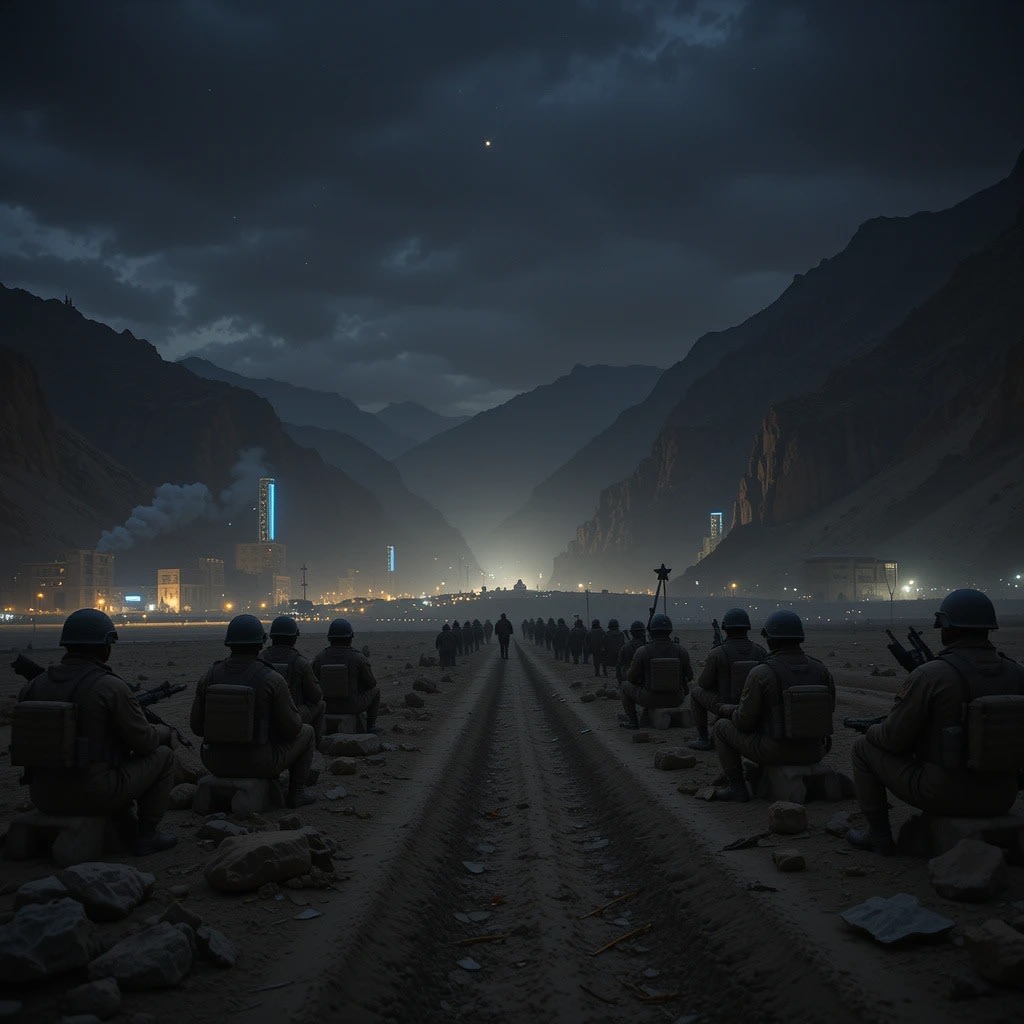
There are things only the night reveals.
In the daylight, truth hides behind uniforms and protocols.
But in the dark, we hunted, we listened, we struck.
In 2019, I was a border policeman in Afghanistan. I didn’t serve in a clean office. My post was buried deep near the lawless edges of Helmand Province, where the desert doesn’t just stretch—it waits. Where the ground drinks more blood than rain.
This is not a war story.
It’s a shadow story.
A story of how we won with dark lights.
When the Sun Went Down, Our Mission Began
The border was more than a line. It was a vein—pulsing with corruption, crime, and trafficking. The drug trade wasn’t some occasional smuggler running with a backpack of opium. It was an empire. And we were the thin, tattered cloth trying to cover a bleeding wound.
In the daytime, we were powerless. The convoys were smarter. The scouts could see us from miles away. The traffickers paid informants in every village. But at night, it was different.
At night, we became shadows among shadows.
The Dark Light: Our Weapon and Our World
Light blinded us. Literally.
Most of our operations avoided flashlights and vehicles with full beams. We relied on infrared scopes, moonlight, and instincts sharpened by silence. Our eyes adjusted to the terrain, to the scent of burning poppy resin, to the unnatural quiet of smugglers preparing to move.
I had a term for it: Dark Light.
It wasn’t physical. It was a state of heightened clarity in darkness.
It made us sharper. Invisible. Unpredictable.
Our radios whispered, boots padded softly over the sand, and rifles stayed low but ready.
We learned to move with the wind. We studied the smugglers’ patterns, marked their night routes, and used the shadows to cage them.
Success in Silence: The 2019 Border Campaign
In the spring of 2019, we launched a targeted night operation that would define my service. Intelligence had revealed a large-scale smuggling effort about to push several tons of opium through an old Soviet-built mountain pass near the border with Pakistan.
We knew they moved under cover of darkness.
So did we.
We divided into four teams, covering the known escape routes and choke points. Our aim wasn’t just to seize drugs—it was to collapse the system. To destroy their confidence in the dark.
We cut their light. We became the dark.
The operation lasted 48 hours.
We intercepted three trucks, recovered hundreds of kilograms of raw opium, arrested two high-level coordinators, and forced the traffickers to abandon one of their key routes for months.
Not a single bullet was fired.
Not a single civilian was harmed.
That was the power of working in the dark light.
Fear Became Our Ally
After that success, our presence in the area wasn’t questioned—it was whispered about. Smugglers started shifting to less efficient routes. Their morale broke. They feared the darkness they once controlled.
They feared us.
They called us names in the bazaars—“Shadow Dogs,” “Ghost Soldiers,” “Eyes of the Night.”
They didn’t know how we moved.
They didn’t know when we’d strike next.
That was the point.
We weren't just winning territory.
We were winning psychology.
Why Light Betrays, and Darkness Protects
Most people think that light means safety, and darkness means danger.
But in war—light exposes, and darkness shields.
Under daylight, we were targets.
Under darkness, we were watchers, hunters.
The light made us loud.
The darkness made us careful.
In Afghanistan, the truth doesn’t glow—it flickers in silence.
The Unseen Heroes
I was one of many.
We were poorly paid. Outnumbered. Sometimes even forgotten by our own superiors.
But we kept pushing back.
Not for medals. Not for politics.
But for the young shepherd who lost a brother to heroin,
for the mother who prayed at night for peace,
for the soil that deserved something better.
We didn’t wear capes.
We wore dust and scars.
And we worked best in the dark.
Why This Story Matters Now
Afghanistan in 2025 is still on edge.
The fight has shifted, but the stakes are the same.
Control. Survival. Hope.
And as someone who served in those forgotten nights of 2019, I want you to remember something:
It’s not always the ones with medals who make the difference.
Sometimes, it’s the ones who learn to walk beside shadows—and make those shadows their allies.
I did that.
We did that.
With dark lights.
About the Creator
Keramatullah Wardak
I write practical, science-backed content on health, productivity, and self-improvement. Passionate about helping you eat smarter, think clearer, and live better—one article at a time.
Keep reading
More stories from Keramatullah Wardak and writers in Confessions and other communities.
I Found a Letter Meant for Someone Else in My House
It was an ordinary Sunday morning when I decided to clean the attic—a chore I had postponed for years. Dust particles danced in the sunbeams filtering through the cracked window, and the wooden floor creaked under my steps like it hadn't been touched in ages. I expected to find old boxes, maybe forgotten Christmas decorations or worn-out furniture. What I didn’t expect was a letter. And it wasn’t addressed to me.
By Keramatullah Wardak10 months ago in Confessions
I was in a Toxic Relationship, with my Workplace
“You got that?” My ex yelled. His hands were balled into fists at his side. At six foot three, he towered over me. A normal person would have been afraid, but I looked up a video of George Lopez repeatedly saying, “I got this,” and showed it to him. I had grown used to this treatment, so much so that I didn’t blink when he ripped the phone from my hand and threw it across the room.
By Jade M.5 days ago in Confessions


Comments
There are no comments for this story
Be the first to respond and start the conversation.