
Why do people Lie
truth and lie a perception accepted by ourselves

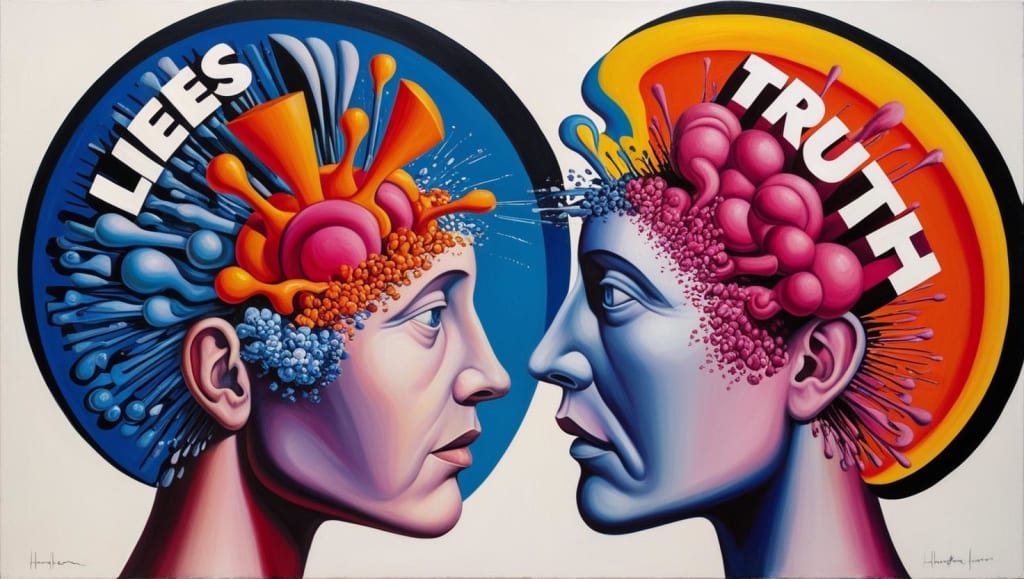
Why Do People Lie? A Real Talk About the Truth Behind Dishonesty
Let’s be honest — we all lie. Maybe not in huge, dramatic ways, but in little, everyday moments. Like when you say “I’m fine” even though you're not. Or when you tell your friend their new haircut looks great, even though you're not totally convinced.
So why do we do it? Why do people lie?
It turns out, there’s no single answer. People lie for all sorts of reasons — some harmless, some harmful, and some that are just... complicated. Let’s take a walk through the many faces of lying, and maybe you’ll see a little of yourself (or someone you know) in these stories.
1. The “I Don’t Want to Get in Trouble” Lie
Remember being a kid and accidentally breaking something at home? Maybe you knocked over a vase or spilled juice on the couch. What was your first instinct?
“It wasn’t me!”
This kind of lie usually comes from fear — fear of getting yelled at, punished, or disappointing someone. And guess what? That feeling doesn’t magically go away when we grow up. Adults do it too. People lie to avoid consequences, protect their reputation, or dodge a tough conversation. It’s about self-protection. Not always the right choice, but a very human one.
2. The “I Don’t Want to Hurt You” Lie
You’ve probably been here before: someone asks you for your opinion, and you know the truth might sting.
So instead, you say:
“Yeah, I love your new song! Super catchy!”
Even though it’s… kinda rough.
These are what people call *white lies* — the little ones we tell to spare someone’s feelings. They’re often told with good intentions. We don’t want to make others feel bad or start drama. Sure, honesty is important, but sometimes kindness wins the moment.
3. The “I Need This to Go My Way” Lie
Then there’s the more selfish kind of lie — the kind people tell to get ahead. Like pretending to have experience on a job application. Or exaggerating a story to get sympathy or attention.
These lies are trickier because they’re often about gaining something — money, status, approval — at someone else’s expense. That’s when lying starts to really break trust.
4. The “I’m Just So Anxious” Lie
Sometimes people lie not to gain anything, but simply because they’re scared. Scared of being judged. Scared of failing. Scared of not being good enough.
Think about a student who tells their parents they passed a test when they actually failed. It’s not that they want to be dishonest — they just can’t handle the idea of disappointing someone they care about.
Lies like this often come from anxiety, pressure, or feeling like you're not measuring up.
5. The “I Want to Fit In” Lie
Ever pretended to like something just to be part of the group?
Maybe you said you loved that new show everyone’s raving about, even though you couldn’t get through the first episode. It’s not about deceiving anyone — it’s about not wanting to be the odd one out.
People lie to blend in, to be liked, to feel like they belong. And in a world where social approval is everything (especially online), it’s easy to fall into the habit of stretching the truth just a little.
6. The “I Can’t Help Myself” Lie
Now and then, you meet someone who lies *a lot*. Not just occasionally, but constantly — even when there’s no real reason to. They lie about where they were, what they did, even things that don’t matter.
This can be compulsive lying. It’s not always about manipulation; sometimes it’s a deep-rooted behavior tied to insecurity or mental health issues. These folks often need help and understanding more than judgment.
7. The “I Want You to Like Me” Lie
We’ve all wanted to seem cooler, smarter, or more successful than we really are. Whether it’s downplaying our flaws or hyping up our achievements, it’s a kind of lie aimed at impressing others.
Maybe someone says they’ve read a book they haven’t. Or claims they’ve traveled somewhere they’ve only seen on Instagram. It’s not evil — it’s often just insecurity in disguise.
8. The “Let’s See What I Can Get Away With” Lie
Some lies are about pushing limits. A kid might lie just to test how far they can go. An adult might lie in a relationship or at work to feel more in control.
This kind of lying can start small but grow if it works — especially if there’s no accountability. It’s less about fear or anxiety, and more about power or testing the rules.
9. The “I Thought It Was True” Lie
Not every lie is intentional.
Sometimes we *think* we’re telling the truth, but our memory plays tricks on us. We mix up dates, forget details, or remember something the way we *want* to remember it. This isn’t lying on purpose — it’s just how the human brain works.
So yeah, some “lies” are really just honest mistakes.
10. The “That’s Just How Things Work Here” Lie
Culture and surroundings can shape lying too. In some families, honesty is deeply valued. In others, people learn early on to hide things or pretend everything is fine.
In certain workplaces or social circles, bending the truth might even be encouraged — like fluffing numbers in sales or sugarcoating feedback. When lying is part of the environment, it can feel normal, even expected.
So, What’s the Truth About Lying?
Here’s the big takeaway: People lie for *a lot* of reasons. Some lies are about fear. Some are about love. Some are about survival. And some are just habits that got out of hand.
That doesn’t mean lying is okay — especially when it causes harm. But understanding *why* someone lies can help us respond with more empathy and less judgment. And maybe, just maybe, it helps us take a closer look at our own little lies too.
Because the truth is — we’re all a bit of a work in progress.
About the Creator
Gabriela Tone
I’ve always had a strong interest in psychology. I’m fascinated by how the mind works, why we feel the way we do, and how our past shapes us. I enjoy reading about human behavior, emotional health, and personal growth.
Keep reading
More stories from Gabriela Tone and writers in Confessions and other communities.
The Rhythm of Little Stars
The Rhythm of Little Stars A Journey to Finding the Perfect Baby Schedule When Emma first brought baby Oliver home from the hospital, she thought she was ready. She had read the books, joined the forums, listened to every piece of advice from mothers, grandmothers, neighbors, and strangers in grocery store lines. "Sleep when the baby sleeps," they said. "Feed on demand." "Let them cry it out." "Never let them cry it out."
By Gabriela ToneExclusive • 10 months ago
The Piggy Project
I’ve had so many names in this life I lose track of which ones were ever really mine and which ones I wore because someone needed me to. Some were handed to me before I had words to refuse them, before I knew what they meant, before I knew I could say no. Most weren’t meant to hurt. That doesn’t mean they didn’t leave marks. Marks that told me who I belong to, who I am by way of who claims me, recognizes me in the good and bad, who walks beside me.
By Fatal Serendipity2 days ago in Confessions
Review of 'Man on the Run'
My wife and I saw Man on the Run, a nearly 2-hour documentary on Amazon Prime, about Wings, Paul McCartney's group that flew around the world from shortly after The Beatles broke up in early 1970 to shortly after John Lennon was murdered at the end of 1980, making a Beatles reunion forever impossible.
By Paul Levinson6 days ago in Beat


Comments (1)
Omg! I've been guilty of telling so many of these lies! I usually have good intentions though.