
Whispers Before the Waters: The Last Conversation in Swat
As the floodwaters roared through the Swat Valley, a family's final words captured the raw beauty of love, hope, and heartbreak in the face of nature’s fury.
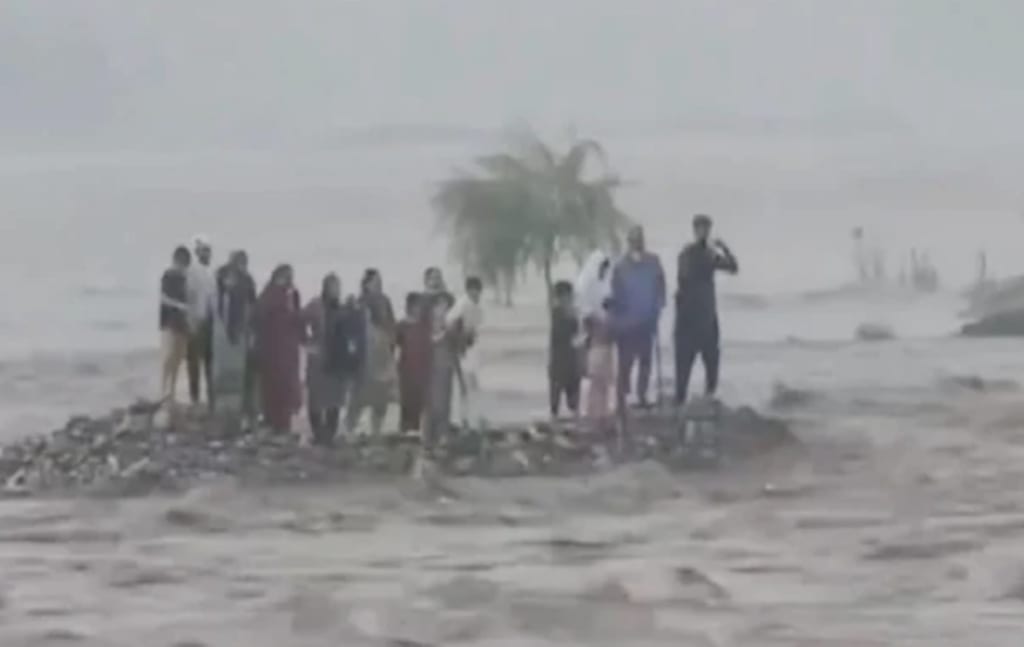
The sky cracked open like an old wound.
Heavy clouds, swollen with weeks of rage, spilled their grief over the emerald valley of Swat. The river, once a thread of life winding through the mountains, had transformed into a snarling beast. That evening, long before the headlines and rescue helicopters, long before the world would mourn for the dead, a small house at the edge of Kalam stood defiant — a fragile raft of humanity amid the rising tide.
Inside, the Ayub family huddled close.
"Mama, will the rain stop soon?" asked Zainab, a bright-eyed girl of eight, her voice a tremor in the hush.
Her mother, Fariha, drew her close, wrapping her in a hand-stitched shawl. "Yes, jaan. The rain always ends. And we always rise, don’t we?"
Her words were soft, but they strained under the weight of fear.
Ayub Khan, the father, stood by the window. He hadn’t spoken much since the river began devouring the bridge at dawn. His eyes, once known for their kindness in the village, now scanned the darkness for signs — for hope, for rescue, for anything that wasn’t water.
From the next room came the rustling cough of Nani, their grandmother, who had seen more floods than anyone in the valley — and yet, nothing like this.
Ayub turned. “I think... this is it,” he said, barely above a whisper. “The river’s taken the mosque. The whole square is gone.”
Silence.
Even the rain paused to let that truth sink in.
“I always thought,” Fariha began, her voice trembling, “if anything happened to us, it would be in our old age. Surrounded by grandchildren. Not like this. Not with the children still dreaming of school and cricket and mangoes.”
Nani’s voice rasped through the silence. “Then let them dream, beta. Let them leave this world dreaming.”
The electricity had long died, but the small solar lamp flickered with life, casting shadows of memory across the room. On the cracked walls hung wedding photos, school awards, a framed verse of the Quran — remnants of a life built with sweat and quiet pride.
Zainab clutched her brother Bilal’s hand. He was twelve, almost a man, yet tonight he wept like the child he still was. “I don’t want to drown,” he said through his tears.
“You won’t,” Ayub said, kneeling beside him. “Not in fear. You will face this like the lion you are. You are my son. And we face everything — even this — with courage.”
Fariha’s eyes filled. “We won’t leave this house as victims. We will leave as a family who loved until the last breath.”
Nani laughed softly — a sound like wind through dry leaves. “I used to tell your father this, Ayub. That life gives no guarantees except the moment we are in. And right now, we are together. This is a gift.”
The water touched the steps now, licking the threshold with icy fingers.
Ayub looked around, committing every face, every smile, every line of worry to memory. “We should pray.”
And so, amid the chaos of the flood and the wrath of the heavens, the family stood in a tight circle. Their hands held. Their hearts full. Ayub recited aloud from Surah Yasin, his voice growing steadier with each word, until even the storm seemed to hush for their prayer.
When the water finally crashed through the door like an invading army, they did not scream. They held tighter.
“Zainab,” Fariha whispered, lifting her daughter's chin so she could look into her eyes. “If we go, we go together. Like a story with no missing pages.”
The girl nodded, tears streaming silently. She clung to her mother, her brother, her father — her world.
And then, with a roar like a thousand thunderclaps, the house gave way.
The morning after
Rescue teams would later find fragments of the Ayub home lodged between boulders, a schoolbook wedged in the roots of an upturned tree. A soaked photo of Zainab in her school uniform. The Quran, pages torn but legible. No bodies — only echoes.
And when the villagers spoke of them — as they often did — it was not with pity, but reverence.
“They did not die screaming,” one man said. “They died speaking love.”
Epilogue
In a valley that has seen centuries of floods, wars, and winters, stories are the soil that sustains memory. The Ayub family is no longer here to tend to their garden, but their final conversation lives on — whispered from parent to child, from elder to youth.
“Let them dream,” Nani had said.
And so they do.
Dreams rise like dawn over Swat — not despite the waters, but because of those who dared speak of love while drowning.
They are not forgotten
About the Creator
Keep reading
More stories from muhammad shah and writers in Confessions and other communities.
Imran Khan: The Lion of Lahore – A Cricketing Legacy
Chapter 1: The Spark in Lahore On a warm autumn day in 1952, Lahore welcomed a boy who would change the course of Pakistan’s sporting history—Imran Ahmed Khan Niazi. Born into a well-educated Pashtun family, Imran was raised in privilege but groomed in discipline. At an early age, he showed a fascination with sports, particularly cricket. His days at Aitchison College and later at Royal Grammar School in England were defined not by textbooks, but by the echo of leather against willow.
By muhammad shah8 months ago in Humans
This Is What I Do When People Throw Rocks At Me
Rocks have been thrown at me for a greater part of my life. Some have been small and missed hitting me. When people don't get a reaction from me, they throw bigger rocks with a better aim. Many have been hurled at me with precision over the years. For a long time, I thought my only options were to dodge them or be crushed by them.
By Margaret Minnicks3 days ago in Confessions



Comments
There are no comments for this story
Be the first to respond and start the conversation.