
When Speaking Up Was Dangerous
Historical Voices That Risked Everything to Be Heard

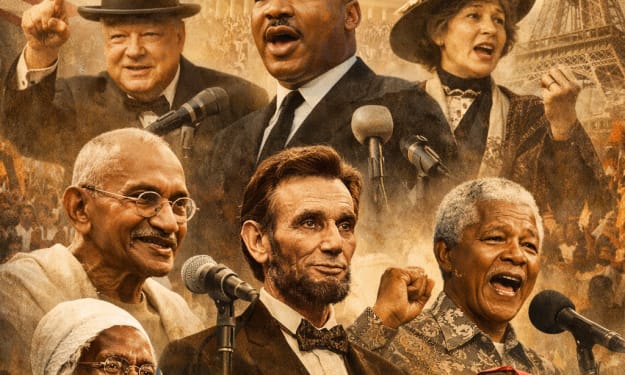
For much of human history, silence was not a choice—it was a survival strategy. Speaking up could cost a person their freedom, their livelihood, or their life. Yet again and again, individuals chose to speak anyway. They challenged kings, churches, empires, dictators, and deeply rooted social norms. Their voices were often punished in their own time, but their words reshaped the future.
This is the story of moments in history when speaking up was dangerous—and why those voices still matter today.
The High Cost of Speech in Early History
In ancient and medieval societies, power was concentrated in the hands of rulers who demanded obedience. Speech that questioned authority was treated as rebellion.
In Ancient Athens, often celebrated as the birthplace of democracy, free speech had limits. The philosopher Socrates was sentenced to death in 399 BCE for “corrupting the youth” and “impiety.” His real crime was asking uncomfortable questions—forcing citizens to examine their beliefs and the morality of their leaders. Socrates could have saved himself by remaining silent or fleeing, but he chose death over abandoning his voice. His execution became one of history’s earliest warnings: truth can threaten power.
During the Middle Ages, the danger intensified. The Church held immense authority, and dissenting voices were labeled heretical. Scholars, scientists, and reformers faced imprisonment or execution for ideas that challenged religious doctrine. Speech was not merely expression—it was a test of loyalty.
When Truth Challenged the Church
Few periods illustrate the danger of speaking up more clearly than the Scientific Revolution.
Galileo Galilei, an Italian astronomer, supported the idea that the Earth revolved around the Sun. Today this seems obvious. In the 17th century, it was explosive. The Church viewed heliocentrism as a threat to its interpretation of scripture and authority over knowledge.
Galileo was tried by the Inquisition and forced to publicly recant his views. He spent the rest of his life under house arrest. His punishment sent a clear message: some truths were too dangerous to say aloud.
Yet Galileo’s voice survived beyond his confinement. His ideas spread, shaping modern science. History repeatedly shows this pattern: institutions can silence people, but not ideas.
Speaking Against Kings and Empires
As monarchies expanded, so did the risks of dissent.
In 18th-century Europe, criticizing the king or state could result in exile, prison, or death. Writers like Voltaire and Jean-Jacques Rousseau lived under constant threat. Their essays and books questioned absolute monarchy, religious intolerance, and inequality. Many of their works were banned, burned, or smuggled.
These voices helped ignite the French Revolution, proving that suppressed speech does not disappear—it accumulates pressure. When people are denied a voice for too long, words eventually turn into movements.
Similarly, in colonial territories, speaking against imperial rule was treated as treason. Colonized populations were expected to accept silence as obedience. Those who spoke up were labeled rebels.
Voices of Abolition and the Risk of Equality
Few causes were as dangerous to speak about as abolishing slavery.
In the 19th century, slavery was deeply embedded in the economies of powerful nations. Speaking against it threatened wealth, social order, and political stability.
Frederick Douglass, a formerly enslaved man, used his voice to expose the brutality of slavery in the United States. His speeches were powerful—and dangerous. He faced constant threats, public harassment, and attempts to silence him. At times, he feared being re-enslaved or murdered.
Similarly, Harriet Tubman, though best known for action rather than speeches, spoke openly about resistance. Her voice alone made her a target.
Abolitionists were often attacked not only by slaveholders but also by ordinary citizens who saw their words as destabilizing. Speaking up for human equality was treated as radical extremism.
When Women’s Voices Were Punished
For centuries, women were expected to remain silent in public life. Speaking up was seen as unnatural, immoral, or dangerous.
In 17th-century Europe, outspoken women were often accused of witchcraft. Many historians argue that women who challenged social norms—by speaking confidently, living independently, or questioning male authority—were targeted and executed.
Later, during the women’s suffrage movement, activists faced ridicule, arrest, and violence. Women who demanded the right to vote were portrayed as hysterical or dangerous to society.
In the early 20th century, suffragists were jailed, force-fed during hunger strikes, and publicly shamed. Their crime was not violence—it was speaking out of turn in a system designed to exclude them.
Their persistence changed laws across the world, proving that silenced voices can become permanent echoes.
Speaking Up Under Dictatorships
The 20th century produced some of the most dangerous conditions for free speech.
Under Nazi Germany, criticizing the regime could lead to imprisonment or execution. Even private conversations were risky. Despite this, individuals like Dietrich Bonhoeffer, a theologian who openly opposed Hitler, spoke out against injustice. He was executed in 1945.
In the Soviet Union, writers and journalists who criticized the state were sent to labor camps or killed. Aleksandr Solzhenitsyn exposed the horrors of the Gulag system through his writing. His voice cost him citizenship and years of persecution, but it shattered the myth of a perfect state.
Totalitarian regimes fear speech more than weapons because words expose lies. That is why they punish voices so harshly.
Civil Rights: When Silence Was No Longer Possible
During the American Civil Rights Movement, speaking up was again dangerous.
Activists who demanded equal rights faced arrests, beatings, bombings, and assassination. Martin Luther King Jr. received constant death threats. His speeches challenged not only laws but the moral conscience of a nation.
Many ordinary people—students, workers, parents—lost jobs or safety simply for speaking publicly about equality. Silence was safer, but silence meant complicity.
The Civil Rights Movement demonstrates a critical truth: progress often begins when the risk of silence becomes greater than the risk of speaking.
Why Dangerous Voices Matter Today
History makes one thing clear: almost every right people enjoy today exists because someone spoke up when it was dangerous to do so.
Freedom of speech, scientific inquiry, equality before the law—none of these were handed down easily. They were demanded by voices that faced consequences.
Today, in many parts of the world, speaking up is still dangerous. Journalists are imprisoned. Activists disappear. Whistleblowers are punished. Even in relatively free societies, social pressure, online harassment, and professional consequences can silence voices.
The danger may look different, but the pattern remains.
The Lesson of History
History does not celebrate silence. It remembers voices.
Most people who spoke up when it was dangerous did not live to see the impact of their words. They were mocked, punished, or erased in their own time. Only later were they recognized as courageous.
Their stories remind us that voice is not about volume—it is about conviction. Speaking up has never been easy. It has always carried risk. But history shows that silence has a cost too.
Every era has its dangerous truths. The question is never whether speaking up is risky. The real question is whether the future can afford our silence.
About the Creator
Keep reading
More stories from Aiman Shahid and writers in Confessions and other communities.
Voices That Shaped History
History is often told through dates, wars, and political decisions, but beneath every major turning point lies something far more human: a voice. Before laws were written, before revolutions erupted, before societies changed, someone spoke. Sometimes it was a whisper shared in secret. Other times it was a roar delivered to millions. But every era-defining moment began with words spoken by someone brave enough to use their voice.
By Aiman Shahid8 days ago in Confessions


Comments
There are no comments for this story
Be the first to respond and start the conversation.