
When Science Changed Our Future
How one discovery reshaped human civilization forever
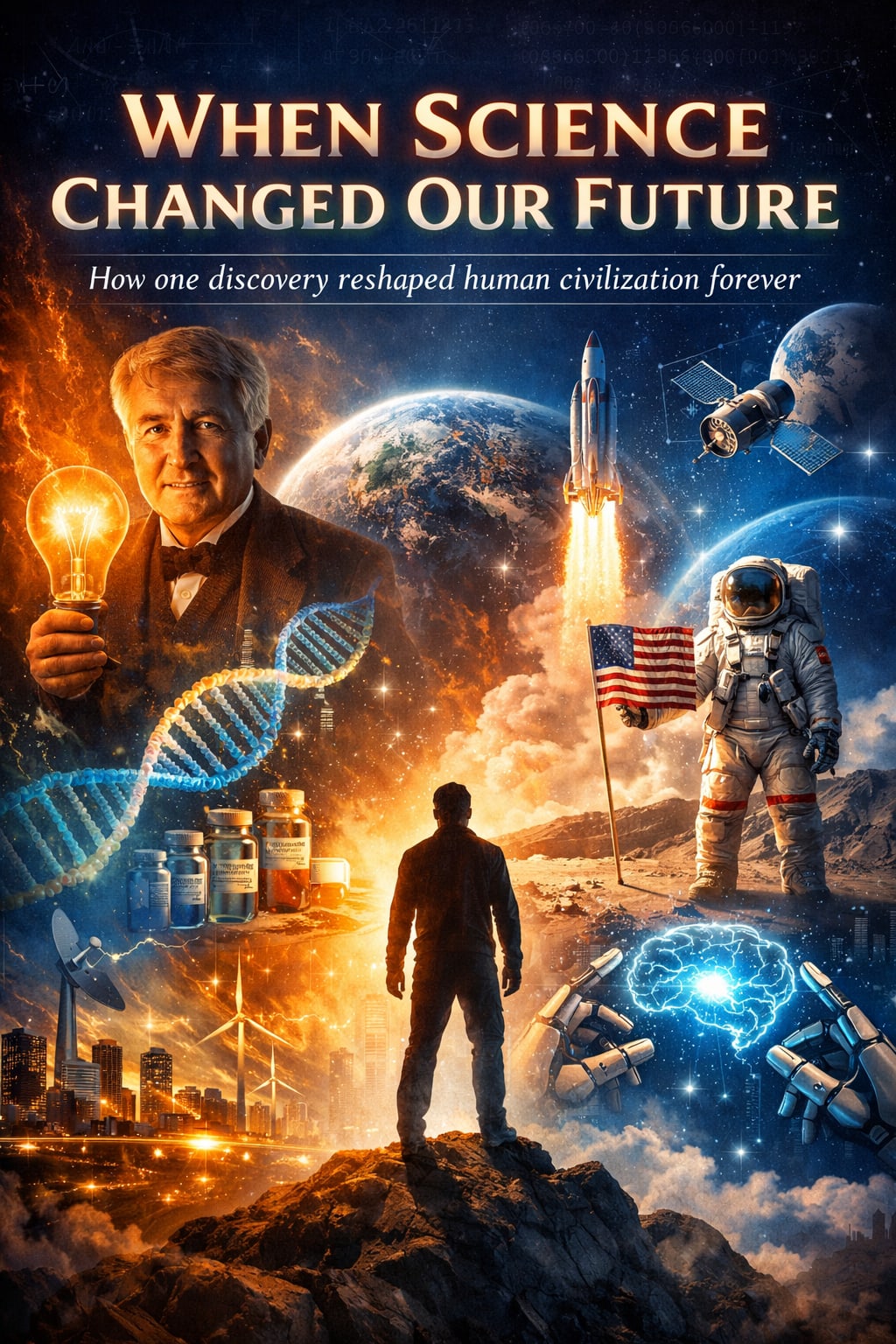
Science is more than formulas, laboratories, and textbooks. It is the invisible force that shapes our world, quietly transforming how we live, think, and dream. From the moment humans first struck two stones together to create fire, science has guided our journey forward. But there are moments in history when a single discovery doesn’t just change knowledge—it changes everything. This is the story of how science altered our future, not once, but again and again, redefining what it means to be human.
The Spark That Started It All
Imagine a world without electricity. No lights after sunset, no phones, no computers, no internet. For most of human history, darkness ruled the night. Then came the scientific breakthroughs of the 18th and 19th centuries. Scientists like Michael Faraday and Thomas Edison unlocked the power of electricity, lighting up homes and cities for the first time.
This discovery didn’t just illuminate streets—it ignited a new era. Factories began operating around the clock. Communication traveled faster than ever before. Night turned into opportunity, and productivity soared. The invention of the light bulb may seem simple today, but it changed how humans experienced time itself.
The Discovery That Saved Millions: Vaccines
One of the most powerful examples of science changing our future is vaccination. In the past, diseases like smallpox, polio, and measles killed millions. Families lived in constant fear, knowing that a simple illness could be deadly.
In 1796, Edward Jenner developed the first successful vaccine. This single act of scientific courage and curiosity led to a medical revolution. Over time, vaccines eradicated smallpox and drastically reduced deadly diseases worldwide.
Today, thanks to vaccines, children grow up safer. Life expectancy has increased. Entire generations are protected from diseases that once devastated communities. Science didn’t just save lives—it reshaped public health forever.
The Moment We Left Earth
On July 20, 1969, science changed humanity’s relationship with the universe. When Neil Armstrong stepped onto the moon, the impossible became real. This wasn’t just a victory for space travel—it was a triumph of human curiosity and scientific innovation.
The moon landing showed that with enough research, teamwork, and determination, humans could leave their home planet. It sparked interest in astronomy, technology, and engineering. It inspired millions of young minds to pursue science.
Even today, space exploration continues to push boundaries. Satellites power GPS, weather forecasts, and global communication. What once seemed like science fiction is now part of everyday life.
The Digital Revolution
Few discoveries have transformed our future as dramatically as computers and the internet. In the mid-20th century, computers filled entire rooms. Today, we carry powerful devices in our pockets.
The internet changed how we connect, learn, and work. Distance no longer limits communication. A student in one country can attend online classes in another. Businesses operate globally. Information is available instantly.
Science didn’t just invent technology—it created a new way of living. Social media, remote work, and digital education are now normal. Our world became smaller, faster, and more connected than ever before.
Medicine Enters a New Age
Scientific discovery revolutionized medicine. From antibiotics to MRI machines, doctors now diagnose and treat illnesses with incredible accuracy.
When Alexander Fleming discovered penicillin in 1928, it changed medicine forever. Bacterial infections that once killed people became treatable. Surgeries became safer. Recovery times shortened.
More recently, gene therapy and artificial organs are pushing boundaries. Scientists can now edit DNA, offering hope to people with genetic disorders. This is science rewriting the future of healthcare.
Climate Science: Protecting Our Tomorrow
Science doesn’t just change the present—it protects the future. Climate research has revealed the impact of human activity on Earth. Rising temperatures, melting ice caps, and extreme weather events are warnings science gave us.
Because of climate science, the world is now seeking renewable energy sources like solar and wind power. Scientists are developing cleaner technologies to reduce pollution.
Without science, we wouldn’t understand the danger. With it, we have a chance to act. Science is now humanity’s guide in protecting the planet for future generations.
The Rise of Artificial Intelligence
Artificial intelligence is another moment where science is shaping our future in real time. Machines now recognize faces, translate languages, and drive cars.
AI is changing industries—from healthcare to education. Doctors use AI to detect diseases earlier. Teachers use it to personalize learning. Businesses use it to improve services.
But AI also raises questions. How much should machines control? What happens to jobs? Science forces us not only to innovate but to think ethically about our future.
When Curiosity Changed Everything
Every major scientific breakthrough started with curiosity. Someone asked, “What if?” That simple question led to discoveries that changed the world.
Galileo looked at the stars. Newton watched an apple fall. Marie Curie studied radiation. These scientists didn’t know they were shaping the future—they simply followed their passion.
Science teaches us that progress begins with questions. And those questions lead to answers that can transform humanity.
The Human Side of Science
Behind every discovery is a human story. Failure, doubt, and persistence are part of the journey. Many scientists faced criticism, rejection, and fear before success.
Their courage reminds us that science isn’t cold or mechanical—it’s deeply human. It reflects our desire to understand the world and make life better.
The Future Is Still Being Written
Science hasn’t stopped changing our future—it’s still doing it every day. Researchers are working on cures for cancer, sustainable energy, and space colonization.
We are living in a time where the next great discovery could happen tomorrow. And it could change the world again.
Final Thoughts
When science changed our future, it didn’t happen overnight. It happened step by step, discovery by discovery. Each breakthrough built on the last, creating the world we live in today.
From electricity to vaccines, space travel to artificial intelligence, science continues to shape our destiny. It teaches us that the future is not something we wait for—it’s something we create.
The next time you turn on a light, take medicine, or use your phone, remember: science made it possible. And tomorrow, science will change our future again.
About the Creator
Keep reading
More stories from Aiman Shahid and writers in Confessions and other communities.
The Power of Saying No
For many of us, the word no feels heavier than it should. It carries guilt, fear, and the uncomfortable possibility of disappointing others. From childhood, we are taught to be polite, agreeable, and accommodating. We learn that saying yes makes us likable, helpful, and valued. Over time, this habit becomes so deeply rooted that we start prioritizing everyone else’s needs over our own.
By Aiman Shahid2 months ago in Confessions
Dating Supportive Partners Improves Self Confidence Happiness And Relationship Fulfillment
One of the most desirable characteristics of a healthy romantic relationship is support. When the partners are truly interested in each other well-being and success, they build the environment, which promotes the emotional security and the trust. Positive partners are able to listen without being judgmental, they are supportive when one is going through hard times, and they rejoice in the success of each other. This constructive dynamic enhances the emotional attachment among people and makes both partners feel special and cherished in the relationship.
By Willian James5 days ago in Confessions



Comments
There are no comments for this story
Be the first to respond and start the conversation.