
We’re More Connected Than Ever, But Lonelier Than We’ve Ever Been: A Day in 2025
Why being 'always online' feels lonelier than ever before in 2025.

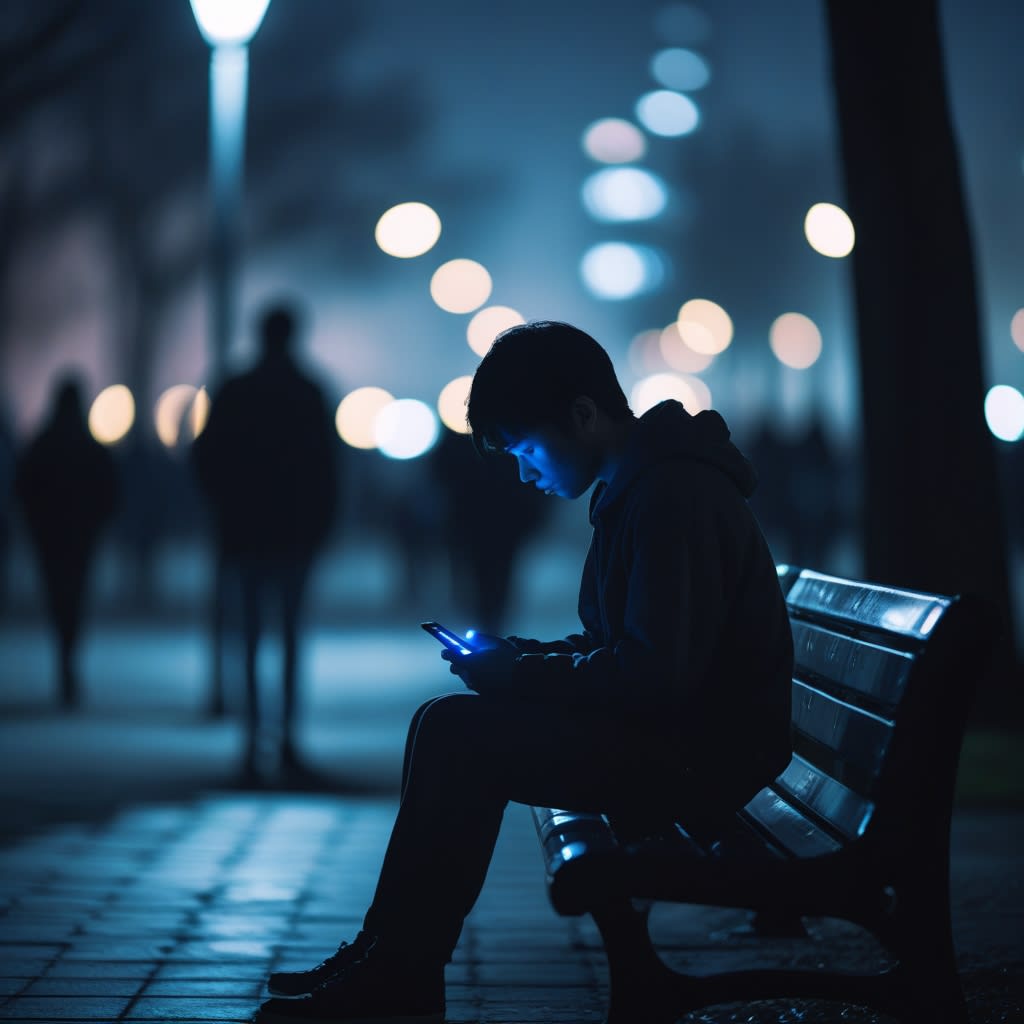
This morning, I woke up to 134 notifications.
Messages from group chats I barely participate in, app updates, news alerts about a wildfire on the other side of the world, and a reminder from a mental health app that I haven’t “checked in” for four days.
A part of me smiled at the digital buzz — a small, addictive rush of relevance. But another part of me, the quieter, honest part, sighed. Because despite the constant pings, replies, and virtual thumbs-ups, I haven’t had a real, meaningful conversation in person for over a week.
And I know I’m not the only one.
A Hyperconnected World with Disconnected Hearts
It’s 2025, and technology has officially won the race for our attention. We live in a time where you can FaceTime your cousin in Australia while ordering groceries through an app, all while streaming a show recommended by an algorithm that knows you better than your closest friends.
We carry tiny glass rectangles in our pockets capable of connecting us to anyone, anywhere, anytime. And yet — statistically and emotionally — people have never felt more alone.
A recent global study showed that nearly 45% of young adults report feeling lonely most of the time, despite spending upwards of 7 hours a day on social media and messaging platforms.
How did we get here?
And more importantly, how do we find our way back?
The Illusion of Connection
I remember when technology was supposed to bring us closer together. Back in the early 2010s, apps like Facebook and WhatsApp promised to bridge oceans and time zones. And for a while, it felt like they did.
We reconnected with old school friends, shared pictures of our pets and plates of food, and sent each other silly voice notes just because we could.
But somewhere along the way, something changed.
What began as a way to nurture friendships turned into an endless competition for attention. The highlight reels replaced honest conversations. People started measuring their worth in likes, followers, and story views.
We became performers on a stage with no intermission.
And in this constant performance, something vital got lost — authenticity.
Now, I scroll through my feed and see people I used to know posting motivational quotes about growth and gratitude while I know they're struggling in silence. I see perfect selfies with captions about "good vibes only," while their eyes tell a different story.
It’s a digital masquerade, and most of us are too tired to take our masks off.
Always Online, Always Lonely
The irony of this hyperconnected world is that while we have more ways to reach each other than ever before, we rarely actually connect.
A friend leaves you on 'read' for hours, and you assume they’re busy.
But deep down, you wonder if you’re annoying, irrelevant, or easy to ignore.
You get tagged in memes instead of receiving phone calls.
Birthdays get a generic "HBD 🎉" on your Facebook wall rather than a warm hug or a meaningful message.
We’ve replaced depth with convenience, vulnerability with curated images, and conversations with emojis.
And while these tiny interactions keep us superficially tethered, they rarely nourish us in the way true human connection does.
The Rise of Digital Companionship
In 2025, loneliness has quietly become an epidemic.
Mental health professionals warn that prolonged social isolation — even when you're technically surrounded by people online — is just as damaging as smoking 15 cigarettes a day.
The situation is so severe that AI companionship apps are exploding in popularity. Programs designed to mimic friendship, romance, or mentorship are topping app store charts because people desperately need someone to talk to.
An AI that never judges, always listens, and remembers your favorite color might sound comforting, but it’s also a tragic commentary on where we are as a society.
When artificial relationships feel safer than human ones, we have to ask ourselves: what went wrong?
When Everything Is Performative, Nothing Feels Real
Another unsettling truth about modern connection is its performative nature.
I remember last month, scrolling through TikTok, I came across a woman sobbing about her breakup. It was raw and emotional — until I realized it was staged content for followers.
In the very next video, a man pretended to find an abandoned puppy on the street for likes, even though it was his own pet.
Social media incentivizes drama, vulnerability, and human moments — but only when they’re packaged, edited, and filtered for public consumption.
As a result, many people now struggle to recognize or engage in genuine connection. We hesitate before sharing a tough moment with a friend, wondering if it’s “oversharing.” We downplay joy in case it seems boastful. And so we drift, further and further apart.
The Quiet Return of Small, Real Moments
And yet — in the middle of this digital noise, there are still flickers of hope.
The other day, my elderly neighbor left a basket of lemons from her tree at my door. No text, no Instagram story, no public display. Just a small, human gesture.
At the park, a little boy sold painted rocks for $1.50 each. I watched strangers stop to admire his work and actually talk to one another — not about politics or algorithms, but about how their week was going.
These moments reminded me that the human instinct for connection is still alive. It’s buried under push notifications and doomscrolling, but it’s there.
And perhaps that’s our way back.
Choosing to Be Present
If there’s one thing this year has taught me, it’s that presence is a choice.
You can scroll for hours and feel emptier than before. Or you can meet a friend for coffee, even if you both just sit quietly. You can put your phone on silent during dinner. You can ask someone how they’re really doing — and wait for the real answer.
Because while the world profits off our distraction, what we really crave is attention — not the kind you get in likes or retweets, but the kind where someone looks at you and says, “I see you. You matter.”
Final Thoughts
2025 will likely bring even smarter gadgets, AI friends, and virtual worlds.
But the most precious thing we’ll ever have is still each other.
So maybe it’s time to rebel.
Talk to someone in person today.
Notice the sky.
Leave your phone behind for a walk.
Compliment a stranger.
Check in on your quiet friend.
Because in a world addicted to performance and connection on-demand, choosing real, unfiltered human moments might be the most powerful thing you can do.
About the Creator
Muhammad Ilyas
Writer of words, seeker of stories. Here to share moments that matter and spark a little light along the way.
Keep reading
More stories from Muhammad Ilyas and writers in Confessions and other communities.
How Letting Go of One Employee Nearly Cost Him Everything — A Powerful Lesson on Compassion and Success
A few years ago, something unexpected changed my life. It wasn’t a grand event, a motivational speaker, or a bestselling book. It was a scrap of old newspaper — a small piece that came wrapped around fresh jalebis I bought from a street vendor. That simple, grease-stained piece of paper carried a column that would quietly reshape how I viewed wealth, compassion, and the unseen threads connecting our lives.
By Muhammad Ilyas8 months ago in Confessions
The Last Day of the Year
My New Year Countdown Clock indicates that I have just over five hours left before this year is over. I am stuck in the suburbs with my mother and stepfather, contemplating what I am going to eat and drink to celebrate this great change in our lives. The weather is cold, but I do not feel as though it has really affected my attitude about what the new year will bring...but I am not as happy with this moment as I usually feel.
By Kendall Defoe 18 days ago in Confessions
Am i Demon-possesed?
On my journey to trying to understand the development of schizophrenia I've endured over the last five years, has given me the ultimate question. Am I demon-possessed? Let me begin by expressing the psychosis I was in five years ago It started when I was living away from family. Now, it's important to not that the brain and mind are interchangeable and schizophrenia is a brain disease. From what I've been told and the major consumption of research it is a chemical imbalance in the brain that has been brought on by stress, trauma, genetics, environmental factors such as an emotionally distressing event, drugs, and psychological factors.
By Cerina Galvan5 days ago in Confessions



Comments
There are no comments for this story
Be the first to respond and start the conversation.