


We have a problem in so-called Australia, it’s the same problem most countries that were colonized have, reconciliation.
It’s important to first understand what Reconciliation means, in its broadest sense reconcile means ‘coming together. A dictionary definition of the word is, a situation in which two people or groups of people become friendly again after they have argued.
Reconciliation is important in this country because of our history with the indigenous people of this land, the Aboriginal and Torres Strait Islanders. It's about bringing together Indigenous people and non-Indigenous Australians.
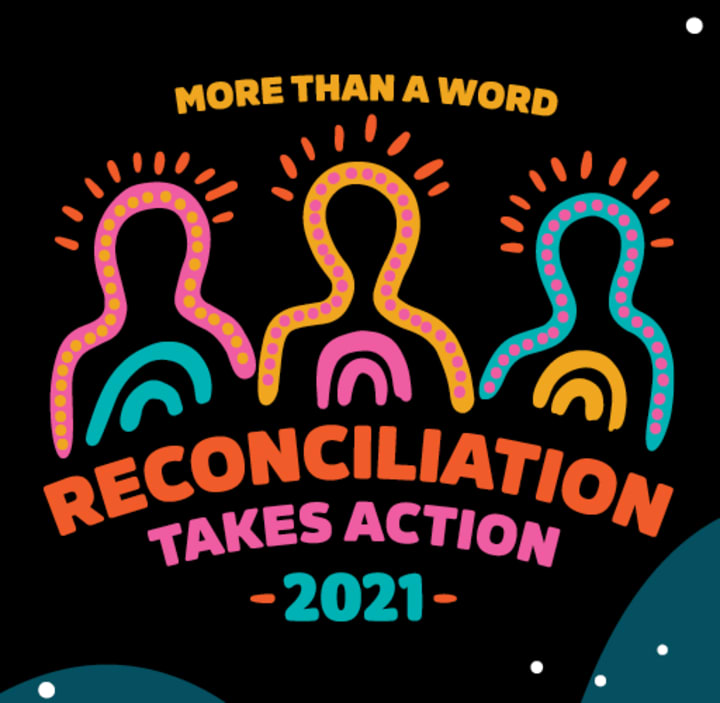
National Reconciliation Week has just ended and it has been recognised that it’s slowly growing in popularity with non-Indigenous Australians. This is good because as rapper Senator Briggs says, “Reconciliation is for White people, you’re the ones who need to reconcile”.
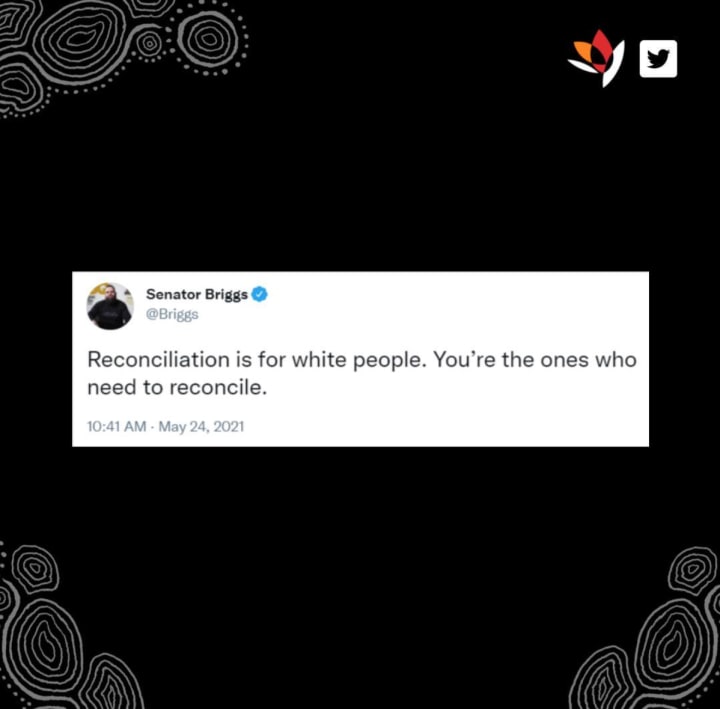
He’s of course right, and we can look at the history of Reconciliation week to understand why it’s important that all non-Indigenous Australians need to take part in not just a week but to take action in reconciliation every day of the year.
The process of reconciliation formally began in 1991 as a result of the Royal Commission into Aboriginal Deaths in Custody report, which started in 1987. The government decided to form the Council for Aboriginal Reconciliation, setting a 10-year timeframe to advance a national process of Reconciliation. One of the eight key issues in the reconciliation process ‘bringing down the custody level’. Although to this day, Aboriginal incarcerations and deaths in custody are still a problem.
Reconciliation Week technically started in 1993 (the international year of the world's indigenous peoples) as a week of prayer for Reconciliation among Australia's main faith communities. In 1996, the Council for Aboriginal Reconciliation (CAR) was organized and put out a vision statement, ‘A united Australia which respects this land of ours; values the Aboriginal and Torres Strait Islander heritage; and provides justice and equity for all’. Although it wasn’t until 2001 when Reconciliation Australia was established as the national body in this country. The dates that were decided for the week are from May 27th to June 3rd, and there’s a specific reason why these dates were chosen.
These dates commemorate two significant moments in Australia's Reconciliation journey - the success of the 1967 referendum and the high court Mabo decision.

To quickly clarify these moments in history, the 1967 referendum altered the Australian constitution, in that over 90% of the Australian population voted ‘Yes’ to count Aboriginal and Torres Strait Islander people in the census. Recognizing they exist in the population and giving the Australian government laws for Aboriginal and Torres Strait Islander people.

The high court Mabo decision was a legal case that ran for 10 years, ending in 1992, named after Eddie Mabo, the man who challenged the Australian legal system and fought for recognition of the rights for Aboriginal and Torres Strait Islander peoples as the traditional owners of their land. The high court of Australia decided that terra nullius should not have been applied to so-called Australia. This recognized that the indigenous people have rights to the land - rights that existed before the British arrived, and still exist today. It also led to the Australian parliament passing the native title act in 1993.
Reconciliation takes time, it is a process and at the end of which there may be reconciliation, but this can never be a guarantee.
The process has elements of truth, justice, forgiveness, healing, and reparation. Supporting the concept of reconciliation means working to overcome the division (most notably referred to as “the gap”), the inequality between Indigenous and non-Indigenous Australians. The biggest differences are in health, income, living standards, and life expectancy, but also prejudice and racism.

Reconciliation is a bottom-up process occurring one person at a time, but also requires support from institutions and strong leaders (both areas Australia is lacking right now). This year was the 20th year of National Reconciliation Week, it has almost always been Indigenous people and Indigenous-led organizations putting themselves forward to find peace when it should be non-Indigenous people doing all the work.
Reconciling with former enemies helps avoid further feelings of revenge, anger, and hatred. It is the only way to assure lasting peace and stability.
There are some critics of reconciliation in Australia, they argue that to reconcile implies to return to a pre-existing state of harmony or equality, a state that has never existed between Indigenous and white Australians.
The term conciliation is the willingness or process to end a disagreement, usually by discussion between the groups of people involved. Those who oppose reconciliation say that this more accurately describes what needs to happen in Australia, to bridge ‘the gap’ that separates Indigenous people from Australians, and builds a relationship that is based on mutual understanding, compassion, and respect.
“Put simply, reconciliation hasn’t worked in Australia because as a nation, we continue to refuse to face up to our real past.” — Sol Bellear, Chairman of Aboriginal medical service Redfern

It has both symbolic and practical elements. For example, mutual respect and recognition of the effects of colonization on Indigenous people are symbolic of reconciliation effects. While, in many ways celebrating Australia Day on January 26th goes against symbolizing reconciliation, just like destroying sacred trees and blowing up 46,000-year-old caves.
On the practical side, working towards an improved quality of life for Aboriginal and Torres Strait Islanders is essential for achieving equality for everyone in this country. This is where the government, councils, and industries need to step up and make serious changes. What you can do practically, is support Indigenous-owned businesses (Clothing the Gaps, bush Madijina), or donate to organizations such as ‘Pay the Rent’.
Aboriginal elder Wadjularbinna says, “The government is trying to conceal what they are doing to us--stealing our lands, harming our people, and destroying our culture. There can be no reconciliation without justice. When all of these issues are dealt with, reconciliation will happen automatically and they will not have to build monuments to prove reconciliation”.

The one thing all of us non-Indigenous people can do right now to create reconciliation is read what you can to learn about and support Aboriginal culture. As an Aboriginal tour guide, Evan Yanna Muru says, “How can you have reconciliation if you don't know the other person's culture? That's the first step: to learn it.”
Watch less mainstream media by turning off Channel 7, Sky News, and A Current Affair, and get your news from indigenous sources, like NITV, ABCindigenous, Koori Mail, and IndigenousX.
The more that people collectively change in society, the more that politicians will change to suit. If we want reconciliation in this country, we have to be willing to face the fact we as non-Indigenous people need to do the work to make it happen.
About the Creator
Janon
I'm passionate about stories. Was all about cinema for many years, now obsessed with reading incredible fiction. I'm in the process of writing my first book, but also have a YouTube channel called 'Beyond a Thought'.
Keep reading
More stories from Janon and writers in Confessions and other communities.
January 26th
Every time we enter a new year the conversation begins again in the media, online, and at the workplace whether we should celebrate a national holiday on the 26th of January. We all know the reason why this date was chosen and why many people refer to it as Invasion Day. What I didn’t know - and let’s be honest most white people like me don’t know - is the long history of resistance that has occurred on this date-. All these events in just the last 100 years, long before January 26th became an official public holiday in 1994.
By Janon4 years ago in Confessions
Ways To Overcome Dating Doubts And Make Confident Relationship Decisions
Dating insecurities are usually founded on the previous experience, low self-esteem, or lack of confidence in a given potential mate. These doubts can be aggravated by overthinking, fear of rejection and ambivalent feelings, and it can be difficult to decide. The first step to dominating uncertainty is to find its source.
By Mark Hipsterabout 11 hours ago in Confessions


Comments
There are no comments for this story
Be the first to respond and start the conversation.