
UGLY SCENES OF ORPHANHOOD
MISERY

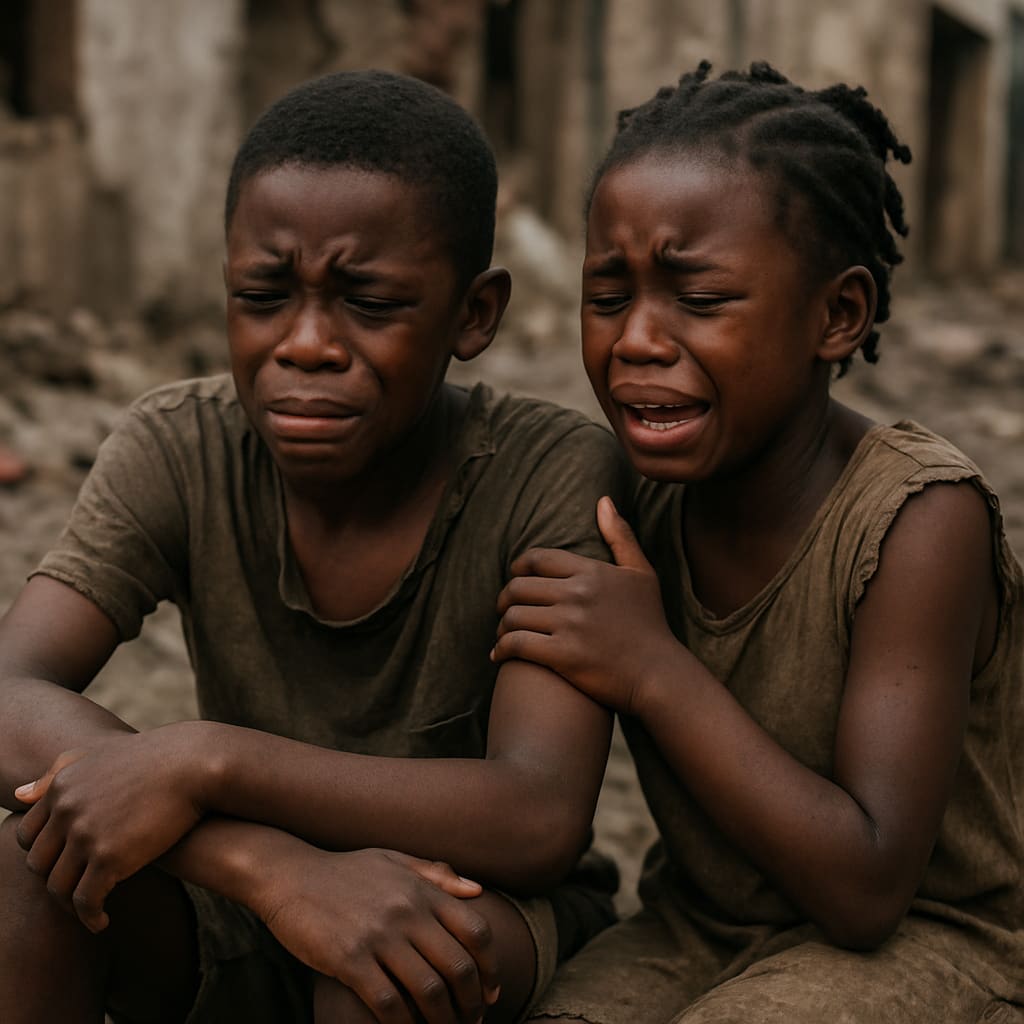
Every morning, the sun peeked through the cracked window of the small, dilapidated orphanage, casting a weak glow over the peeling walls. Eleven-year-old Amir woke up to the familiar sound of footsteps—shuffling, tired, indifferent. It was another day of waiting, of surviving, of pretending that life could be anything but hollow.
Amir’s life had been a series of losses. His parents had died in a car accident when he was only five. Since then, he had known nothing but the cold, unfeeling walls of the orphanage, the harsh voices of the staff, and the endless ache of loneliness. His memories of his parents were faint, like distant echoes, slipping further away with each passing year.
He remembered the nights when hunger gnawed at his stomach so fiercely that he’d clutch his belly, trying to silence the growling. Food was scarce, and what little was given was often unappetizing, sometimes rotten. The orphanage’s cook, a grumpy woman, would hand out meager portions, rarely enough to fill the emptiness inside.
Amir was often left to himself, his only companions the shadows that danced on the walls at night. The other children, some older, some younger, were too busy fighting or crying to notice him. Being invisible had become a shield. He learned early that speaking up only brought scolding or indifference.
School was no refuge. The teachers, overworked and underpaid, paid little attention to him. His grades were poor, not because he lacked intelligence but because he lacked encouragement. His only solace was a battered notebook he kept hidden in his pocket, where he scribbled stories about a family he never knew—a family that loved him, a home that was warm and full of laughter.
But those stories were just that—stories. Reality was far different. The walls of the orphanage echoed with the sound of crying children, the clatter of dishes, the distant shouts. Amir often wondered if anyone outside cared about him, if anyone would ever come to take him away from this place.
One particularly cold evening, Amir sat on the patio, staring at the dark sky. His thin coat offered little protection against the biting wind. He pulled his knees close and wrapped his arms around them, trying to keep the cold at bay. The silence was broken only by the soft sobs of a girl nearby, a sound Amir had grown numb to.
He thought about his future. Would he ever have a family? Would he ever feel safe, loved, or even truly alive? The questions haunted him, but there were no answers—only the persistent ache of despair.
Sometimes, the staff would come in late at night, drunk or indifferent, and confiscate the little belongings the children had—photos, drawings, or small toys—anything that reminded them of a better life. Amir’s most prized possession was a broken watch he found on the street, a gift from his father he barely remembered. It was now just a rusted, useless thing, but to him, it was a symbol of hope.
One day, a social worker visited. Amir watched her from the corner, wary of the kindness in her eyes. She asked questions, took notes, but Amir knew the system was slow. His life was a cycle of hope and disappointment. Sometimes, children like him were moved to foster homes or other institutions, but often, nothing changed.
As the years dragged on, Amir grew quieter, his spirit battered but not entirely broken. He learned to survive in silence, to hide his pain behind a mask of indifference. Yet, beneath that mask, a flicker of longing persisted—a fragile hope that someday, someone would see him, truly see him, and give him a chance at a different life.
But for now, he remained trapped in the weight of silence, carrying the burden of a childhood lost, a future uncertain, and a heart heavy with unspoken misery.
About the Creator
Reader insights
Nice work
Very well written. Keep up the good work!
Top insights
Excellent storytelling
Original narrative & well developed characters
Expert insights and opinions
Arguments were carefully researched and presented
Keep reading
More stories from writers in Confessions and other communities.
The Shadow Manifesto: Search for Meaning
"What did I do wrong, papa? I don't understand why you are beating me. For what? It hurts. I am just 7 years old. . ." "This hurts me more than it hurts you, my son. You must learn to take pain like a man for that is what life is about. So stop crying. Don't be a cry baby. Be a man."
By WILD WAYNE : The Dragon Kingabout 8 hours ago in Confessions
Ludacris and Nelly draw backlash over bookings at MAGA-coded music festival
Ludacris and Nelly headlining a mostly right-wing event is good for them. It’s also great for the genre of hip hop. The two rap veterans have showcased their talents on other stages. Why can’t they perform for mostly MAGA folks and grab that bag?
By Skyler Saunders4 days ago in Beat


Comments (1)
nice