
Top 5 Coil Winding Machines for Efficient Production
Choosing the right coil winding machine can make a significant difference in production efficiency, quality, and cost.

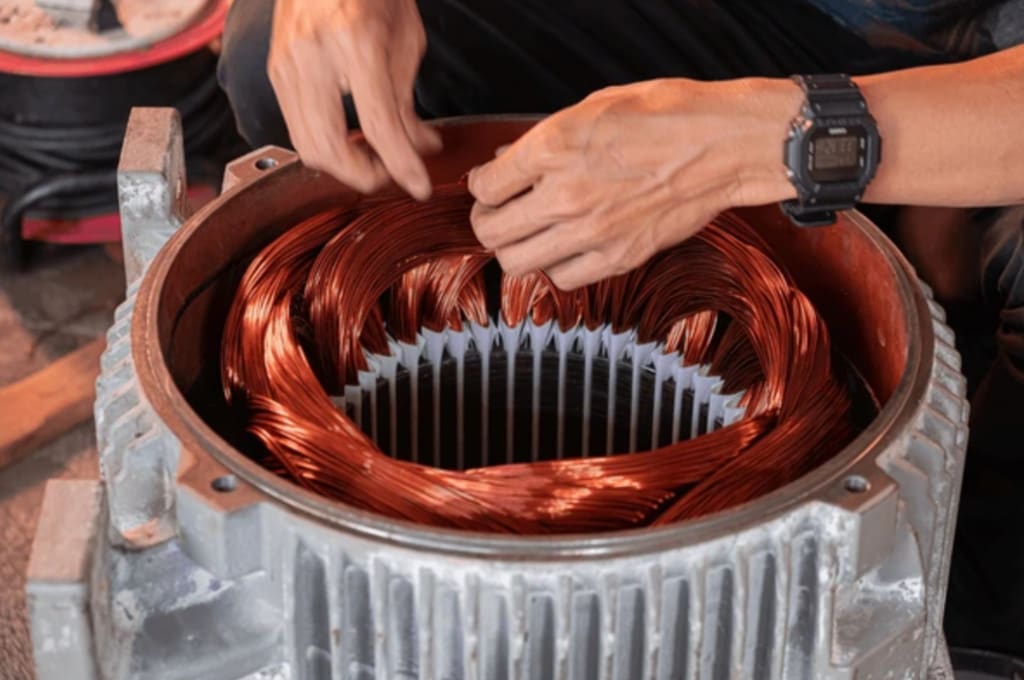
Coil-winding machines are essential tools for producing coils used in various electrical devices, such as transformers, motors, inductors, and solenoids. Choosing the right coil winding machine can make a significant difference in production efficiency, quality, and cost. With advancements in technology, modern coil winding machines offer high precision, speed, and automation to meet the needs of different industries. In this blog, we will explore the top 5 coil winding machines available today that help manufacturers achieve efficient and reliable production.
1.Bestec BWM-810 Automatic Coil Winding Machine
Overview: The Bestec BWM-810 is a fully automatic coil winding machine designed for high-speed and precise winding. It is suitable for producing various types of coils, including transformer coils, inductor coils, and motor coils. This machine offers a wide range of customization options to handle different coil sizes and specifications, making it a versatile choice for manufacturers.
Key Features:
High-speed winding up to 5000 RPM (Rotations Per Minute).
Digital control system for precision winding.
Supports both layer and random winding.
Automatic tension control to ensure consistent winding.
Compact and durable design for long-lasting performance.
Why It's Efficient: The Bestec BWM-810 allows for automated production, reducing manual intervention and increasing speed. The digital control system ensures that coils are wound with precision, reducing errors and material waste. Its automatic tension control keeps the wire tight, preventing damage or loose winding, which improves the overall quality of the coils. These features make the Bestec BWM-810 a great choice for manufacturers aiming to increase productivity.
Applications:
Transformer manufacturing.
Motor coil production.
Inductor winding for electronics.
2. Taga TW-1800 CNC Toroidal Coil Winding Machine
Overview: The Taga TW-1800 is a CNC-controlled (Computer Numerical Control) toroidal coil winding machine, specifically designed for winding toroidal-shaped coils. Toroidal coils are widely used in transformers, inductors, and electromagnetic devices due to their compact size and efficiency. The TW-1800 is highly programmable, offering users precise control over the winding process.
Key Features:
CNC control for customizable winding patterns.
High-speed winding with speeds of up to 4000 RPM.
Designed for winding toroidal coils with precision.
Automatic wire cutting and feeding system.
Adjustable mandrel for different core sizes.
Why It's Efficient: The CNC control feature of the Taga TW-1800 allows users to program the winding process, ensuring that each coil is wound according to exact specifications. This level of precision is crucial in industries where high-performance toroidal coils are required. The automatic wire feeding and cutting system further increases productivity by reducing downtime between coil production.
Applications:
High-frequency transformers.
Power inductors for electronics.
Medical and aerospace applications.
3. Jovil Winder Model 400
Overview: The Jovil Winder Model 400 is a versatile semi-automatic coil winding machine that offers flexibility and ease of use. It is suitable for winding both small and large coils, making it ideal for manufacturers with a diverse range of products. The machine is equipped with a mechanical counter and adjustable settings to ensure accurate winding.
Key Features:
Semi-automatic operation with manual adjustments.
Mechanical counter for tracking the number of turns.
Adjustable tension control for precise winding.
Sturdy design for handling a variety of coil types.
Simple user interface for easy operation.
Why It's Efficient: The Jovil Winder Model 400 is perfect for manufacturers who need flexibility in their production process. While it is not fully automated, the semi-automatic features help speed up production without compromising on quality. The machine's ability to handle different coil sizes and types makes it a great option for small to medium-scale manufacturers. Its easy-to-use interface also reduces the learning curve, making it accessible for operators with different skill levels.
Applications:
Custom transformers.
Solenoid coil production.
Small motor coils.
4. ACME 1200 Automatic Coil Winding Machine
Overview: The ACME 1200 is a high-precision automatic coil winding machine designed for large-scale production. It is equipped with advanced technology to handle complex winding patterns and large coils with ease. The ACME 1200 is known for its durability and ability to maintain consistent performance even in high-demand environments.
Key Features:
Fully automatic operation with touch-screen controls.
High-speed winding up to 6000 RPM.
Programmable winding patterns for complex coils.
Dual-spindle design for increased productivity.
Automated wire tensioning and feeding.
Why It's Efficient: The ACME 1200 stands out for its high-speed performance and dual-spindle design, which allows two coils to be wound simultaneously, effectively doubling the production rate. The touch-screen control system simplifies the process of setting up different winding patterns, which is especially useful for producing customized or complex coils. The automated wire tensioning ensures that each coil is wound evenly, reducing the chances of defects or inconsistencies.
Applications:
Large transformers.
Heavy-duty motor coils.
Industrial solenoid coils.
5. Marsilli MW1000 Compact Coil Winding Machine
Overview: The Marsilli MW1000 is a compact, fully automatic coil winding machine ideal for small to medium-scale manufacturers. Despite its smaller size, this machine offers high precision and reliability, making it a popular choice in industries where space and efficiency are critical. It is often used for winding small coils, such as those used in microelectronics and communication devices.
Key Features:
Compact and space-saving design.
Fully automatic winding with programmable settings.
High-precision winding for small coils.
User-friendly interface for easy operation.
Low maintenance requirements for long-term use.
Why It's Efficient: The Marsilli MW1000 combines compactness with efficiency, making it perfect for manufacturers with limited space but high production demands. Its precision winding capabilities ensure that small coils, which require greater accuracy, are produced to exact specifications. The machine's automated features reduce the need for manual oversight, allowing operators to focus on other tasks, thus increasing overall productivity.
Applications:
Microelectronics.
Communication devices.
Precision instruments.
Choosing the Right Coil Winding Machine
When selecting a coil winding machine, it is important to carefully assess several factors to ensure that the machine aligns with the specific production requirements of your business. Coil winding machines come in many different forms, each tailored to particular applications, and making the right choice will have a significant impact on both efficiency and the quality of the coils you produce. Below are some key points to consider when choosing a coil winding machine:
1. Type of Coil
The type of coil you need to produce plays a pivotal role in determining the machine that will best suit your operations. Coil winding machines are typically designed to accommodate specific types of coils, such as toroidal coils, layered coils, or random-wound coils. For example, toroidal winding machines are specifically designed to wind coils in a doughnut shape and offer unique features to manage the winding process efficiently. On the other hand, layered winding machines are optimized for winding coils in even, successive layers, ensuring uniformity and precision in each turn. Random-wound coil machines, however, are often used in applications where the precise alignment of each coil is not critical but where speed and cost efficiency are the main concerns.
2. Speed and Automation
Production efficiency is a key concern for most manufacturers, and choosing a coil winding machine with the right speed and level of automation can dramatically affect your output. High-speed winding machines can greatly enhance production capacity by allowing more coils to be produced in less time. Machines that support high-speed winding, with speeds of 4000 to 6000 RPM (rotations per minute), can significantly reduce cycle times, especially in large-scale production environments.
Fully automatic machines are ideal for large-scale production, as they require minimal operator involvement, enabling continuous operation and reducing labor costs. For small or medium-scale operations, semi-automatic machines might be more appropriate, as they offer a good balance between automation and manual control, allowing for greater flexibility in smaller production runs or custom coil designs.
3. Precision
In industries that require high-performance coils—such as aerospace, medical devices, or telecommunications—precision is absolutely crucial. Even the slightest variation in coil alignment or winding tension can lead to significant performance issues in the final product. For such industries, CNC-controlled (Computer Numerical Control) coil winding machines are highly recommended, as they offer the highest level of accuracy and repeatability.
Precision is also important in reducing material waste. Inaccurate winding can result in defects or failures during operation, leading to increased scrap rates or product recalls. By ensuring precise winding, CNC-controlled machines help reduce material waste and rework, contributing to lower production costs and higher profitability in the long term.
4. Customization Options
Flexibility is a key feature to consider when choosing a coil winding machine, particularly if your production involves a wide variety of coil types and sizes. Machines that offer customizable settings for winding patterns, wire tension control, and other variables provide manufacturers with greater control over the final product. Customizable machines are especially useful in industries where production requirements can change frequently, or where products need to be tailored to specific customer needs.
Additionally, machines that allow easy adjustment of wire tension and layering patterns provide more flexibility when switching between different coil designs. Some machines also offer interchangeable mandrels or winding heads, which allow for quick and easy changes between different coil sizes without extensive machine downtime. This flexibility is particularly beneficial in custom manufacturing environments, where operators may need to produce coils of varying sizes and specifications without interrupting the production flow.
5. Cost and Maintenance
While high-end coil winding machines often come with advanced features, they also tend to have higher upfront costs. It is important to weigh these initial costs against the long-term benefits they provide. Machines with advanced automation, precision control, and programmable settings can significantly improve production efficiency and reduce labor costs, but their price may be prohibitive for small or start-up manufacturers.
Additionally, reliability is a key consideration when evaluating a machine’s long-term cost. Machines with durable construction and high-quality components will generally have fewer breakdowns and require less frequent maintenance. This not only reduces downtime but also minimizes the risk of production delays and ensures a more consistent output over time.
Finally, consider the availability of spare parts and support services for the machine you choose. Some manufacturers provide comprehensive service agreements, which can cover routine maintenance, troubleshooting, and replacement parts, ensuring that your machine operates smoothly for years to come.
6. Scalability
If your business is likely to expand in the future, scalability should also be a key factor in your decision-making process. Look for coil winding machines that can easily adapt to increased production volumes without requiring a complete overhaul of your manufacturing setup. Some machines are modular, meaning they can be upgraded with additional features, such as extra spindles or improved control systems, to accommodate growing production needs.
Scalability is particularly important for manufacturers in industries with fluctuating demand. A machine that offers a good balance of current efficiency and future growth potential will enable your business to scale up or down without the need for significant capital expenditure in the future.
By considering these factors, you can make a well-informed decision that aligns with both your current and future production needs. The right coil winding machine not only improves efficiency but also enhances the quality of your products, ultimately leading to greater customer satisfaction and business success.
Conclusion
Efficient production in coil winding requires the right combination of speed, precision, and automation. The top 5 coil winding machines mentioned above each offer unique features that cater to different production needs, from small-scale manufacturing to large industrial applications. By understanding the capabilities and advantages of each machine, you can select the one that best suits your specific requirements, ensuring that your production process remains smooth, efficient, and cost-effective.
Whether you're winding small coils for electronics or large transformers for industrial use, investing in the right coil winding machine will pay off in improved quality and faster production times.
About the Creator
SMT Group
SMT Group provides cutting edge Precision Molding services, producing unique components of the highest caliber that are incredibly accurate and long-lasting. Their creative solutions are reliable and perform to high industry requirements.
Keep reading
More stories from writers in Confessions and other communities.
Thoughts on Vocal and the way the world is
"Death cannot stop true love, only delay it." – Wesley in The Princess Bride. I decided to come back to Vocal on a very cold and dark night at the end of December. I had been, and still am, convalescing from a horrible staph infection that had gone misdiagnosed for months. This, paired with the increasing challenges of being healthy, making the best choices for my co-parented child, being a wife, and being a director at a new job, was a lot to manage.
By Jazzy 7 days ago in Confessions
The Letter I'll Never Send
I'll never tell you, but deep down in the furthest corner of my heart, I keep a flame alive for you. In the version of things that I tell myself (to prevent from feeling the devastating loss of that flame going out) I say that you pushed me away to protect yourself. I say that all you've known is loss and pain and that your nervous system can't handle having me back. I tell myself that we both know now is not the right time, and that your abandonment only happened because you wanted to protect the last bit of flame you still hold for me. I say that you're holding that flame the way I'm holding mine, in secret hopes that one day we can hold each others hearts without breaking them. We've both been too clumsy with each others glass hearts, and we're paying for that right now.
By Jayni Cole3 days ago in Confessions
The Path to Salvation
The late autumn evening air filled the monk's lungs, but it wasn't the season that chilled his bones. The heavy-handed presence of evil he had sensed upon entering the woods surrounding this mountain village had not bothered to conceal itself from him.
By Made in DNA4 days ago in Fiction


Comments
There are no comments for this story
Be the first to respond and start the conversation.