
Things We Don’t Say at Family Dinners
Every family has a script.

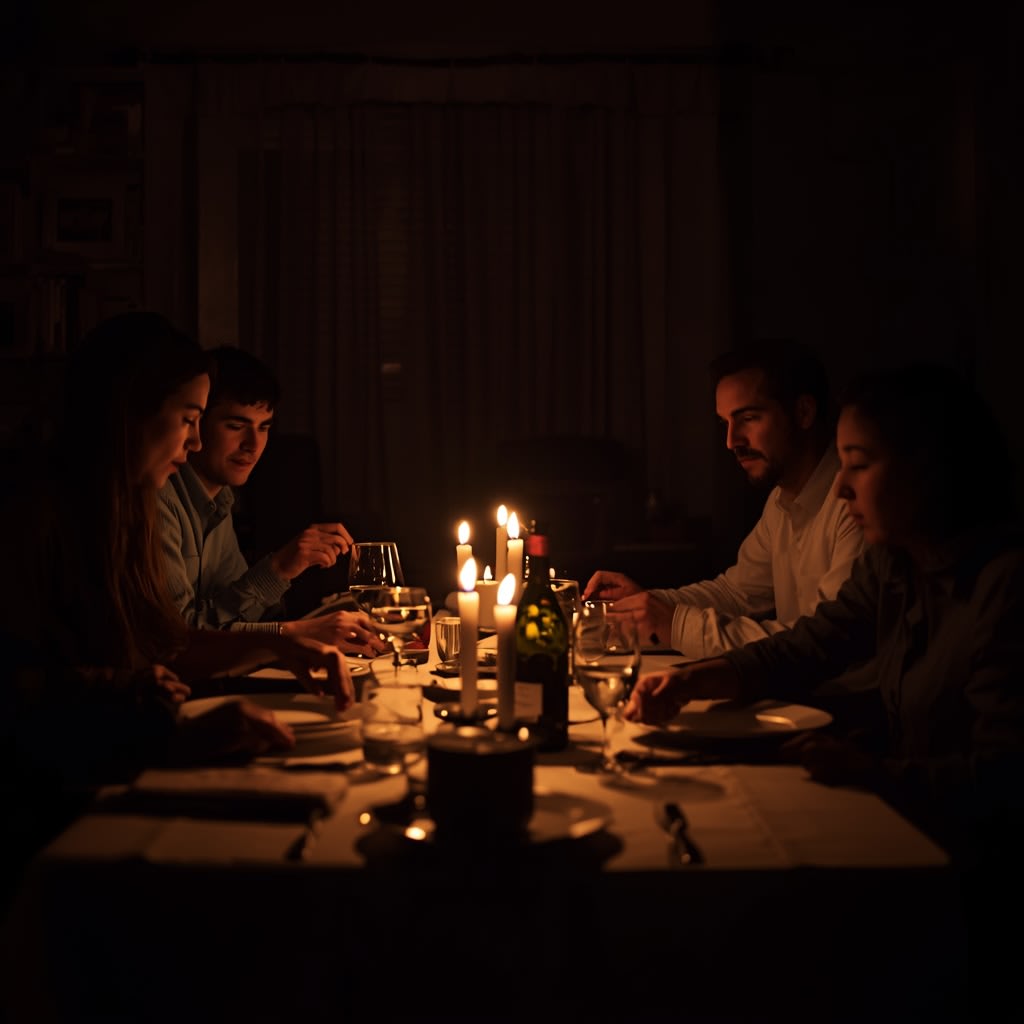
Every family has a script. You can feel it the moment you sit down. Certain topics are safe. Certain jokes get recycled. Certain truths stay politely hidden under the table.
Ours was no different.
At dinner, my uncle talked about work like it was a competition he kept winning. My aunt nodded, already knowing how the story would end. My cousin scrolled through his phone, pretending not to listen. My mother asked if anyone wanted more rice, even though no one had finished their plate.
I watched all of it like I’d seen the episode before.
What we didn’t say was louder.
We didn’t say that my uncle looked tired despite the bragging. We didn’t say my aunt flinched every time he interrupted her. We didn’t say my cousin’s silence wasn’t teenage moodiness but something heavier.
We passed the salt instead.
At one point, the power went out. Just like that. Lights gone. Fan stopped. Silence rushed in, thick and unplanned.
Someone laughed nervously. Someone else complained about the heat. Phones lit up the table, cold blue light replacing warmth.
Then my grandmother spoke.
“In the dark,” she said, “you notice what you ignore.”
No one replied. We didn’t need to.
For a few minutes, we ate without distractions. Forks clinked softly. Someone sighed. Someone else cleared their throat like they wanted to say something but didn’t know how to start.
When the lights came back, the moment passed. The script resumed. Conversations picked up where they’d left off, safe and shallow.
Later that night, I thought about how much effort goes into not speaking. How silence can be polite and protective, but also exhausting.
Families aren’t built on honesty alone. They’re built on timing. On knowing when to speak and when to let things rest.
But I wonder what would happen if, just once, we let the lights stay off a little longer.
The truth is, family dinners are rarely about food. They are performances—rituals where everyone plays their part. The meal is just the stage. The real drama lies in what isn’t said.
I think about my uncle, his voice booming with stories of success. He wears his victories like armor, but beneath it, there’s fatigue. His shoulders slump when he thinks no one is watching. His laughter is a little too sharp, like it’s covering something softer. But no one asks. To ask would be to break the script.
I think about my aunt, her smile polite, her nods rehearsed. She knows the rhythm of his stories, knows when to laugh, when to agree, when to fade into the background. Her silence is not emptiness—it’s survival. She has learned that speaking up only shifts the mood, and family dinners are not the place for confrontation.
I think about my cousin, eyes glued to his phone. Everyone assumes it’s distraction, teenage indifference. But I know it’s escape. The glow of the screen is safer than the weight of the table. He doesn’t want to be asked questions he can’t answer, doesn’t want to explain feelings he hasn’t named yet. So he scrolls, and we let him.
And my mother—always the peacemaker. She offers rice, refills glasses, smooths over silences with small gestures. She knows the script better than anyone. She knows that keeping the table steady matters more than digging into the cracks.
Then there’s my grandmother. The only one who broke the silence. Her words were simple, but they cut through everything: “In the dark, you notice what you ignore.”
I keep replaying that moment. The way the table shifted, just slightly. The way everyone paused, caught between recognition and denial. For a brief moment, the script faltered. We were not characters—we were people. People with unspoken truths sitting heavy in our throats.
But the lights came back, and with them, the performance.
I wonder what would happen if we stayed in the dark. If we let the silence stretch long enough for someone to finally speak. Would my uncle admit he was tired? Would my aunt say she wanted to finish her sentence? Would my cousin confess that he felt lost? Would my mother stop offering rice and start asking questions?
Maybe nothing would change. Maybe the silence would remain, heavy and unbroken. But maybe—just maybe—it would open a door.
Because families are not only built on timing. They are built on courage. On the willingness to break the script, even once, and trust that love will hold the pieces together.
That night, lying in bed, I realized something: the things we don’t say at family dinners are not gone. They live in us, waiting. They shape the way we look at each other, the way we laugh, the way we avoid certain topics. Silence is not emptiness—it’s storage.
And sometimes, storage becomes too full.
So I wonder: what would happen if, just once, we let the lights stay off a little longer?
About the Creator
Salman Writes
Writer of thoughts that make you think, feel, and smile. I share honest stories, social truths, and simple words with deep meaning. Welcome to the world of Salman Writes — where ideas come to life.
Keep reading
More stories from Salman Writes and writers in Confessions and other communities.
The Version of Me That Almost Was
I found the old notebook while cleaning, tucked behind things I no longer used but hadn’t thrown away. The cover was bent, the pages yellowed, the spine fragile from years of neglect. Inside was a version of me that felt both familiar and distant, like meeting an old friend whose face you recognize but whose life you no longer understand.
By Salman Writesabout 8 hours ago in Confessions
Third Party, Quiet Writer, Silent Viewer
I’ve been on Vocal for a long time. I think longer than most I’ve seen on here. I found Vocal about a year after it was created, in 2017. I was very active in the beginning, but don’t have many articles on here now because life gets in the way. I put what I want to write on here and then go on my way. I would like to start launching my writing career more seriously now though and hope to create more of a portfolio and I hope Vocal is the one site that allows me to do so while, I hear, being on the verge of some changes.
By Rich Burton6 days ago in Confessions



Comments
There are no comments for this story
Be the first to respond and start the conversation.