
The Ultimate Case of a Teenager Trying to Make It
Charles Bukowski and the Beautiful Struggle of Becoming Human

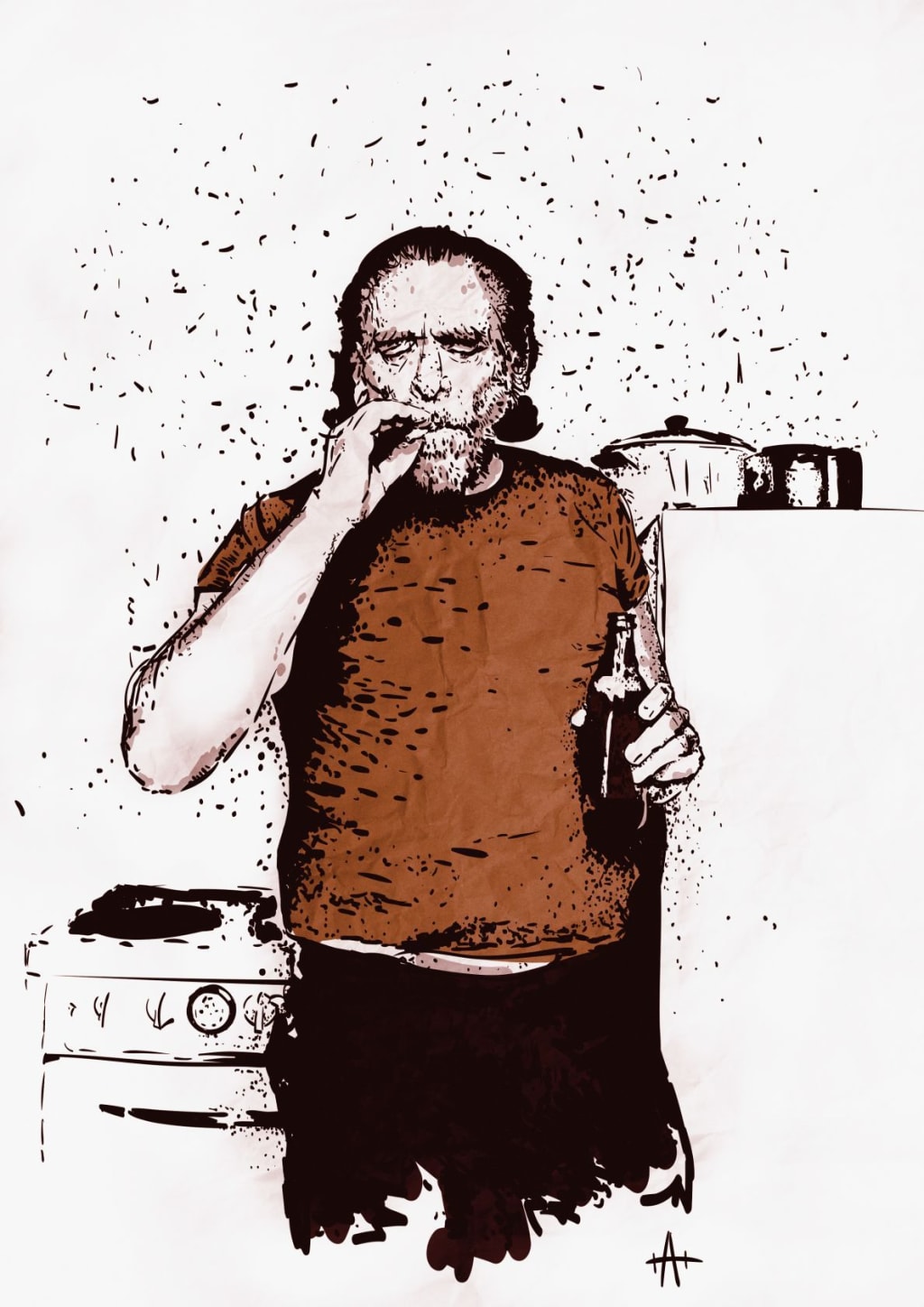
There’s a certain kind of teenager that never really gets to be a teenager.
The world doesn't give them the room.
They grow up in a house where love comes with a clenched jaw,
where silence is louder than apologies,
where even the walls hold their breath.
Charles Bukowski was one of those kids.
He never had the glittering movie version of youth—no first loves under bleachers, no warm dinners, no “how was your day, son?”
Instead, he had welts and whiskey, shame and silence.
An abusive father carved his childhood into something jagged and unrecognizable.
And when the world looked at him, all they saw was dysfunction.
But dysfunction is only the name we give to pain we don’t understand.
What Bukowski had—buried beneath the bruises and sarcasm—was something much more rare:
awareness.
And that’s what makes it all so haunting.
He knew.
Even as a kid, he knew he felt things too deeply.
He knew he didn’t fit.
He knew he wasn’t like them.
It would take decades before he’d write about it in a poem called Let It Enfold You,
but the truth was already living in him when he was a teenager just trying to make it.
He didn’t mean “make it” in the glamorous sense.
Not fame. Not fortune.
Just make it through.
Make it to tomorrow.
Make it past the silence.
Make it without breaking completely.
There’s something especially cruel about poverty.
It’s not just the hunger or the humiliation of counting coins at the register—
it’s how it gets inside you.
It shrinks your sense of self until you’re too scared to even dream.
When you’re poor, it’s not just that you don’t have —
it’s that you feel you don’t deserve to.
Bukowski knew that.
He felt that.
He wrote that.
That deep, soul-rotting shame of being broke, being broken, being unwanted.
But there was one thing he had: words.
Ugly, raw, brilliant words.
They weren’t a “shot in the dark,” as he liked to say—
they were aimed.
He knew what he was doing.
He was too smart not to.
He understood that even if no one listened, he had to speak.
Because silence was killing him faster than failure ever could.
Some people mistake him for a cynic.
But I think he was actually one of the most hopeful people to ever pick up a pen.
Because he kept showing up.
He kept writing.
Even when it hurt.
Even when no one cared.
Even when he didn’t care.
That’s not cynicism.
That’s belief in disguise.
He wrote about pain not to glorify it,
but to face it down.
He wrote about beauty not as a prize,
but as a right —
even if he had to bleed for it.
And in the end, all he ever really wanted
was to live with a little style.
Not class, not status — just style.
A kind of self-made grace.
To live, even in all the filth and failure,
with a spine.
That’s what makes Bukowski so unforgettable.
He wasn’t a hero.
He wasn’t a victim.
He was just a guy—
not a male, not a genius, not a role model—
just a guy trying to survive his youth,
make rent,
keep his mind,
and find some sliver of peace
in a world that told him from the start he didn’t belong.
And he made it.
Not cleanly. Not beautifully.
But truthfully.
And that, I think, is the most anyone can ask for.
About the Creator
Umar Faiz
Writer of supply chains, NFTs, parenting, and the occasional philosophical spiral. Obsessed with cinema, psychology, and stories that make you say “wait, what?” Fueled by coffee and mild existential dread.
Keep reading
More stories from Umar Faiz and writers in Confessions and other communities.
After He Was Gone: Part 2
Distance Returned Without Warning After campus, I moved to a different city for work, and just like that, the distance returned. Not just the physical miles between us, but the emotional space that had once felt like a canyon. Life moved quickly with new responsibilities and new routines, and the noise of becoming an adult filled my days. The calls became fewer. The visits became fewer than the calls.
By Eunice Kamau7 days ago in Confessions
How to Succeed at the Benson Directory®
Congratulations and welcome to the Benson Directory® employee #22391! As our newest call handler, you will have the privilege of speaking with dozens of unique and interesting people on a daily basis as well as the opportunity to earn bonuses for high performance. Contained within this handbook you will find a set of ease to follow instructions designed to help you settle in to your new role and begin paving the way to success.
By S. A. Crawford2 days ago in Fiction



Comments
There are no comments for this story
Be the first to respond and start the conversation.