
The Stranger on Platform Nine
A brief encounter at a European train station turned into a life-changing experience.

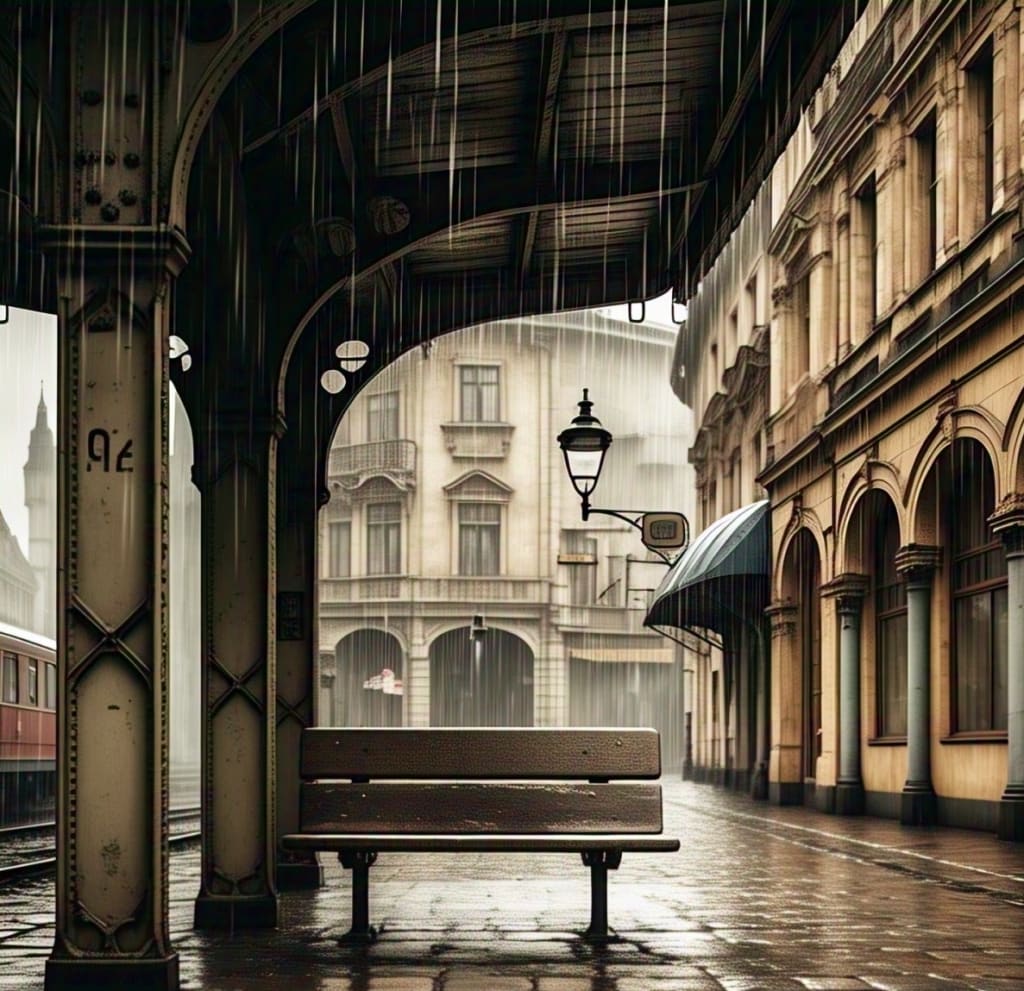
It was a rainy afternoon in Prague, and the train station buzzed with the usual chaos—loudspeakers echoing destinations, footsteps clattering on old tiles, and the scent of coffee blending with metal, rain, and the faint smell of diesel. I was on Platform Nine, backpack in hand, waiting for a train to Vienna.
I had been traveling across Europe for a month, chasing beauty, solitude, and a little inspiration. My plan was simple: see the world, one city at a time. But nothing in my itinerary included meeting a stranger who would change how I viewed time, memory, and love.
As I stood near the platform’s edge, I noticed an elderly man sitting on a worn bench, holding a faded leather journal. His coat was slightly torn at the shoulder, and his eyes carried a deep, peaceful sadness—as if he had seen too much, but never lost his warmth. When our eyes met, he smiled. It wasn’t the polite smile of a stranger, but the kind that felt... familiar, as if we’d met before in another life.
“Are you heading to Vienna too?” I asked, partly out of curiosity and partly to break the silence around us.
“No,” he replied in a calm, accented English. “But I used to.”
That puzzled me. Something about his tone invited further conversation, so I sat beside him. Before I knew it, we were lost in words. He introduced himself as Marek, a retired literature professor who had once taught in Vienna, Budapest, and Paris. He told me he came to this station every week—not to travel, but to remember.
“Remember what?” I asked.
He looked toward the tracks with the gaze of someone seeing a different time. “Love,” he said softly.
Marek told me how he met a woman named Eliska at this very platform in 1978. She was an artist, passionate and wild, while he was quiet and serious, a man of poetry and theory. But somehow, they fit together. Every Friday, they met at Platform Nine, exchanged thoughts, coffee, laughter—and then parted ways, bound for separate cities.
But life, he said, is not a straight line. Political unrest, career moves, and letters lost in the post turned Fridays into silences. One day, Eliska simply stopped coming. He waited for her—for weeks, then months—until he realized she wasn’t returning.
"Did you ever see her again?" I asked, already bracing myself.
He shook his head. “But I still come. Because this place… this platform gave me something no city, no lecture hall ever could.”
I didn’t know what to say. The rain had turned to a light drizzle. My train was announced, its lights cutting through the mist. But I didn’t want to leave. I wanted to hear more—to hold onto the magic of this unexpected encounter.
“You know,” Marek said, closing his journal, “we all wait at some platform in life—hoping, searching, remembering. The question is: what are you waiting for?”
His words struck a chord I didn’t know existed in me. I had been running from place to place, thinking I was chasing freedom. But maybe I was just running from myself, from the truths I wasn’t ready to face.
The train’s whistle called me back. As I boarded, Marek waved gently, his journal resting on his lap like an old friend. Through the window, I saw him return to silence—to memory. But something in me had shifted.
I arrived in Vienna that night, but a part of me had stayed on Platform Nine.
A week later, I returned to Prague. I went to the station, hoping to see Marek again—but he wasn’t there. I asked around, even described him to nearby vendors and workers. No one knew who I was talking about.
It was as if he had been a ghost, or perhaps, a gift from the universe. Either way, he had left a mark on me deeper than any landmark or monument ever could.
Since then, I no longer travel to escape. I travel to connect—with places, with people, and with those rare, quiet moments that leave you forever changed.
About the Creator
Keep reading
More stories from Sultan durani and writers in Confessions and other communities.
How I Saved $500 in 30 Days Without Sacrificing My Lifestyle
Introduction Most people believe saving money means giving up everything they enjoy—like eating out, shopping, or streaming their favorite shows. That’s what I used to think too. But one month, I decided to challenge myself: Could I save $500 in 30 days without making my life miserable?
By Sultan durani 9 months ago in Lifehack
Thoughts on Vocal and the way the world is
"Death cannot stop true love, only delay it." – Wesley in The Princess Bride. I decided to come back to Vocal on a very cold and dark night at the end of December. I had been, and still am, convalescing from a horrible staph infection that had gone misdiagnosed for months. This, paired with the increasing challenges of being healthy, making the best choices for my co-parented child, being a wife, and being a director at a new job, was a lot to manage.
By Jazzy 2 days ago in Confessions
The Fear of Being Seen
Introduction The fear of being seen is something many of us carry quietly. It hides behind our smiles, our silence, and the carefully curated versions of ourselves we present to the world. We want connection, yet we dread exposure. We long to be understood, but we fear judgment. This inner conflict shapes our choices, our relationships, and even our dreams.
By Aiman Shahid7 days ago in Confessions


Comments
There are no comments for this story
Be the first to respond and start the conversation.