
The Silent Widow: A Village Heiress Who Sacrificed Her Life for Others
The true story of a wealthy young bride who became a widow at eleven—and chose love, sacrifice, and resilience over her own happiness.

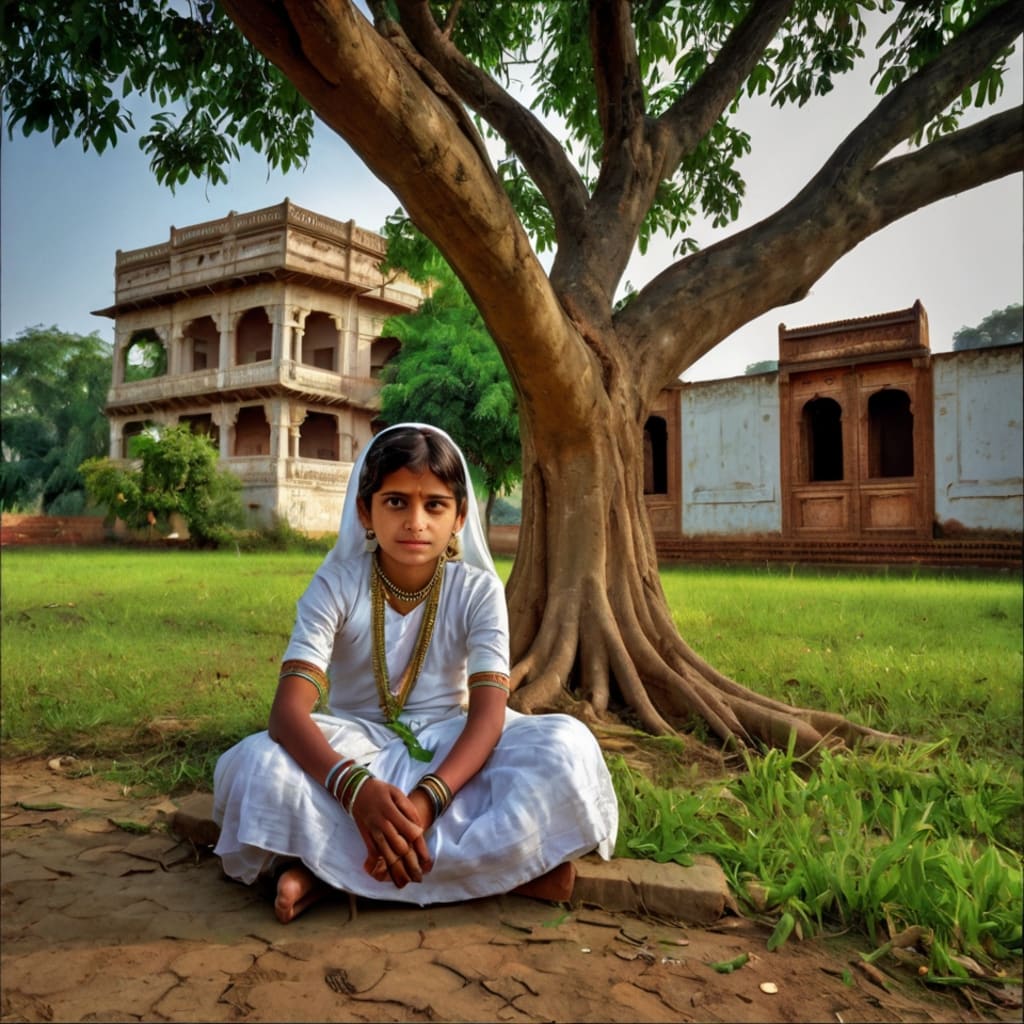
The Untold Tale of a Village Heiress
BY:Khan
In the heart of a vast village during the days of the British Raj lived Raisa Khalid Ahmed, a man of immense wealth and influence. His presence commanded respect; he owned nearly half the agricultural lands of the village and two lush orchards filled with trees heavy with fruits of every season. God had blessed him with fortune, land, and prestige. Yet, despite these worldly blessings, there was a void in his life—he had no son to inherit his legacy.
The village spread far and wide, its fields blooming with crops of every variety. His land alone was enough to sustain his entire family’s needs. But those were times when education, especially English education, was frowned upon by the Muslim community, more so in rural areas. Schools did not exist for boys, let alone for girls. Girls were usually taught only to recite the Quran and perform prayers. Medical facilities were equally absent—no clinics, no hospitals. Women rarely traveled to the city for treatment, for there were no proper roads, no transport. A patient often perished on the way in a bullock cart before reaching any doctor.
Ahmed Sahib lived with his wife and daughters, holding tightly to the traditions of his time. He was blessed with six daughters, though tragedy struck early—four of them died in childhood. Only two survived: the elder, aged fifteen, and the younger, just nine years old. Like most men of his generation, Ahmed Sahib believed that educating girls was unnecessary. Instead, he prepared them for domestic life and looked for suitable matches when they came of age.
When proposals began arriving, suitors often expressed preference for the younger daughter, but since she was too young, the proposals were politely declined. Eventually, an excellent match was found for the elder daughter. She was married into a respectable family, leaving the younger still a child at home.
Not long after, another proposal came—this time for the younger daughter. It was from a wealthy family in the same village. The patriarch of that household had passed away, leaving behind vast lands and a young widow raising their only son. The boy, just fifteen, was studying in a prestigious school in the city. His mother wished for him to be married in name only, with the actual wedding delayed until he grew older. Given the wealth and honor of the family, Ahmed Sahib accepted the match, and the two children were bound together in a simple marriage contract.
For a while, life went on peacefully. But fate had other plans. When the girl turned eleven, tragedy struck. Her young husband, still studying in the city, fell gravely ill and passed away. The shock reverberated through both families. The boy’s mother, devastated by the loss of her only child, soon followed him to the grave.
At the very same time, Ahmed Sahib’s wife gave birth to another baby girl. Their home, once full of anticipation, was suddenly drowned in sorrow. Amid this chaos, the eleven-year-old widow could not even comprehend what had befallen her. When her bangles were broken and she was forced into white garments, she resisted in tears, screaming that she would not give up her colorful clothes or her beloved ornaments. She was too young to understand widowhood but old enough to feel its cruelty.
Her mother too shared in her grief, breaking her own bangles in mourning. Life in the household grew somber. The younger sister, as she grew older, was married into a highly educated and prestigious family. Her father-in-law was a barrister trained in London, and her husband held a prominent government position. After Ahmed Sahib’s death, she took her widowed sister into her home.
The young widow never remarried, for in their family, second marriages were considered improper. Instead, she devoted herself entirely to raising her sister’s children. Though she had been deprived of the joys of her own marriage, she poured her love and affection into her nieces and nephews. They grew up calling her “Ammi,” treating her with the same respect and love as their real mother.
Her wealth remained intact, but she never sought luxury. Instead, she embraced a life of service and sacrifice. Her existence became a testament to quiet resilience—the story of a woman denied her own happiness yet giving boundless love to others.
She lived a long life, reaching nearly ninety years of age. In 1975, she finally departed from this world. She was laid to rest from her sister’s home, the same home where she had spent decades nurturing generations that were not her own.
Her story is not one of romance or grandeur, but of sacrifice, endurance, and silent strength. In an era when girls were seldom given choices, she bore the weight of her fate with dignity. While the world saw her as a wealthy heiress, in truth, she was a woman whose greatest legacy was not land or riches but the love she left behind in the hearts of those who called her “mother.”
May God grant her eternal peace and the highest place in His mercy. Amen.
About the Creator
Keep reading
More stories from Khan and writers in Confessions and other communities.
True Friendship: The Story of Zaman Ali’s Sacrifice
True Friendship: A Bond Beyond Time BY:Khan Friendship is a five-letter word, yet within these letters lie countless mysteries, secrets, and values. Only those who have experienced true friendship can truly understand its depth. Genuine friendship is not merely a bond; it is a sacred relationship that often surpasses ties like those of siblings, parents, or even children. When hearts are bound with the pure essence of friendship, even the most difficult tasks become easier. In such a relationship, there is no space for greed, jealousy, deceit, or malice. Instead, it paves the way to success and makes strangers feel like family.
By Khan 4 months ago in Confessions
After He Was Gone: Part 2
Distance Returned Without Warning After campus, I moved to a different city for work, and just like that, the distance returned. Not just the physical miles between us, but the emotional space that had once felt like a canyon. Life moved quickly with new responsibilities and new routines, and the noise of becoming an adult filled my days. The calls became fewer. The visits became fewer than the calls.
By Eunice Kamau7 days ago in Confessions
How to Succeed at the Benson Directory®
Congratulations and welcome to the Benson Directory® employee #22391! As our newest call handler, you will have the privilege of speaking with dozens of unique and interesting people on a daily basis as well as the opportunity to earn bonuses for high performance. Contained within this handbook you will find a set of ease to follow instructions designed to help you settle in to your new role and begin paving the way to success.
By S. A. Crawford2 days ago in Fiction



Comments
There are no comments for this story
Be the first to respond and start the conversation.