
The Silent Struggle
What High-Functioning Anxiety Looks Like
Introduction
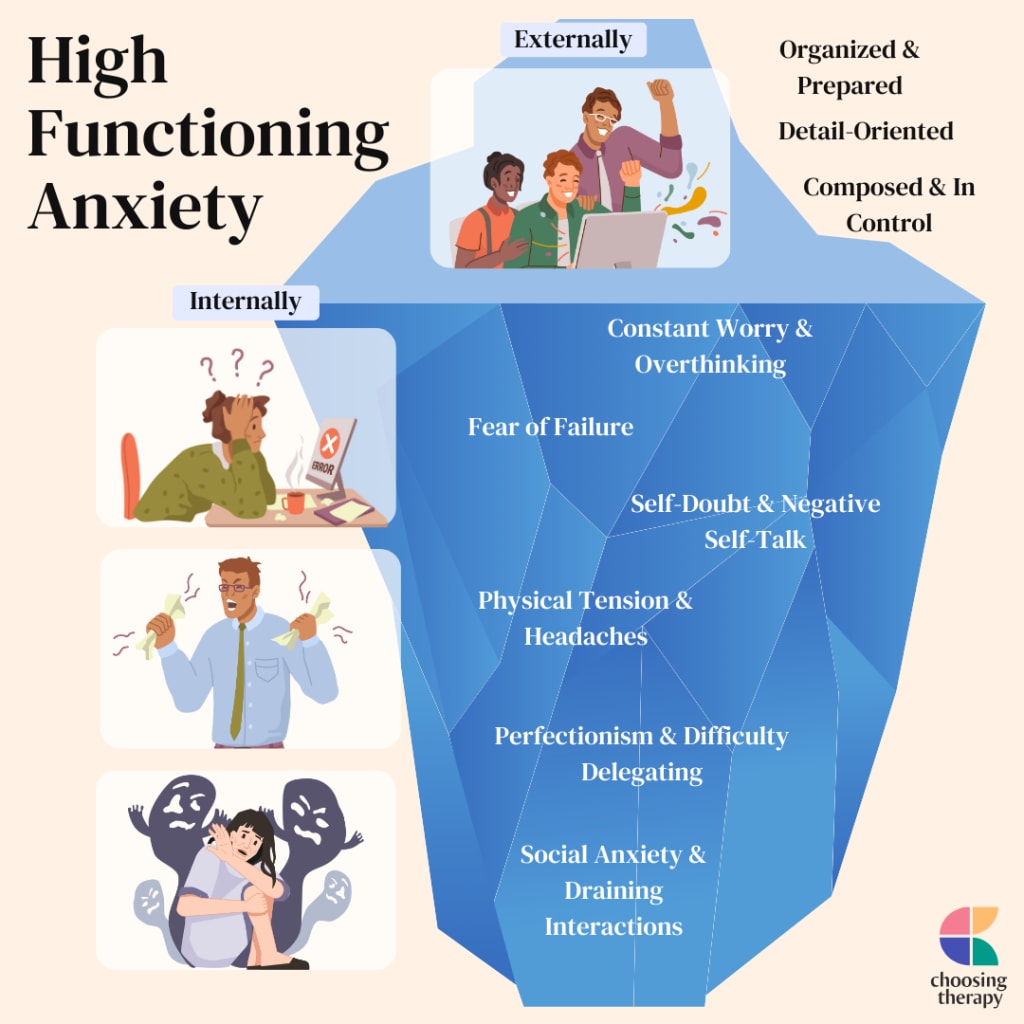
On the outside, they seem confident, successful, and put-together. They excel in their careers, maintain social relationships, and appear to handle life’s challenges with ease. But beneath that composed exterior lies a constant battle with high-functioning anxiety—an often overlooked and misunderstood mental health struggle.
Unlike generalized anxiety disorder, high-functioning anxiety isn’t always obvious. People experiencing it might not have visible panic attacks or avoid social situations. Instead, they push through their fears, excelling in their work and personal lives while secretly feeling overwhelmed, exhausted, and mentally drained.
Signs of High-Functioning Anxiety
While those with high-functioning anxiety often appear calm, they experience an ongoing inner struggle. Here are some common signs:
1. Overthinking and Perfectionism
They constantly second-guess their decisions. They set extremely high standards for themselves and fear failure. They struggle to complete tasks because they want them to be perfect.
2. Difficulty Saying No
They take on too much responsibility, fearing they will disappoint others. They struggle with setting boundaries in both professional and personal relationships. They may feel guilty when prioritizing their own well-being.
3. People-Pleasing Behavior
They crave validation from others and fear criticism. They go out of their way to make everyone happy, even at their own expense. They overanalyze conversations, worrying if they said the wrong thing.
4. Constant Worry & Racing Thoughts
Their mind is always “on,” overthinking every decision. They replay past mistakes and dwell on “what-ifs.” They struggle to relax, even during leisure time.
5. Physical Symptoms
They often experience muscle tension, headaches, or stomach issues. They may struggle with insomnia due to racing thoughts. Their energy levels fluctuate between high productivity and total exhaustion.
Coping Strategies for High-Functioning Anxiety
Although high-functioning anxiety can be overwhelming, it is manageable with the right tools and mindset. Here are some effective coping strategies:
1. Challenge Perfectionism
- Accept that perfection is an illusion—done is better than perfect.
- Set realistic goals and break tasks into smaller, manageable steps.
- Learn to celebrate progress rather than just outcomes.
2. Set Healthy Boundaries
- Practice saying “no” without guilt.
- Prioritize self-care and schedule breaks into your routine.
- Surround yourself with supportive people who respect your limits.
3. Manage Racing Thoughts
- Write down worries in a journal to clear your mind.
- Practice mindfulness or meditation to stay present.
- Focus on what you can control, rather than obsessing over uncertainties.
4. Seek Professional Support
- Therapy can help develop healthy coping mechanisms and manage anxiety triggers.
- Cognitive Behavioral Therapy (CBT) is particularly effective for anxiety disorders.
- Medication may be an option for those experiencing severe anxiety—always consult a professional.
5. Practice Self-Compassion
- Be kind to yourself—you are doing your best.
- Recognize your accomplishments instead of focusing on your flaws.
- Allow yourself to rest and recharge without guilt.
Final Thoughts: You Are Not Alone
High-functioning anxiety may be a silent struggle, but you are not alone. Many people face the same battle every day, managing their fears while appearing strong on the outside. Recognizing the signs and taking steps to prioritize your mental well-being can make a world of difference.
💬 Have you experienced high-functioning anxiety? Share your thoughts in the comments below!

🌟 If you found this article helpful, consider sharing it with someone who might relate. Let’s break the stigma around mental health—together!
About the Creator
Keep reading
More stories from writers in Confessions and other communities.
🅼🅸🅳🅽🅸🅶🅷🆃 🆂🅽🅰🅲🅺🆂
"It's 10 in Tuscon! We all know what that means... It's Time for Midnight Snacks with your man, Gerald Gee! Ready to spend the night together? Me too! I'm full of snacks and can't wait to regurgitate them all back into your hungry ears. Crack a brew! Pop some corn! Anything to get ready for one hell of a show where the talk maybe cheap but the words cut deep...
By Lamar Wiggins5 days ago in Fiction


Comments (1)
I love the struggle! It’s a good struggle